As Amazon Associates, we earn from qualifying purchases. This means we may receive a small commission at no extra cost to you if you click through and make a purchase.
Maximum Wireless Speed
Up to 5 Gbps
Advertised Coverage Area
Up to 6,000 sq ft (3-Pack)
Wireless Standard
802.11be (Wi-Fi 7)
Frequency Band Class
Dual-Band
Full spec sheet 6 more rows from the listing
| Brand | NETGEAR |
| Model Name | RBE373 (Router RBE371, Satellites RBE370) |
| Maximum Connected Devices | Up to 70 devices |
| Wired Connectivity | Multi-Gig Ethernet |
| Antenna Configuration | Internal |
| Regional Compatibility | Made for use in the US only |
Anyone considering the NETGEAR Orbi 370 wants to know if entering the Wi-Fi 7 ecosystem with an entry-level mesh hardware pack makes practical sense. As an RBE373 three-pack kit featuring one router and two satellites, this system introduces next-generation 802.11be wireless communication to home environments while keeping the internal radio architecture strictly dual-band. For property owners trying to eliminate dead spots across large floor plans without investing in industrial-grade hardware, understanding how this specific configuration handles everyday traffic is essential. The headline claim centers on delivering cumulative wireless speeds up to 5 Gbps across up to 6,000 square feet, but the technical reality of dual-band networking means buyers must weigh throughput against architectural constraints before committing.
This comprehensive netgear rbe373 review examines the engineering decisions behind the system, long-term netgear orbi 370 reliability, and where potential bottlenecks lie. We break down the hardware specifications, analyze wireless backhaul performance under load, outline real-world coverage expectations, evaluate setup workflows, and inspect ongoing subscription dependencies like Netgear Armor. By focusing on longevity, firmware maintenance, and support expectations, this guide provides the detailed context needed to decide if this Wi-Fi 7 mesh package fits your specific household requirements.
What You Get With the NETGEAR Orbi 370


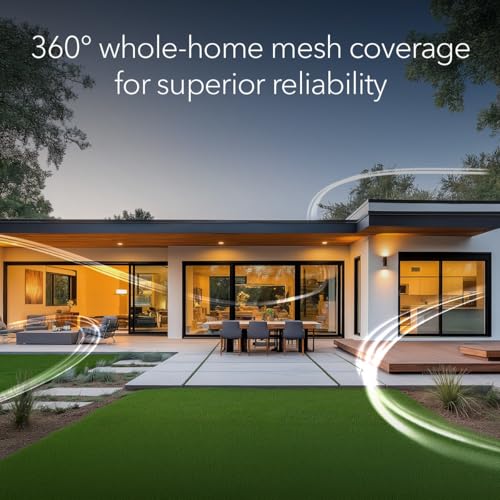

The NETGEAR Orbi 370 three-pack package, designated as model RBE373, ships with the core components required to establish a whole-home wireless mesh network right out of the box.
- One Orbi WiFi 7 Router (model RBE371) featuring internal antennas and Multi-Gig Ethernet connectivity.
- Two Orbi WiFi 7 Satellites (model RBE370) designed to extend wireless coverage throughout the property.
- Three dedicated power adapters matched to the electrical requirements of each unit.
- One flat Ethernet cable to connect the primary router to your existing internet service provider modem or gateway.
- Quick start guide outlining physical placement and initial app pairing steps.
- Out-of-the-box system support for up to 70 simultaneous client devices across 6,000 square feet.
- Integrated Advanced Router Protection and automatic firmware update protocols.
- A 30-day trial of the NETGEAR Armor security suite, providing online protection tools against malware and external threats.
Dual-Band Performance and Backhaul Realities
When examining the netgear orbi 370 specs, the most critical architectural detail is its dual-band frequency design. In a traditional tri-band or quad-band mesh system, such as the step-up orbi 770 series mesh wifi system, manufacturers include a dedicated wireless channel exclusively reserved for communication between the router and its satellites. The NETGEAR Orbi 370 operates differently. It utilizes a netgear orbi 370 dual band backhaul system, meaning client devices like smartphones, laptops, and smart televisions share the same 2.4 GHz and 5 GHz wireless spectrum that the satellites use to relay data back to the base station.
NETGEAR incorporates what the listing terms Enhanced Backhaul technology to dynamically manage this shared airtime. Under light to moderate household usage, such as routine web browsing, streaming video, and working from home, this optimization keeps traffic moving smoothly. However, because client data and backhaul traffic compete for the same frequency slices, peak wireless throughput on remote satellites naturally diminishes compared to what you would measure directly next to the primary RBE371 router. Wi-Fi 7 features like Multi-Link Operation help mitigate some latency spikes, but physical channel contention remains a fundamental reality of dual-band mesh architecture.
For homes with heavy local data demands, such as uncompressed 8K video streaming, high-bitrate wireless virtual reality headsets, or competitive PC gaming on distant satellites, this shared bandwidth represents a design compromise. If your household runs intensive transfers across multiple nodes simultaneously, direct wired Ethernet backhaul connecting the satellites to the router is the ultimate way to unlock the full 5 Gbps wireless potential without running into airtime congestion.
Coverage Capabilities in Multi-Story Homes
The advertised 6,000 square feet of coverage for the RBE373 three-pack kit is structured around ideal conditions. In an open environment without physical obstructions, the primary router and its two RBE370 satellites can blanket a substantial footprint from the basement to the upper floors. For property owners evaluating the netgear orbi 370 for large homes, achieving uniform coverage depends heavily on the physical materials forming your walls and floors. Dense building materials like reinforced concrete, brick, plaster, and metal framing will attenuate wireless signals far more rapidly than drywall and standard wood framing.
A rigorous netgear orbi 370 coverage test scenario must account for line-of-sight barriers and inter-floor transit. Placing a satellite directly above or below another node through thick subflooring can degrade link quality between the units. The system relies on internal antennas engineered to cast an omnidirectional signal pattern. To maintain strong satellite-to-router synchronization, nodes should be placed roughly halfway between the primary router and known dead zones, rather than directly inside the dead zone itself. The listing notes that coverage can be expanded by adding an individual Orbi 370 Series satellite to gain up to 2,000 square feet of additional reach per unit.
Handling up to 70 devices simultaneously makes this system well suited for modern connected households. Everyday smart home gear, including streaming dongles, smart plugs, and dedicated hardware like the netgear arlo baby 1080p hd monitoring camera, will easily find a stable connection across the shared 2.4 GHz and 5 GHz radios. The system seamlessly steers legacy Wi-Fi 5 and Wi-Fi 6 devices to appropriate frequencies, ensuring older hardware continues to function without destabilizing the broader Wi-Fi 7 mesh environment.
Setup Procedures and Network Management
Deploying the RBE373 mesh system is centered around the mobile Orbi app. Initial onboarding guides users through connecting the RBE371 router to an internet modem, powering on the satellites, and synchronizing the mesh network. For those pairing the router with modern high-speed infrastructure, such as a standalone netgear nighthawk cm3000 cable modem, the Multi-Gig Ethernet port on the router readily accommodates fiber and cable service tiers rated up to 2.5 Gbps without introducing a physical connection bottleneck.
While the guided setup is straightforward for most users, potential netgear orbi 370 setup problems typically stem from pairing delays between the router and satellites during the initial sync phase. If a satellite is placed too far from the base unit during first boot, the app may fail to detect the node, forcing a manual reset or requiring the user to move the satellite closer for initial provisioning before relocating it to its permanent location. Ensuring proper distance during first-time configuration prevents setup timeouts.
Once established, the Orbi app serves as the centralized dashboard for daily network management. Users can view connected client lists, test incoming broadband speeds, and configure a separate guest network to isolate visitors from private household devices. However, power users should note that the mobile interface prioritizes automated convenience over deep administrative customization. Detailed routing tables, manual channel assignments, and granular wireless parameters are kept minimal to prevent accidental misconfiguration by mainstream users.
Firmware Stability and Long-Term Maintenance
Long-term netgear orbi 370 reliability hinges significantly on consistent software support and radio management. The listing highlights automated firmware updates and Advanced Router Protection enabled straight out of the box. Automatic patching is critical for household networking equipment, ensuring that emerging security vulnerabilities are patched without requiring manual file downloads or administrative intervention. For a new generation standard like Wi-Fi 7, ongoing netgear orbi 370 firmware stability updates are essential to resolve early interoperability quirks between newer 802.11be client chipsets and legacy devices.
A key consideration for budget-conscious buyers is the software subscription structure. The package includes a 30-day free trial of the NETGEAR Armor security suite, which offers advanced protection against malware, phishing attempts, and unauthorized network intrusions. While the base router functionality, firewall basics, and wireless connectivity remain fully operational without paying extra, retaining Armor features requires an ongoing netgear armor orbi 370 subscription once the introductory trial concludes. Buyers should account for this software separation when calculating total ownership expectations.
From a hardware durability standpoint, the internal antenna layout and fanless chassis rely on passive convection cooling. To ensure sustained reliability and prevent thermal throttling during periods of sustained heavy throughput, the router and satellites should be positioned on open surfaces with adequate airflow rather than enclosed within entertainment cabinets or tucked behind furniture. The hardware is specifically designated for use in the US only, operating on certified North American regulatory channels and power standards.
NETGEAR Orbi 370 Pros and Cons
Pros
- Wi-Fi 7 speeds up to 5 Gbps
- Covers up to 6,000 square feet
- Multi-Gig Ethernet supports up to 2.5 Gbps
- Supports up to 70 simultaneous devices
- Expandable with additional 370 satellites
Cons
- Dual-band architecture shares satellite backhaul bandwidth
- NETGEAR Armor requires paid subscription after trial
- Engineered for use in the US only
Is the NETGEAR Orbi 370 Worth It
Determining whether the NETGEAR Orbi 370 represents the right investment depends primarily on your household size, your internet connection tier, and your specific expectations regarding Wi-Fi 7 technology. If you occupy a home up to 6,000 square feet, subscribe to an internet service plan up to 2.5 Gbps, and want a modern mesh setup that links up to 70 smart home devices without dropped signals, this system provides a capable, future-ready baseline. The combination of Wi-Fi 7 client support and Multi-Gig Ethernet ports ensures that newer smartphones and laptops can maximize their wireless radios without requiring a commercial-grade network overhaul.
Conversely, power users who frequently transfer massive files locally between network-attached storage units and desktop computers should carefully consider the limitations of a dual-band mesh layout. Because this kit lacks a third, dedicated 6 GHz backhaul radio band, data relaying across the wireless satellites shares airtime with your active devices. Users seeking uncompromising gigabit speeds from the furthest corners of a multi-story home over purely wireless connections may find tri-band alternatives better suited to extreme data demands, provided they are willing to invest in higher-tier hardware.
Ultimately, for households seeking seamless whole-home coverage, straightforward app-driven management, and modern hardware that accommodates legacy devices alongside next-generation Wi-Fi 7 gear, the NETGEAR Orbi 370 delivers a balanced feature set. As long as you understand the dual-band backhaul trade-offs and the recurring nature of the optional Armor security suite, this three-pack kit offers a dependable foundation for standard residential connectivity.
FAQ
What makes the dual-band backhaul in the NETGEAR Orbi 370 different from tri-band systems?
The NETGEAR Orbi 370 operates on two frequency bands: 2.4 GHz and 5 GHz. In this dual-band setup, satellite-to-router communication shares the same wireless frequencies used by your phones, laptops, and smart home gear. Tri-band systems include an extra dedicated wireless radio band exclusively for satellite communication, preventing client traffic and backhaul data from competing for the same airtime.
Can the NETGEAR Orbi 370 handle multi-gigabit internet plans?
Yes. The system features Multi-Gig Ethernet connectivity on the primary router, making it fully compatible with cable and fiber internet service provider equipment for plans up to 2.5 Gbps. You simply connect the router directly to your existing modem using the included Ethernet cable.
What happens when the 30-day NETGEAR Armor trial ends?
When the 30-day trial of NETGEAR Armor expires, your basic routing, wireless coverage, guest network, and out-of-the-box Advanced Router Protection continue to function normally. However, premium security suite features—such as enhanced protection against hackers, identity theft tools, and comprehensive malware screening across all connected endpoints—require an active separate paid subscription.
How many satellites can be added to the NETGEAR Orbi 370 system?
The listing states that the mesh network is easily expandable by adding individual Orbi 370 Series satellites. Each additional satellite provides up to 2,000 square feet of extra wireless coverage, allowing you to tailor the system to larger multi-story homes or complex floor plans. The listing does not specify a maximum ceiling for total satellite additions.
Will older devices connect to the Wi-Fi 7 network?
Yes. The NETGEAR Orbi 370 uses backward-compatible 802.11be technology. It connects older devices running Wi-Fi 6, Wi-Fi 5, and older legacy standards alongside brand-new Wi-Fi 7 equipment. It automatically manages connections across its supported 70-device capacity, ensuring that older smart cameras, printers, and gaming consoles operate without configuration conflicts.


