As Amazon Associates, we earn from qualifying purchases. This means we may receive a small commission at no extra cost to you if you click through and make a purchase.
Maximum Output Power
600W
Input Voltage Range
11.8V – 32V DC
Charging Speed Baseline
6× faster than standard car cigarette lighter sockets
Product Function
DC-DC Vehicle Alternator Charger
Full spec sheet 6 more rows from the listing
| Brand | Jackery |
| Connector Type (Input) | Cigarette Lighter Socket |
| Connector Type (Output) | DC8020 Port |
| Vehicle System Compatibility | 90% of fuel vehicles, hybrids, and boats |
| Protection Mechanism | Smart Auto Protection with Dual ACC and Voltage Monitoring |
| Universal Product Code (UPC) | 810182247434 |
For outdoor travelers and remote workers who rely on portable power stations, in-transit battery charging is often the most dependable method to keep gear energized between destinations. If you are researching the Jackery 600W Alternator Charger, known among many overlanders as the jackery thunder charger, the central question is whether drawing up to 600 watts from your vehicle electrical system is safe for your vehicle battery and alternator. This specialized hardware is designed to move beyond the slow trickle of standard 12-volt car sockets, delivering high-speed energy while integrating protective monitoring to keep your primary vehicle battery from draining.
This comprehensive review investigates the electrical mechanics, vehicle safety parameters, and practical trade-offs of the unit. We examine the exact jackery dc-dc charger specs provided by the manufacturer, break down how the dual-monitoring safeguards function during travel, verify compatibility across different vehicle platforms, and evaluate whether this fast-charging accessory is the right addition to your mobile power setup.
What You Get With the Jackery 600W Alternator Charger
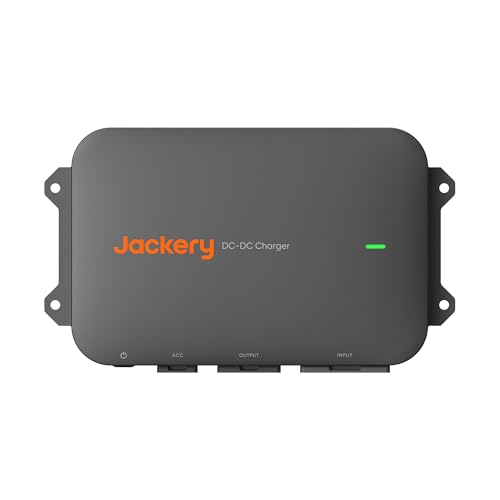


The product provides a dedicated direct-current charging interface engineered to connect your automobile electrical generation system to compatible outdoor power stations. According to the manufacturer data, the package contains the core charging device built for fast vehicular energy transfer.
- 600W optimal power delivery system engineered for high-speed replenishment
- Direct DC8020 output connector eliminating the need for secondary terminal adapters
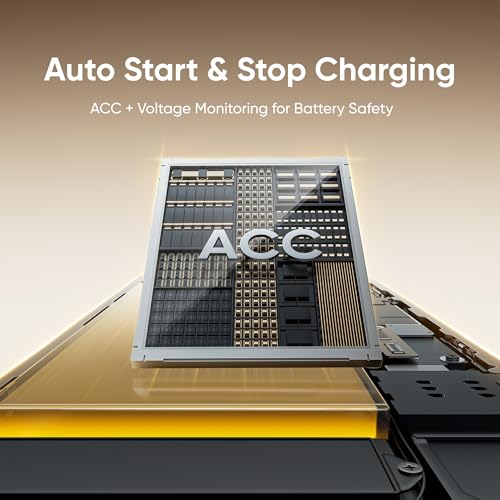
- Smart Auto Protection system featuring dual ACC and input voltage monitoring
- Broad vehicle compatibility covering 11.8V to 32V direct-current inputs for 12V and 24V electrical architectures
- Engineered circuit protection designed to prevent excessive draw on starter batteries and vehicle generators
Alternator Load and Vehicle Electrical Safety
The primary concern for any vehicle owner considering a high-draw accessory is how it affects the long-term reliability of the engine charging system. A standard 12-volt vehicle accessory port typically caps out around 10 amps, delivering roughly 120 watts of power. Stepping up to 600 watts means your charging device is drawing substantial current across the vehicle line. In a standard 12-volt automotive setup, producing 600 watts of charging throughput requires roughly 45 to 50 amperes of continuous current from the vehicle electrical supply. For cautious vehicle owners, verifying jackery 600w charger safety requires understanding whether your vehicle alternator possesses the reserve capacity to handle this load alongside headlights, climate control, and electronic safety systems.
Modern full-size trucks, SUVs, commercial vans, and many crossover platforms come equipped with alternators rated between 130 and 220 amperes, leaving comfortable headroom for a 600W continuous draw during highway driving. However, compact economy commuter cars often feature smaller alternators rated around 80 to 90 amperes, where an additional 50-amp draw could approach the safe continuous operating margin of the vehicle charging generator. The manufacturer notes that this unit is engineered to protect your vehicle circuits, generator, and primary battery. It achieves this by governing power conversion dynamically, avoiding sudden current spikes that could otherwise blow vehicle fuses or cause excessive thermal rise inside the engine bay wiring harness.
When charging large-capacity equipment like a jackery 2000 plus portable power station on the road, having sustained power delivery without risking electrical damage is vital. Running an inefficient standalone inverter coupled to an AC power brick generates excessive heat and wastes energy through multiple direct-current to alternating-current conversion steps. By utilizing direct DC-to-DC conversion, the charger keeps thermal dissipation lower, placing less strain on the alternator and ensuring that the energy produced by your engine goes straight into your secondary storage system with higher overall electrical efficiency.
Battery Drain Prevention and Smart Auto Protection
Nothing ruins an overland adventure faster than returning to a vehicle with a flat starter battery. For careful buyers, understanding how the hardware manages jackery car charger battery drain is a critical purchasing factor. The device incorporates what the manufacturer terms Smart Auto Protection, which combines dual ACC (accessory) ignition sensing with continuous input voltage monitoring. This dual-layer detection mechanism serves as an automated safeguard against accidental battery drain when your engine is not actively generating power.
The system operates by sensing whether the vehicle is running or parked. When the engine is shut down, the alternator ceases generating current, and the vehicle system voltage naturally drops from active charging levels (typically 13.8V to 14.4V) down toward resting battery levels (12.4V to 12.6V). The charger monitors this line condition and cross-references it with the ACC circuit. The moment it detects that the vehicle is turned off or that the input drops below its operational cutoff threshold, it halts charging immediately. This automatic disconnect ensures that auxiliary appliances and high-capacity battery units do not siphon energy from the starting battery while you are stationary.
According to the listed specifications, the charger operates with an input voltage threshold down to 11.8 volts of direct current. Resting lead-acid and AGM batteries that fall near 11.8 volts are approaching significant discharge; therefore, having an integrated low-voltage cutoff prevents the vehicle battery from entering the deep-discharge zone that prevents an engine from cranking. By automating the transition between active driving charging and parked standby mode, the unit removes the risk of user error, ensuring you do not have to manually disconnect cables every time you pull into a scenic overlook or rest stop.
Station Compatibility and the DC8020 Connection
Power station port architecture varies across different models and generations, making physical connector compatibility an essential factor in your buying decision. The device comes equipped with a dedicated DC8020 output connector, designed to plug straight into newer generations of Jackery power equipment. This dedicated jackery dc8020 vehicle charger configuration eliminates the need for loose third-party barrel adapters, which frequently suffer from loose mechanical fits, high electrical resistance, and unwanted heat generation under high amperage.
If your portable power setup features a DC8020 input, such as the jackery solar generator 1000 v2 with 200w solar panel, the connection is entirely plug-and-play. The 600W rating allows compatible stations to recharge rapidly during drive intervals, delivering up to six times the charging speed of traditional vehicle accessory outlets. This high-throughput delivery allows users to recover significant percentages of their station battery capacity during a typical two-to-three-hour drive between destinations, making off-grid meal preparation, electric cooking, and refrigeration practical without relying strictly on clear skies.
However, users operating legacy gear should exercise caution before purchasing. Older power station models, such as the compact jackery explorer 500, utilize an 8mm DC7909 input barrel rather than the larger DC8020 port. Because the manufacturer data explicitly specifies a DC8020 output without mentioning legacy adapters in the package, owners of older hardware must verify their unit port size. Attempting to force an incompatible barrel connector can damage internal pins, so matching the DC8020 connector to your station input port is an absolute operational requirement.
Real-World Vehicle and Marine Deployment
Versatility across different vehicle platforms is one of the standout aspects highlighted in the manufacturer documentation. The hardware supports an input voltage range spanning from 11.8V up to 32V of direct current. This wide operating range makes it fully compatible with standard 12-volt passenger vehicle architectures, as well as 24-volt commercial truck platforms, heavy-duty overland chassis, dual-battery RV builds, and marine vessels. The listing notes broad vehicle coverage, citing compatibility with approximately 90% of fuel vehicles, hybrids, and marine boats.
For hybrid vehicle owners, the charger provides a reliable bridge to high-speed energy storage. Hybrid systems utilize high-voltage traction packs that step down power through an internal DC-DC converter to maintain an auxiliary 12-volt battery. Because the auxiliary battery is constantly replenished whenever the hybrid system is active, running a 600W charger allows hybrid drivers to harvest excess driving energy efficiently. In marine applications, where damp air and unpredictable weather frequently reduce solar panel efficiency, having a dependable DC-DC link between the boat generator or outboard charging circuit and an auxiliary power station ensures safety and communications equipment stay fully powered.
Regarding physical installation and connectivity, the listing specifies a cigarette lighter socket style input alongside the DC8020 output. Traditional lighter sockets in passenger vehicles are generally fused at 10 to 15 amperes (120W to 180W). When reading this jackery 600w alternator charger review, buyers should recognize that achieving the advertised 600W maximum throughput requires an electrical input pathway capable of handling that power draw. In vehicle environments where an auxiliary socket circuit is restricted to standard factory fusing, the input circuit will either dictate total power draw or require appropriate vehicle wiring to supply the necessary direct-current amperage safely.
Jackery 600W Alternator Charger Pros and Cons
Pros
- Delivers up to 600W high-speed vehicle charging
- Dual ACC and voltage monitoring prevents battery drain
- Direct DC8020 connection requires no port adapters
- Supports wide 11.8V to 32V direct-current input
- Automated charging shuts off when vehicle is parked
Cons
- Restricted exclusively to DC8020 input power stations
- Requires high-capacity alternator for optimal power draw
- Listing does not include legacy port adapters
Is the Jackery 600W Alternator Charger Worth It
Determining whether this charging accessory is worth your investment comes down to your travel habits, your vehicle electrical specifications, and your off-grid energy demands. If you are an active road-tripper, overlander, or mobile professional who drives several hours between remote destinations, the unit resolves the biggest limitation of portable power stations: slow replenishment times. Moving from a standard 100W car port to a 600W high-speed charger cuts hours off recharge cycles, allowing you to run high-draw appliances like induction cooktops, blenders, and power tools without needing shore power or extensive solar arrays.
Conversely, if your travel routine involves parking in a single campsite for multiple consecutive days without driving, the value proposition drops considerably. Running a vehicle engine at idle simply to recharge a portable power station is inefficient, causes unnecessary engine wear, and burns costly fuel. Stationary campers who stay off-grid for extended periods without moving their vehicles are far better served investing in dedicated solar equipment, which harvests ambient energy continuously without requiring engine run time.
For owners of compatible DC8020 power stations who have vehicles with healthy, modern alternators, the charger provides excellent utility and reliability. Its automated voltage and ignition sensing remove the anxiety of dead starter batteries, while its robust direct-current conversion shields vehicle circuits from overload. As long as your power station accepts the DC8020 connection and your driving patterns support regular alternator charging, this unit serves as a dependable, high-efficiency backbone for mobile energy independence.
FAQ
Will this charger drain my vehicle starter battery when the engine is turned off?
No. The charger features Smart Auto Protection incorporating dual ACC ignition sensing and real-time input voltage monitoring. It automatically initiates charging when the vehicle is running and shuts off when the vehicle is parked or when input voltage drops below its 11.8V operating threshold, protecting your starter battery from being drained.
Which power stations are compatible with the output cable?
The charger features a dedicated DC8020 output connector. It is engineered to pair directly with Jackery power stations equipped with DC8020 input ports. Devices utilizing older 8mm DC7909 ports or alternative barrel sizes will not connect directly without separate third-party adaptation, which the listing does not include.
Can this unit be used in 24-volt electrical systems and marine boats?
Yes. The specifications state an input voltage range of 11.8V to 32V of direct current. This wide range enables compatibility with 12V and 24V electrical architectures found in standard fuel vehicles, hybrid platforms, heavy-duty recreational vehicles, and marine boats.
How does vehicle alternator charging compare to solar panel charging?
Vehicle charging through this 600W unit delivers a consistent, high-rate electrical current regardless of weather conditions, cloud cover, or daylight hours. By contrast, a solar array like the jackery solar saga 200w solar panel generates clean, silent power while your vehicle is parked, but its total energy output remains dependent on direct sunlight, panel angle, and atmospheric conditions.
Does the charger require manual setup each time you start driving?
No manual activation is necessary. The integrated voltage monitoring and ACC detection system identify when the vehicle electrical system becomes active, automatically resuming charging during transit and ceasing operation when the engine stops.