As Amazon Associates, we earn from qualifying purchases. This means we may receive a small commission at no extra cost to you if you click through and make a purchase.
Acoustic Output
45dB ultra-quiet operation
Machine Weight
9.5 kg (approximately 20.94 lbs)
Chassis Material
Metal XYZ gantry structure
Product Dimensions
17.93 inches D x 17.53 inches W x 18.16 inches H
The hardware parameters of the Anycubic Kobra X reflect a mid-sized desktop machine built with structural rigidity, automated bed compensation, and quiet indoor operation in mind.
Full spec sheet 6 more rows from the listing
| Manufacturer | ANYCUBIC |
| Color Capability | Native 4-color multi-filament printing |
| Filament Management | ACE GEN 2 automated material management |
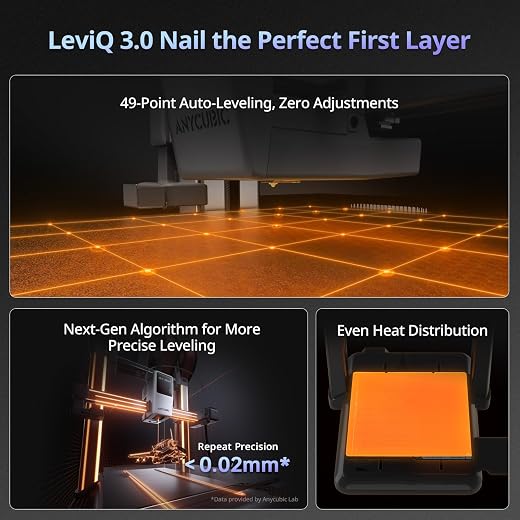
| Bed Leveling System | LeviQ 3.0 (49-point auto-leveling, 0.02mm accuracy) |
| Optical Monitoring | Integrated 720P AI camera with phone notifications |
| Color Finish | Grey |
If you are researching the anycubic cobra x, your primary concern is likely whether automated multicolor printing has evolved into a dependable household appliance or remains a maintenance-heavy chore. The Anycubic Kobra X attempts to answer that question by combining native four-color filament handling, an automated LeviQ 3.0 leveling system, and continuous optical oversight into a modular metal chassis. Rather than forcing users to manually calibrate print surfaces or diagnose messy mechanical clogs in isolation, this machine relies on an integrated hardware and software ecosystem designed to prevent common desktop fabrication failures.
In this detailed Anycubic Kobra X review, we evaluate the machine’s structural engineering, sensor integrations, and multi-material workflow to determine its long-term viability. We examine the LeviQ 3.0 auto-leveling setup, the ACE GEN 2 filament handling system, the 720P AI camera monitoring suite, and official replacement component availability through the Amazon Replacement Parts Program. By exploring both the automated conveniences and the mechanical realities of multicolor printing, this guide helps you decide if the Kobra X fits your home workshop, classroom, or creative workspace.
What You Get With the Anycubic Kobra X


The Anycubic Kobra X arrives packaged as a modular desktop fabrication unit engineered to minimize initial assembly hurdles while providing out-of-the-box support for multi-material projects.
- Modular metal XYZ gantry and base platform configured for a 15-minute assembly process
- Native 4-color automated material system powered by ACE GEN 2 waste-reduction technology
- LeviQ 3.0 automated bed leveling system featuring 49-point measurement at 0.02mm accuracy
- Integrated 720P AI monitoring camera with automated spaghetti and bed-obstruction detection
- Ultra-quiet internal motor drive system rated at 45dB operating volume
- Power outage resume printing sensor and integrated filament runout recovery mechanism
- Direct enrollment in the Amazon Replacement Parts Program for simplified maintenance sourcing
Multicolor Filament Switching and Jam Prevention Realities
The core selling point of the platform is Anycubic Kobra X 4 color printing, driven by the brand’s ACE GEN 2 automated filament system. In traditional single-extruder setups, printing in multiple hues requires manual pauses, manual material retraction, and tedious nozzle flushing. The Kobra X automates these cycles entirely, pulling filament back from the toolhead, loading the next selected spool, and purging the nozzle before resuming the toolpath. By focusing on material conservation, the ACE GEN 2 technology minimizes the volumetric waste typically deposited into purge towers, which helps conserve expensive filaments across complex multi-hue models.
However, automated color swapping introduces distinct mechanical failure risks that every prospective buyer should understand. Multi-material printing subjects the filament path, drive gears, and PTFE guide tubes to intense mechanical cycles. During an intricate model requiring hundreds of layer transitions, filament is retracted and fed repeatedly across mechanical junctions. If filament develops brittleness from ambient moisture absorption or if the feeding gears grind against soft materials, jams can occur inside the feed path. When evaluating multi-filament options across the broader market, such as the high-capacity Anycubic Kobra 3 Max Combo, keeping filament dry and inspecting feed guide pathways regularly remains critical to long-term reliability.
Anycubic Kobra X reliability over extended printing schedules depends heavily on proper maintenance of this automated feeding system. Because filament must travel cleanly from external spools into the print head, any friction within the tubing can trigger motor stalling or uneven extrusion. Users should routinely check the internal cutter assembly and clear micro-debris from the feed rollers. When treated with routine cleaning and high-grade dry spools, the native 4-color system delivers dependable layer transitions, but ignoring feed pathway maintenance will eventually lead to mid-print feeding errors.
LeviQ 3.0 Leveling Setup and Structural Stability
First-layer adhesion remains the single most common point of failure in fused filament fabrication, making the Anycubic Kobra X leveling setup central to user success. The machine incorporates the LeviQ 3.0 auto-leveling system, which deploys a 49-point matrix scan across the build plate to calculate surface deviations down to 0.02mm accuracy. Rather than requiring users to manually balance thumbscrews at each corner of the heated bed, the firmware automatically interpolates height discrepancies and adjusts the Z-axis height in real time during the initial layer laydown.
This automated compensation is reinforced by the printer’s rigid physical build. Featuring an XYZ gantry structure assembled from metal components and weighing in at 9.5 kg, the chassis provides solid resistance against mechanical resonance. Rapid directional changes from the print head generate lateral vibrations that can cause layer shifting, ghosting, or poor bed adhesion on flimsy frames. Much like the balanced motion systems found on enclosed alternatives such as the Anycubic Kobra S1, the rigid metal gantry of the Kobra X minimizes frame flexing, ensuring that the precision recorded during the 49-point scan translates into consistent nozzle clearance across the entire bed surface.
Even with automated mesh compensation, buyers must recognize that sensor-based leveling cannot fix structural neglect. Over hundreds of hours of thermal cycles, machine fasteners can loosen and drive belts can lose their calibrated tension. If the physical gantry slips out of perpendicular alignment, the LeviQ 3.0 system will attempt to compensate electronically, but excessive mechanical tilt will eventually degrade dimensional accuracy on tall vertical models. Checking frame bolts periodically and verifying belt tension preserves the mechanical foundation that the auto-leveling algorithms rely on.
AI Camera Monitoring and Error Detection in Practice
Unattended printing has historically posed significant hazards, from wasted filament spools to catastrophic toolhead encasement caused by detached models. The Anycubic Kobra X AI camera integrates directly into the machine’s safety architecture, using a 720P sensor to provide real-time optical tracking. The system’s Safe AI Guard software analyzes frame data to identify two critical failure modes: foreign objects left on the build platform before printing begins, and spaghetti errors caused by parts detaching from the build plate mid-job.
When the optical monitoring system detects a detached print or unexpected movement on the bed, it executes an immediate pause routine and transmits a notification alert to the user’s mobile device. This automatic intervention prevents the dreaded “blob of death,” where extruded plastic curls upward into the hotend wiring block, permanently destroying thermistors and heater cartridges. For families and educators running prints in home environments, this automated shutdown provides a meaningful safety net that prevents material waste and hardware destruction.
The monitoring suite also integrates traditional hardware recovery features, including resume printing functions for power outages and mechanical filament runout sensors. While the 720P camera functions well in typical room lighting, buyers should note that optical AI detection has natural operating limits. Semi-transparent, highly reflective, or ultra-dark filaments can occasionally fool computer vision algorithms, and printing in a pitch-black room reduces camera clarity. Ensuring adequate ambient lighting around the printer allows the AI monitoring tools to evaluate print progress with maximum fidelity.
Maintenance Demands and Replacement Parts Support
Every fused filament fabrication machine contains wearable components that degrade over time, making long-term serviceability a primary concern for careful buyers. A standout operational advantage highlighted in the Anycubic Kobra X specs is that the printer has joined the Amazon Replacement Parts Program. This integration streamlines the process of ordering critical replacement assemblies, removing the frustration of tracking down obscure third-party components or waiting weeks for overseas logistics channels.
Routine wear items on the Kobra X include brass extruder nozzles, silicone heat block socks, PTFE filament routing tubes, and mechanical drive gears. As abrasive or composite materials pass through the hotend, nozzle apertures gradually widen, resulting in loss of dimensional precision and stringing. Thanks to official Anycubic Kobra X replacement parts availability, replacing worn hotends or feed components is straightforward, allowing users to restore factory-level extrusion tolerances without complex modifications.
Additionally, the printer is designed for household environments with a quiet 45dB acoustic profile, making it quieter than normal ambient conversational noise. Keeping the machine operating at this low sound level requires basic preventive care. The linear motion guide rods and lead screws should be wiped clean of dust and lightly lubricated every few months. Clearing filament dust from the internal drive gears of the ACE GEN 2 system prevents motor strain and keeps the multicolor feed mechanisms running silently and efficiently.
Anycubic Kobra X Pros and Cons
Pros
- Native 4-color printing with automated swaps
- LeviQ 3.0 49-point bed leveling system
- Safe AI Guard with 720P camera monitoring
- Ultra-quiet 45dB home operating sound
- Enrolled in Amazon Replacement Parts Program
- Pre-assembled modular 15-minute setup
Cons
- Frequent multicolor retractions require feed path cleaning
- Optical AI camera requires adequate ambient lighting
- Relies on periodic manual gantry bolt inspection
Is the Anycubic Kobra X Worth It
Determining whether the Anycubic Kobra X is worth it depends entirely on your project requirements and technical comfort level. For hobbyists, makerspaces, and parents looking for an Anycubic Kobra X for beginners, the printer presents a compelling balance of automation and user accessibility. The 15-minute modular assembly eliminates intimidating kit construction, the 45dB quiet operation allows it to run comfortably in living rooms or classrooms, and the integrated AI safety guard minimizes the risk of catastrophic print failures that discourage new users.
Conversely, shoppers whose primary focus is high-detail miniature fabrication or jewelry design may find fused filament printers less ideal than dedicated resin systems like the Anycubic Photon P1. While the Kobra X produces smooth surfaces and automated color splits, filament printing inherently leaves subtle layer lines on tiny decorative items. Furthermore, while the modular design and automated systems dramatically lower the entry barrier, multicolor printing still requires users to perform routine cleaning of filament paths and cutter mechanisms.
Ultimately, the Anycubic Kobra X stands out as a dependable, highly automated desktop workhorse for creative multicolor production. If you want native four-color capability backed by modern 49-point auto-leveling, real-time optical error detection, and direct access to replacement parts, this machine offers an exceptional balance of features and long-term serviceability for home and educational use.
FAQ
Does the Anycubic Kobra X arrive fully assembled?
The printer arrives pre-assembled in modular sections engineered for rapid setup. Final assembly involves mounting the gantry to the base, securing the hardware fasteners, and connecting pre-labeled wiring harnesses, allowing most users to complete setup within approximately 15 minutes.
How does the 720P AI camera detect print failures?
The integrated 720P camera uses optical recognition algorithms to continuously monitor the build plate. It scans for foreign debris before a job begins to prevent toolhead collisions and identifies detached filament masses (spaghetti errors) mid-print, immediately pausing the machine and sending a notification to your smartphone.
How loud is the Anycubic Kobra X during operation?
The Kobra X is rated at an operating sound level of 45dB, which is quieter than a standard conversational tone. This makes the machine suitable for use in residential living rooms, home offices, and classrooms without causing distracting background noise.
What does the LeviQ 3.0 auto-leveling system do?
LeviQ 3.0 uses an automated 49-point sensor matrix across the print surface to measure microscopic variations down to 0.02mm accuracy. The printer’s firmware compensates for these surface variances dynamically during printing, ensuring reliable first-layer adhesion without manual bed-screw adjustments.
Where can replacement parts for the Anycubic Kobra X be obtained?
The Anycubic Kobra X is enrolled directly in the Amazon Replacement Parts Program. This allows owners to source authentic replacement components, including nozzles, hotends, and drive assemblies, directly through standard fulfillment channels for straightforward ongoing maintenance.