As Amazon Associates, we earn from qualifying purchases. This means we may receive a small commission at no extra cost to you if you click through and make a purchase.
Finish
Black Suede
Wireless Connectivity
Bluetooth and 2.4 GHz Wi-Fi (via Connect Bridge)
Lock Type
Deadbolt with Push-Button Keypad
Recommended Placement
Exterior Door
Full spec sheet 6 more rows from the listing
| Brand | Yale |
| Model Number | YRD410-CB1-BSP |
| Manual Override | Physical Key (Included) |
| Smart Platform Compatibility | Amazon Alexa, Google Assistant, SmartThings, iOS, Android |
| Door Position Sensor | Yale DoorSense Magnetic Sensor |
| Control Methods | Yale Access App, Push-Button Code, Physical Key |
Finding a smart deadbolt that reliably handles turnover logistics without locking out guests or owners is a persistent challenge for rental hosts and homeowners. The Yale Assure Lock 2 Keypad is engineered specifically for exterior doors requiring dependable, code-based access backed by a traditional mechanical keyway. This particular bundle pairs Yale’s push-button deadbolt hardware with an external plug-in Wi-Fi bridge, aiming to balance long battery longevity with real-time remote network connectivity. Rather than relying solely on touchscreens or motorized digital mechanisms, this configuration focuses on physical hardware resilience, familiar push-button tactile feedback, and fail-safe keyed entry.
This objective assessment examines the hardware build, long-term mechanical reliability, and operational stability of the lock and its connected accessories. We review how the external network bridge performs in day-to-day scheduling, evaluate the DoorSense magnetic alignment sensor, analyze physical key backup utility, and outline essential troubleshooting steps for common rental property failure points.
What You Get With the Yale Assure Lock 2 Keypad


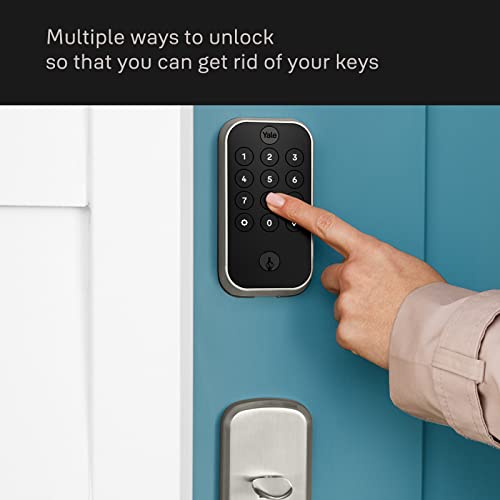
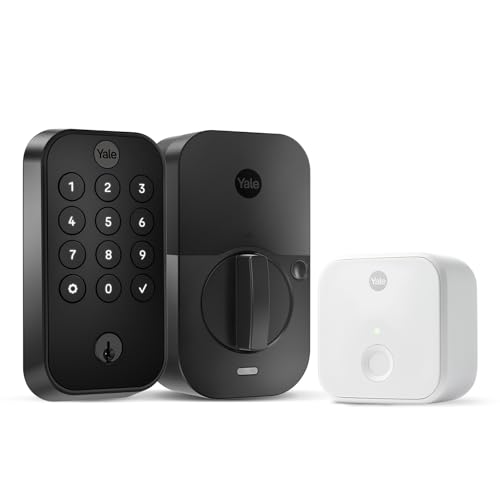
The Yale Assure Lock 2 Keypad arrives packaged as a complete exterior door retrofit kit that includes all critical mechanical components, remote networking modules, and mounting hardware required for standard deadbolt preparation.
- Exterior push-button keypad assembly finished in weather-resistant Black Suede
- Interior motorized deadbolt escutcheon and mounting plate
- Physical backup cylinder with standard physical cut keys
- Yale Connect Wi-Fi Bridge for indoor 120-volt wall outlet installation
- Yale DoorSense surface-mount and flush-mount magnetic sensor kit
- Standard exterior door deadbolt strike plate and latch mechanism
- Installation hardware packet and step-by-step instruction guide
- Yale Access software integration with automated activity logging and temporary guest passcode scheduling
Hardware Durability and Physical Key Backup Integration
Hardware durability on an exterior entrance depends heavily on the physical materials of the keypad and the mechanical design of the drive mechanism. The push-button interface on this lock utilizes individual tactile buttons with integrated backlighting, avoiding the touch-capacitive glass screens that often become unresponsive in freezing rain, direct sunlight, or humid coastal environments. The housing features a weather-resistant Black Suede exterior designed to withstand moisture and seasonal temperature fluctuations on exterior entryways. The push-button layout delivers positive tactile clicks that help visitors verify each digit entered, which dramatically cuts down on accidental passcode lockouts caused by incomplete screen taps.
The primary safety net of this model is the integrated mechanical keyway, making the yale assure lock 2 physical key backup a critical asset for risk-conscious property managers. Many smart locks completely omit physical keyholes to achieve sleeker industrial designs, leaving owners vulnerable if internal circuit boards fail or batteries deplete unexpectedly. By including a traditional cylinder below the push-button array, this deadbolt retains full mechanical operation. If moisture intrusion damages the electronic board, or if a guest ignores low-power warnings until the motorized actuator stalls, the door can still be unlocked with a standard physical key without hiring an emergency locksmith.
While buyers exploring modern biometric locks might evaluate the yale assure lock 2 touch with wi-fi for fingerprint scanning convenience, physical push buttons remain far more predictable for high-turnover guest access. Visiting family members, cleaning crews, and rental guests do not need to register biometric data or struggle with wet fingers on a scanner. They simply press their assigned numeric code or insert the backup key, keeping entry frictionless and mechanically straightforward.
Yale Connect Wi-Fi Bridge Reliability and App Connectivity
Remote management for this deadbolt is handled through an external module rather than an internal Wi-Fi chip embedded inside the lock body. The included Yale Connect Wi-Fi Bridge plugs directly into a standard indoor wall outlet positioned within Bluetooth range of the deadbolt. The bridge establishes a persistent link to your home 2.4 GHz wireless network and converts outgoing cloud commands into local Bluetooth signals sent to the lock. Splitting the network communication off from the deadbolt chassis protects the lock from high battery draw while maintaining continuous cloud visibility for remote authorization.
Assessing the yale connect wifi bridge reliability is essential for property hosts who rely on prompt guest code management. The bridge functions reliably when placed within an unobstructed line of sight ten to fifteen feet from the deadbolt. However, because it operates strictly on 2.4 GHz frequencies, congestion from neighboring networks, thick plaster walls, or dual-band routers that merge SSID bands can cause occasional dropped connections. When the bridge loses its link, remote locking and offsite code creation temporarily pause, although guests already possessing valid codes can still enter locally via the keypad. Homeowners operating the yale assure lock 2 for rentals must ensure their router maintains a stable 2.4 GHz channel so the Yale Access app and partner platforms like Airbnb can continuously sync booking schedules without interruption.
For buyers who do not need remote code provisioning from afar, installing a local-only lock like the yale assure lock 2 bluetooth avoids the need for an external wall bridge entirely. However, rental hosts managing properties from a distance depend on the Wi-Fi bridge to monitor check-ins through the Yale Access activity feed, confirm that turnover teams have arrived on time, and instantly revoke entry permissions when a stay concludes.
DoorSense Sensor Alignment and Auto-Lock Performance
Standard electronic auto-lock mechanisms rely entirely on basic countdown timers, throwing the deadbolt after a set duration regardless of where the door actually rests. This frequently results in extended deadbolts striking the door frame, marring the woodwork, chipping paint, and straining the motorized gearbox. The yale assure lock 2 doorsense system solves this mechanical hazard by utilizing a dedicated magnetic position sensor. DoorSense continuously tracks the magnetic proximity between the door edge and the door frame, verifying the leaf is completely seated in the jamb before triggering the motor.
Achieving dependable performance with DoorSense requires strict attention to physical alignment during installation. The kit includes both an external surface-mount housing and a clean flush-mount cylinder that inserts directly into a bored hole in the door frame. If the door tends to bounce back against dense weatherstripping, or if seasonal humidity causes the door frame to shift out of plumb, DoorSense may report the door as open or ajar even when gently latched. Ensuring that the primary door latch draws the door tight against the jamb is vital to ensure DoorSense accurately registers closure and fires the deadbolt without physical interference.
When properly calibrated in the Yale Access application, DoorSense provides peace of mind for absent owners. It eliminates frantic inquiries to guests asking if they remembered to lock up when departing for the day. Once the door clicks shut, the app records the closed status and locks the deadbolt automatically. If a guest leaves the door cracked open, the system alerts the host via app notifications instead of blindly driving the steel bolt against the door casing.
Power Management, Battery Life Expectations, and Troubleshooting
The lock chassis is entirely battery powered, ensuring that property access remains functional during neighborhood electrical blackouts. The manufacturer listing does not specify the exact battery chemistry or cell count for this specific model, though smart deadbolts in this category conventionally run on standard replaceable alkaline cells. Because Wi-Fi processing is offloaded to the wall-powered Yale Connect bridge, the lock only powers its internal motor, keypad LEDs, and low-energy Bluetooth radio. This architecture delivers superior longevity compared to all-in-one deadbolts that integrate power-hungry Wi-Fi radios directly inside the interior thumbturn assembly.
Real-world yale assure lock 2 battery life is predominantly governed by mechanical deadbolt resistance rather than keypad usage. If a door is poorly hung, requiring the user to push, pull, or lift the door handle to align the deadbolt with the strike pocket, the internal electric motor consumes excessive current attempting to overcome the physical friction. Over several months, this continuous mechanical drag rapidly exhausts the power supply. Homeowners can maximize cell life by boring the strike plate hole deep enough to allow the bolt to extend completely freely without contacting any timber or metal edges.
When operating problems occur, knowing basic yale assure lock 2 troubleshooting procedures saves expensive emergency service calls. The most common operational issue is motor binding, signaled by an audible error tone and an incomplete throw indicator in the Yale Access app. This is almost universally resolved by loosening the deadbolt mounting screws slightly, realigning the interior escutcheon, and enlarging the strike plate pocket. If the Wi-Fi bridge reports an offline state after a router reboot, power-cycling the bridge module and verifying the 2.4 GHz network band restores the connection. In situations where batteries deplete completely without warning, the owner simply inserts the physical backup key to gain immediate mechanical access. Those evaluating alternative motorized deadbolt solutions can also review the aqara smart lock u200, which uses a different mechanical retrofit configuration to drive existing deadbolt hardware.
Yale Assure Lock 2 Keypad Pros and Cons
Pros
- Physical key backup prevents accidental electronic lockouts
- Separate Wi-Fi bridge preserves lock battery longevity
- DoorSense prevents deadbolt extension when door is ajar
- Tactile push-button keypad provides positive entry feedback
- Broad integration with Alexa, Google Assistant, and SmartThings
Cons
- Requires a dedicated indoor outlet near the entryway
- Restricted exclusively to 2.4 GHz wireless networks
- Push-button interface lacks biometric fingerprint scanning
Is the Yale Assure Lock 2 Keypad Worth It
For vacation rental hosts, boutique motel operators, and property managers, the Yale Assure Lock 2 Keypad represents a dependable, practical security investment. The combination of automated code generation, guest booking software integration, and the activity feed eliminates the administrative headache of physical lockboxes. Most importantly, the inclusion of a mechanical keyway removes the threat of total system lockout caused by dead batteries or software glitches, protecting hosts from midnight emergency maintenance trips.
For standard residential homeowners, the value proposition depends on personal entry habits and aesthetic preferences. The physical push buttons are remarkably easy for children and elderly family members to operate, providing dependable tactile feedback that touchscreen keypads cannot match. Integration with Amazon Alexa, Google Assistant, and SmartThings allows straightforward inclusion into existing home automation routines, such as locking doors automatically when an evening arming routine begins.
Ultimately, this smart deadbolt package hits the sweet spot between mechanical reliability and modern digital access. While you must dedicate a nearby indoor electrical outlet for the 2.4 GHz bridge, the resulting battery preservation, robust weather resistance, and fail-safe key override make it an exceptionally sound hardware choice for any primary entrance. Reviewing the complete yale assure lock 2 keypad specs confirms that Yale designed this hardware package for real-world reliability rather than unnecessary complexity, answering the question: is yale assure lock 2 worth it with a clear yes for rental hosts and active families alike.
FAQ
How does the physical key backup function if the batteries die completely?
The physical key cylinder operates entirely mechanically, bypassing all internal electronics, motors, and wiring. If the batteries inside the interior escutcheon fail completely, inserting and turning the included physical cut key retracts the deadbolt manually just like a conventional, non-smart deadbolt.
Does managing guest codes through the Yale Access app require a paid subscription?
Basic access management through the Yale Access app does not require a recurring monthly subscription fee. Owners can generate temporary access codes, set entry schedules, view the real-time activity feed, and link compatible rental partner applications using the included hardware and standard software features.
What Wi-Fi network band is required to connect the Yale Connect bridge?
The included Yale Connect Wi-Fi Bridge requires a dedicated 2.4 GHz Wi-Fi network connection and works within the United States and Canada. It does not support 5 GHz wireless networks. If your router uses a combined single network name for both bands, you may need to configure a dedicated 2.4 GHz guest network for initial pairing.
Can visitors still unlock the door during an electrical blackout or internet outage?
Yes. The deadbolt itself runs on internal battery power, so local keypad access continues to work even if neighborhood electricity is knocked out. While the Wi-Fi bridge will temporarily lose power and pause remote cloud updates, any valid PIN codes previously synchronized to the lock remain stored in local memory and can be entered on the push-button keypad.
Why is DoorSense important when setting up the automated locking feature?
DoorSense uses magnetic proximity to verify that the door is physically shut inside the jamb before the motor extends the deadbolt. Without DoorSense, an automated lock operates on a simple timer, which can cause the bolt to extend while the door is standing open, leading to damaged door frames and scratched hardware when the door swings shut.


