As Amazon Associates, we earn from qualifying purchases. This means we may receive a small commission at no extra cost to you if you click through and make a purchase.
Dimensions
0.88 x 2.5 x 3.75 inches
Connectivity
Bluetooth
Material
Metal, Stainless Steel
Lock Type
Touchscreen
Full spec sheet 6 more rows from the listing
| Brand | Yale |
| Keypad Surface | Back-Lit Keypad with matte fingerprint-resistant finish |
| Security Rating | ANSI/BHMA Grade 2 certified |
| Regional Support | U.S. and Canada only |
| Remote Access | Requires Yale Wi-Fi Smart Module (sold separately) |
| Special Features | Auto-Lock, Back-Lit Keypad, Passcode Unlock, Touchscreen, Weather Resistant |
Replacing standard keys with electronic access requires balancing convenience against real lockout risks. The Yale Assure Lock 2 Bluetooth eliminates the physical keyway entirely, relying on a backlit keypad, encrypted Bluetooth connectivity, and proximity-based auto-unlocking. Designed for homeowners seeking clean hardware without brass keys, this model provides a modern entry point into home security. However, key-free deadbolts require complete trust in motorized mechanics and battery health, making it critical to understand how this hardware behaves under daily use.
Before purchasing, careful buyers must understand what living with an offline Bluetooth deadbolt involves. Operating without a network bridge shapes how you grant visitor codes, monitor door security, and resolve electronic glitches. In this guide, we evaluate lockout vulnerabilities on key-free doors, test offline Bluetooth stability, review DoorSense alignment demands, and determine whether this keyless model provides the long-term reliability safety-conscious homeowners expect.
What You Get With the Yale Assure Lock 2 Bluetooth


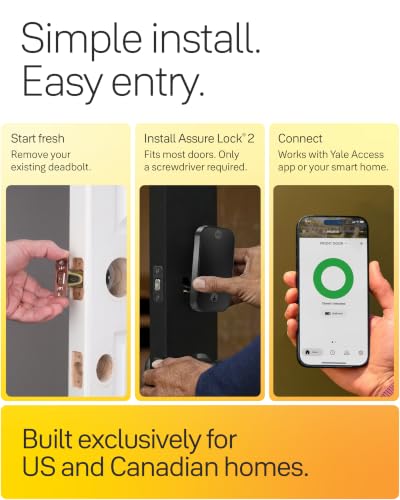
The deadbolt is engineered for standard residential doors across the United States and Canada, supplying motorized security alongside several local credential options. The manufacturer listing identifies several core hardware features and digital capabilities:
- Key-free access via numeric keypad, the Yale Access app, or an Apple Watch
- Hands-free entry using optional Auto-Unlock proximity detection
- Integrated DoorSense sensor hardware to confirm when the door is closed
- Automatic deadbolt engagement through DoorSense-guided Auto-Lock
- Local code storage supporting unlimited shareable guest credentials
- ANSI/BHMA Grade 2 certified metal and stainless steel construction
- Backlit matte keypad designed to resist surface fingerprints
- Encrypted short-range Bluetooth communication for localized control
Physical Lockout Vulnerabilities and Keyless Operation
The primary concern with any keyless deadbolt is what happens when electronics fail. Because this design eliminates the physical keyway, lock picking and bumping attacks are impossible, but you also surrender the mechanical fail-safe of turning a brass key. Evaluating the yale assure lock 2 lock out risk means acknowledging that entry relies on battery voltage, motorized throws, and circuit integrity. If the deadbolt motor jams against an unaligned frame, no exterior keyhole exists to unlock the door manually.
Fortunately, the yale assure lock 2 keypad deadbolt stores entry credentials locally rather than on a remote server. This local memory ensures internet outages will not block entry when using your PIN. The matte keypad surface also resists fingerprint oil retention, preventing onlookers from deciphering your code. However, homeowners who prefer carrying a physical backup key may want to consider a keyed alternative like the yale assure lock 2 keypad before fully eliminating traditional keyways.
Preventing power-related lockouts requires strict attention to battery alerts. As power diminishes, motorized deadbolts display sluggish throws and warning indicators before failing completely. The listing does not specify whether this trim includes external emergency battery terminals for jumpstarting a dead lock. Consequently, ignoring low-power warnings in the Yale Access app is a genuine risk. Proactive battery replacement remains essential when operating a key-free entrance.
Offline Bluetooth Stability and App Control
Operating the yale assure lock 2 without wifi module limits smart functions to direct Bluetooth connections between your phone and the door hardware. Within short range, the Yale Access app delivers responsive unlocking, setting management, and code distribution. Because Bluetooth communication uses encryption and pairs directly to your mobile device or Apple Watch, access credentials stay localized, avoiding third-party server outages and keeping permissions off cloud networks.
However, relying strictly on Bluetooth introduces real-world limitations. Without a Wi-Fi bridge, remote unlocking from away from home is impossible, preventing you from admitting guests or delivery couriers while away. Smart lock owners may also encounter occasional connectivity hiccups requiring yale assure lock 2 bluetooth troubleshooting, such as delayed pairing handshakes after phone software updates. When approaching the door, Bluetooth pairing can take a few seconds, making the physical keypad the faster daily choice.
For households tracking visitor arrivals, offline operation also limits activity monitoring. While you can issue unlimited codes via the app, reviewing access logs requires syncing your phone near the lock over Bluetooth. To view access history remotely or receive instant arrival alerts, you must purchase the separate Yale Wi-Fi Smart Module or choose a fully connected lock like the yale assure lock 2 touch with wi-fi.
DoorSense Setup and Auto-Lock Reliability
Auto-locking deadbolts frequently jam when timed mechanisms fire while the door is slightly open, damaging door frames or straining motors. The yale assure lock 2 doorsense setup avoids this by using an integrated magnetic sensor on the door frame. DoorSense confirms the door is shut flush before triggering the Auto-Lock mechanism. This verification ensures the deadbolt only extends when aligned with the strike plate, preventing unnecessary motor wear.
Even with magnetic sensors, seasonal weather shifts can compromise latching. Temperature and humidity changes cause wooden doors to expand or sag, shifting the deadbolt relative to the strike opening. If the deadbolt binds against the strike plate, the motor may stall before fully locking. While smart locks like the nest x yale lock utilize different door detection systems, any automated deadbolt requires a smooth-latching door that closes flush without manual pushing or pulling.
The lock also provides an optional Auto-Unlock feature designed to retract the deadbolt as you approach. Assessing yale assure lock 2 auto unlock reliability requires understanding that the lock combines geofencing with Bluetooth detection. The system detects when you enter your neighborhood and unlocks once your phone establishes Bluetooth contact at the porch. While convenient when carrying items, background smartphone battery restrictions can occasionally delay the signal, making keypad entry a necessary backup.
Physical Durability and Power Demands
Hardware specifications confirm the deadbolt is built for dependable exterior security. The lock holds an ANSI/BHMA Grade 2 certification, verifying strong resistance against mechanical forced entry and repeated cycling. Constructed from metal and stainless steel, the compact exterior housing measures 0.88 inches deep, 2.5 inches wide, and 3.75 inches high in Black Suede. Weather-resistant construction protects interior circuits from rain and dust, while the backlit matte keypad ensures visibility without revealing oily fingerprint smudges.
Managing yale assure lock 2 battery life is generally simpler with a Bluetooth lock than with Wi-Fi alternatives. Low-power Bluetooth radios sleep until awakened by a paired device or keypad press, drawing far less energy than locks maintaining constant network connections. However, motor friction caused by a misaligned door will accelerate battery drain, as the motor works harder to force the deadbolt into a tight strike hole during every locking cycle.
The listing does not specify exact battery longevity in months or the battery cell type. Nevertheless, proper maintenance habits directly impact lifespan. Ensuring your door latches without friction prevents motorized binding and preserves battery capacity. Monitoring battery warnings in the companion app and changing cells promptly ensures the deadbolt throws reliably through changing weather.
Yale Assure Lock 2 Bluetooth Pros and Cons
Pros
- ANSI/BHMA Grade 2 certified physical security
- Fingerprint-resistant matte backlit keypad
- DoorSense prevents locking while door is open
- Local code memory operates without internet
- Compact metal and stainless steel construction
Cons
- Remote access requires separate Wi-Fi module
- No physical keyway for mechanical backup
- Operates exclusively in the US and Canada
Is the Yale Assure Lock 2 Bluetooth Worth It
Deciding if the Yale Assure Lock 2 Bluetooth is worth it depends on your comfort with eliminating physical keys and your remote access needs. For buyers wanting a sleek, key-free door with Grade 2 deadbolt security, this model delivers solid performance. Its offline Bluetooth architecture protects against remote server outages, while local code storage and DoorSense auto-locking ensure dependable day-to-day security for family and guests.
However, this lock is not ideal for those who require remote access out of the box. Unlocking the door for service workers while away requires purchasing the separate Wi-Fi module. Additionally, buyers who feel anxious about having no physical keyway may prefer a keyed alternative or an advanced biometric model like the yale assure lock 2 plus to preserve multiple access methods.
For homeowners satisfied with localized control, quick keypad access, and sturdy construction, this keyless deadbolt offers a reliable security upgrade. As long as your door is properly aligned and you respond promptly to battery alerts, it eliminates lost keys while maintaining dependable residential security.
FAQ
Can I unlock the Yale Assure Lock 2 Bluetooth away from home?
No. The standard Bluetooth model operates exclusively over short-range radio connections. To lock, unlock, or monitor guest activity remotely, you must purchase the separate Yale Wi-Fi Smart Module.
What are the primary Yale Assure Lock 2 Bluetooth specs?
Documented yale assure lock 2 bluetooth specs include ANSI/BHMA Grade 2 certification, metal and stainless steel construction, and dimensions of 0.88 x 2.5 x 3.75 inches. It features a backlit touchscreen keypad, weather-resistant sealing, DoorSense technology, and Bluetooth encryption, and operates exclusively in the U.S. and Canada.
How do I perform Yale Assure Lock 2 Bluetooth troubleshooting if the connection fails?
Basic yale assure lock 2 bluetooth troubleshooting involves toggling Bluetooth off and on, restarting the Yale Access app, and standing close to the lock. If wireless communication lags, you can unlock the door immediately using your passcode on the backlit keypad.
Does the lock work outside of the United States and Canada?
No. The manufacturer listing explicitly states that this product will not operate outside the United States and Canada. Buyers in other countries should choose locks certified for their specific regional door standards.
How does DoorSense prevent accidental lockouts?
DoorSense uses a magnetic sensor on the door frame to verify the door is completely closed before engaging Auto-Lock. This prevents the deadbolt from throwing while the door is open, avoiding frame damage and accidental lockouts during quick trips outside.


