As Amazon Associates, we earn from qualifying purchases. This means we may receive a small commission at no extra cost to you if you click through and make a purchase.
Heating System
Dual Boiler & Thermoblock Hybrid
Reservoir Capacity
1.7 Liters (Detachable)
Portafilter Size
58mm Standard
Housing Material
Stainless Steel
Full spec sheet 6 more rows from the listing
| Brand / Manufacturer | Turin Grinders |
| Model Number | TCRM3007LSS-100 |
| Operation Mode | Semi-Automatic |
| Power Consumption | 1500 Watts (120 Volts) |
| Product Dimensions | 12.5" D x 14.63" W x 8.75" H |
| Coffee Input Format | Ground Coffee |
When evaluating the Turin Legato V2 for a home espresso setup, buyers generally want to know whether its hybrid heating architecture delivers commercial-style extraction stability without the mechanical fragility common to entry-level appliances. Manufactured under model number TCRM3007LSS-100 by Turin Grinders, this semi-automatic machine targets home baristas who want prosumer specifications—specifically an industry-standard 58mm group, digital temperature management, and immediate steam readiness—without the footprint or complexity of massive commercial hardware. For daily espresso drinkers, the combination of a dedicated brew boiler and an auxiliary thermoblock addresses the thermal compromises seen in single-boiler machines, allowing seamless transitions between pulling shots and texturing milk. However, achieving dependable performance over years of daily service requires understanding how these internal components handle sustained heat and water exposure.
In this detailed review, we examine the engineering design, performance specifications, and long-term care requirements of the machine to determine if it fits your counter. We analyze how the dual heating system behaves under heavy extraction schedules, assess the real-world utility of the 58mm portafilter, highlight vulnerable internal components, and outline the maintenance routines required to prevent operational failures. If you are debating an upgrade from entry-level single-boiler machines such as the breville duo temp, this breakdown provides the technical context needed to make an informed investment.
What You Get With the Turin Legato V2

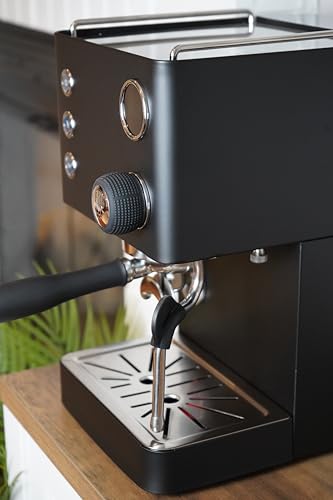
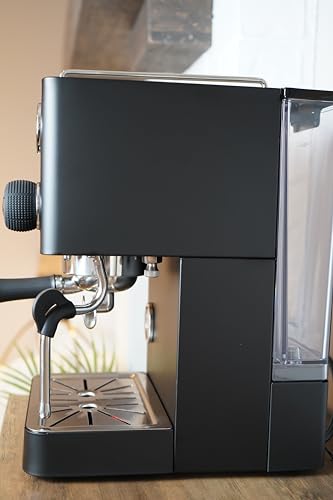

The machine ships with a complete set of foundational accessories intended to get you extracting immediately, provided you already own an espresso-capable grinder for whole beans or use pre-ground coffee.
- Turin Legato Espresso Machine (Model TCRM3007LSS-100)
- 58mm double-spouted portafilter
- Heavy 58mm metal tamper
- Single-shot filter basket
- Double-shot filter basket
- Small bottle of backflush powder
- Detachable 1.7-liter water reservoir
- Removable stainless steel drip tray
Thermal Stability and the Dual Boiler Thermoblock Design
The primary technical highlight of this machine is its hybrid heating architecture, which pairs a dedicated single brew boiler with an auxiliary thermoblock. Traditional single-boiler espresso appliances require you to brew your shot, switch into steam mode, and wait for the entire boiler to ramp up to steaming temperatures before texturing milk. Once steaming is finished, the boiler must be manually purged and cooled down before pulling another shot without scalding the grounds. By isolating brew water in an independent boiler and routing milk frothing duties through a fast-heating thermoblock, this machine eliminates temperature cycling delays and allows simultaneous brewing and steaming.
Thermal precision during the extraction phase is managed by an integrated PID temperature control module. A PID controller continuously measures water temperature in the brew boiler and applies micro-adjustments to the heating element, preventing the wide temperature swings typical of basic mechanical thermostats. This continuous monitoring ensures that the water striking the coffee puck remains stable from the first second of the shot to the last, which is essential for extracting balanced sweetness and acidity from light and medium roast coffees. Compact thermoblock-only machines like the casabrews 5418 pro prioritize speed, but a dedicated water reservoir inside a true boiler provides superior thermal mass during water delivery.
Operating a 1500-watt heating system on a standard 120-volt household circuit requires disciplined power distribution. The internal electronic controller must manage power delivery between the brew boiler element, the thermoblock, and the vibration pump. In homes with older wiring or shared kitchen circuits, running the machine alongside other high-wattage appliances can trip circuit breakers. When provided with clean power, the system delivers rapid warm-up times and predictable temperature recovery between back-to-back drinks.
Standard 58mm Portafilter Compatibility and Workflow
Many consumer espresso machines use proprietary 50mm to 54mm portafilters that restrict your accessory choices and force a narrow, deep puck geometry. The inclusion of a commercial-standard 58mm portafilter on this machine represents a significant advantage for baristas looking to build a tailored workflow. A wider 58mm basket creates a thinner coffee bed for standard dosage sizes, promoting even water dispersion across the surface and reducing the likelihood of severe channeling during high-pressure extraction.
Because the group head conforms to the standard 58mm footprint, owners are not locked into stock components. While the machine includes a double-spouted portafilter, heavy tamper, and single and double baskets, you can easily incorporate aftermarket bottomless portafilters, precision distribution tools, puck screens, and calibrated tampers from third-party manufacturers. This versatility gives intermediate users room to refine their technique without outgrowing the physical dimensions of the machine.
Extraction control is enhanced by a programmable shot timer and built-in pre-infusion functionality. The programmable shot timer allows you to automate volumetric or timed delivery, giving you clear visual feedback on flow rate and recipe execution. During the pre-infusion stage, the machine gently introduces low-pressure water to saturate the puck before applying full extraction pressure. This initial wetting expands the coffee grounds evenly, filling microscopic voids in the puck and yielding a richer crema with fewer extraction defects compared to rapid, high-pressure semi-automatic systems like the ninja luxe cafe mini espresso machine.
Long-Term Reliability and Potential Failure Points
Assessing mechanical durability requires looking past the stainless steel exterior to the interior plumbing and electro-mechanical layout. A machine combining a boiler, a thermoblock, high-pressure valves, and digital controls naturally has more potential failure modes than a basic manual appliance. The three-way solenoid valve, which relieves pressure from the group head immediately after a shot ends, is constantly exposed to pressurized coffee oils and fines. If backflushing is neglected, this valve can stick open or closed, leading to a dripping group head or total loss of brew pressure.
The thermoblock line represents another critical vulnerability over several years of use. Because thermoblocks force water through narrow internal coils heated to elevated temperatures, dissolved calcium and magnesium minerals precipitate rapidly onto the interior walls. If hard water is run through the 1.7-liter reservoir, mineral buildup will choke steam output long before the primary boiler exhibits signs of distress. In severe cases, scale buildup creates thermal hotspots that burn out the thermoblock heating trace prematurely.
Vibration and seal fatigue are also routine considerations for semi-automatic hardware. The internal pump creates ongoing mechanical vibration during every extraction, which places stress on internal silicone tubing connections and brass fittings over time. Similarly, the rubber group head gasket hardens under continuous thermal exposure, requiring periodic inspection and eventual replacement to maintain a watertight seal against the 58mm portafilter ears.
Routine Maintenance and Descaling Demands
Maintaining extraction quality and extending machine lifespan demands an uncompromised cleaning routine. Because the unit features a true three-way solenoid valve that evacuates water into the removable drip tray after each shot, regular chemical backflushing is non-negotiable. The inclusion of backflush powder in the original packaging highlights this requirement. Using a blind basket and backflush detergent clears stale coffee oils and microscopic grounds out of the group head passage and solenoid valve, preventing bitter residue from tainting future extractions.
Descaling the dual-circuit heating system requires a targeted approach. The 1.7-liter detachable water reservoir makes mixing and filling descaling solutions straightforward, but you must flush the chemical solution thoroughly through both the group head and the independent steam wand. Descaling the brew boiler removes mineral scale from the immersion heating element, while flushing the thermoblock ensures the high-pressure steam pathway remains unobstructed. Failing to rinse thoroughly can leave acidic descaling agents inside the boiler, accelerating corrosion of internal seals and brass components.
Daily preventative care is equally important to minimize deep cleaning downtime. The shower screen should be wiped and flushed immediately after knocking out the spent puck to prevent grounds from baking onto the metal dispersion plate. The steam wand must be purged and wiped down with a damp cloth immediately following milk texturing to keep dried milk proteins from clogging the steam tip orifice. Regular cleaning of the detachable reservoir prevents biofilm formation, ensuring clean water intake for the pump.
Turin Legato V2 Pros and Cons
Pros
- Dedicated boiler and thermoblock for simultaneous brewing and steaming
- Standard 58mm commercial portafilter group head
- Integrated PID digital temperature controller
- Programmable shot timer and automated pre-infusion
- Sturdy stainless steel exterior construction
- Detachable 1.7-liter water reservoir
Cons
- Requires dedicated espresso grinder for optimal results
- Demands regular backflushing and water hardness management
- 1500-watt power draw requires dedicated circuit headroom
Is the Turin Legato V2 Worth It
The machine represents an outstanding platform for dedicated home baristas who want prosumer temperature stability and commercial 58mm accessory compatibility without paying the steep premium of traditional twin-boiler setups. If your daily routine involves producing multiple milk-based drinks in rapid succession, the simultaneous brewing and steaming capability offered by the boiler-thermoblock hybrid eliminates the workflow bottlenecks found on standard entry-level machines.
However, this semi-automatic system is not ideal for casual users seeking an automated, hands-off appliance. Operating it effectively requires a standalone espresso-grade grinder, precise puck preparation skills, and a commitment to routine chemical backflushing and water quality management. Those unwilling to manage mineral hardness or clean group head valves will find the operational overhead frustrating.
For the coffee enthusiast prepared to maintain their equipment, the combination of digital PID temperature control, programmable pre-infusion, standard 58mm geometry, and a solid stainless steel body provides an exceptional foundation for cafe-quality espresso at home. It bridges the divide between basic entry appliances and heavy prosumer machines with thoughtful engineering and versatile functionality.
FAQ
Can you brew espresso and steam milk simultaneously on this machine?
Yes. Because the machine utilizes a dedicated brew boiler for espresso extraction and an independent thermoblock for steam production, both systems can operate at the same time without cross-temperature interference.
What is the benefit of the 58mm portafilter size?
A 58mm portafilter is the commercial standard used in professional espresso bars. It allows for a wider, shallower coffee bed that improves extraction consistency and makes the machine compatible with a vast selection of aftermarket commercial baskets, tampers, and distribution tools.
How does the PID temperature controller improve espresso quality?
The PID controller uses digital feedback to monitor and adjust water temperature inside the brew boiler in real time. This minimizes temperature variance during the shot, ensuring consistent extraction and preventing sour or burnt flavors caused by thermal instability.
What does the pre-infusion feature do?
Pre-infusion introduces low-pressure water to saturate the dry coffee puck before the pump ramps up to full extraction pressure. This allows the coffee grounds to swell evenly, reducing the risk of water channeling through weak spots in the puck and improving crema production.
What routine maintenance is required out of the box?
Routine care involves wiping and purging the steam wand after every use, flushing the group head after pulling shots, performing periodic chemical backflushes using the included powder, and descaling the reservoir and heating circuits according to local water hardness.