As Amazon Associates, we earn from qualifying purchases. This means we may receive a small commission at no extra cost to you if you click through and make a purchase.
Package Dimensions
10.63 x 6.85 x 2.09 inches
Item Weight
7.4 ounces
Cutting Diameter Range
1 to 12 inches
Compatible Materials
Fabric, felt, vinyl, and paper
Full spec sheet 6 more rows from the listing
| Product Name | TrueCut 360 Circle Cutter |
| Manufacturer | The Grace Company |
| Model Number | TCCC |
| Safety Features | Removable protective blade safety cap |
| Template Requirement | None (integrated adjustable pivot arm) |
| Replacement Blade Model | The listing does not specify standard replacement blade numbers |
When projects require cleanly cut circles, relying on scissors, paper templates, or inverted bowls quickly leads to jagged borders and inconsistent diameters. Finding an accurate TrueCut 360 Circle Cutter provides quilters, sewists, and paper crafters with a dedicated rotary circle cutter for fabric designed to produce clean circles from 1 to 12 inches across. Unlike standard rotary cutters that follow a straight acrylic ruler, this specialized tool rotates around an anchored center point to trace a continuous circumference without wrinkling or lifting the material. For makers tired of uneven seam allowances and tedious hand trimming, it promises speed and repeatability.
In this comprehensive true cut 360 circle cutter review, we examine whether this tool maintains precision during repetitive studio work or if mechanical flex and fabric drag compromise your cuts. We inspect the mechanical pivot stability, blade tracking tolerances, locking latch security, and how the cutter handles diverse materials such as quilting cotton, felt, vinyl, and cardstock. The following sections outline the complete truecut 360 circle cutter specs, what comes packaged in the box, essential technique requirements, and long-term maintenance considerations so you can determine if it meets your crafting standards.
What You Get With the TrueCut 360 Circle Cutter


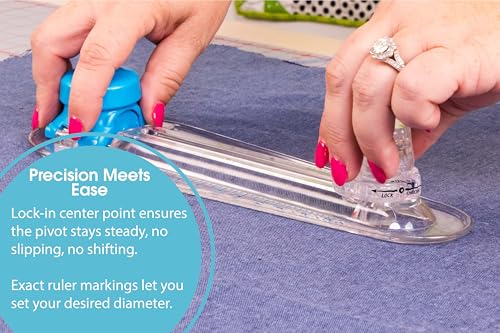
The TrueCut 360 Circle Cutter comes engineered as an all-in-one rotary cutting system designed to eliminate external templates and pattern tracing. Straight out of the package, the tool provides the primary cutting components needed to measure and cut circular arcs across light to medium craft mediums.
- The Grace Company circle cutter main assembly featuring a calibrated radial measurement beam for 1 to 12-inch diameters.
- Integrated precision rotary cutting blade engineered to glide smoothly without bunching or lifting delicate textiles.
- Removable protective safety cap designed to shield fingers during transport and cover the blade edge during storage.
- Wide center pivot base engineered to secure the circle center without piercing holes through your fabric.
- Quick-set locking mechanism designed to maintain consistent radius calibration during full 360-degree rotations.
Mechanical Pivot Stability and Preventing Fabric Shifting
The central mechanical challenge of any circular rotary tool is maintaining absolute stability at the center point while applying rotational torque. When you sweep a rotary blade through woven cotton or synthetic cloth, the friction between the cutting wheel and the fibers pushes laterally against the center anchor. If the anchor point slips even a fraction of a millimeter, your intended circle will fail to close evenly, resulting in an egg shape or a stepped seam allowance. The TrueCut 360 Circle Cutter addresses this by using a wide, flat pivot foot rather than a sharp center pin, preserving delicate threads while requiring proper downward friction to remain stationary.
Achieving clean results without truecut 360 fabric slipping depends heavily on user technique and mat preparation. Because the pivot foot relies on surface contact rather than a fabric-piercing needle, you must apply firm, vertical downward force directly over the central hub with your non-dominant hand. While freehand tools like the gyro cut pro craft cutting tool allow fluid wrist-guided turns on open paper sheets, this circular cutter demands strict radial discipline. Any lateral rocking of the central hub mid-cut causes the fabric to bunch, distorting the weave and pulling the line off course.
Surface grip beneath your material is equally critical. Using a clean self-healing rotary mat with reliable traction ensures the backing fabric will not slide as the blade rolls over the circumference. On slick textiles like polished cotton, sateen, or smooth vinyl, taking slow, deliberate turns with consistent downward pressure prevents the shear force of the rotating arm from dragging the material out of true.
Blade Tracking Tolerances and Alignment Integrity
Even if your pivot point remains completely motionless, cutting precision hinges on the alignment of the rotary wheel. The blade must sit precisely tangent to the circular path of travel. If the blade carriage suffers from mechanical play or tilts out of vertical plumb, the cutting wheel scuffs the fabric diagonally instead of slicing cleanly through the weave. Maintaining truecut 360 blade alignment guarantees that the cutting edge meets the textile at a perpendicular angle across the entire sweep.
The TrueCut 360 Circle Cutter uses a specialized housing designed to glide over fabric surfaces without snagging loose threads or lifting pliable materials. When properly aligned, the blade cleanly severs fibers in a single continuous pass. However, crafters must resist the urge to lean sideways on the outer rotating handle. Pressing outward or canting the handle introduces torque on the adjustment bar, which can cause the rotary blade to track off-radius and leave behind uncut threads or ragged intersections where the circle completes.
Blade sharpness directly affects tracking fidelity, as a dull blade requires heavier downward force that invites carriage flex. While the manufacturer supplies a precision blade with the unit, the product data notes that the listing does not specify the exact blade diameter or steel alloy. When sourcing truecut 360 replacement blades, users must seek genuine Grace Company circle cutter components to guarantee correct carriage fit, as standard generic rotary blades may not align with the specialized safety shield and mounting spindle.
Locking Calibration Under Repetitive Fabric Pressure
Quilters and production crafters often need dozens of identical circles for complex applique blocks, yo-yos, or decorative pennants. In high-volume settings, the measurement locking mechanism must resist vibration, rotational strain, and downward force without drifting off the target diameter. The TrueCut 360 Circle Cutter features a calibrated measurement beam extending from 1 to 12 inches, held in place by a quick-locking sliding clamp.
To calibrate the cut, the operator positions the carriage along the graduated beam and depresses the locking latch to clamp the arm. While the lightweight 7.4-ounce polymer frame makes the tool effortless to maneuver, polymer tracks will flex if subjected to excessive force on the outer perimeter. Reviewing the standard truecut 360 circle cutter instructions emphasizes that downward force belongs entirely on the central pivot hub, while the outer arm should receive only smooth, rotational guidance. Forcing the outer blade down into resistant mats can cause the slider to creep, altering the radius midway through a project.
Preserving exact cut dimensions is vital for quilters aiming to avoid unnecessary textile waste. Craft enthusiasts who examine the true cost of fabric consumption know that miscut patches quickly lead to discarded yardage and inflated project expenses. Verifying that the locking arm is seated securely before beginning each cut protects valuable materials and ensures identical block sizing from the first cut to the last.
Material Versatility Across Quilting, Felt, Vinyl, and Paper
The Grace Company rates this circle cutter for a diverse collection of craft mediums, ranging from woven yardage to dense felt, craft vinyl, and cardstock. Successfully managing these materials requires adjusting rotational speed and pressure to suit the density of the medium. Using the truecut 360 for quilting demands a light, fluid rotation that respects the bias stretch of woven cotton, ensuring the blade cleanly divides crosswise threads without pulling the grainline out of alignment.
Denser substrates like wool craft felt or flexible sheet vinyl behave differently under a rotary edge. Felt provides excellent friction against the cutting mat and resists bias stretching, making it one of the easiest materials to cut cleanly on the first pass. Sheet vinyl, by comparison, presents surface resistance that requires a very sharp blade edge and steady vertical pressure to prevent the rolling wheel from skidding over the synthetic coating. For multi-layer cuts, the safest approach is working with single layers or firmly pressed dual layers to keep rotational drag within manageable limits.
Safety is integrated directly into the tool’s functional geometry. Because circular rotary arms swing through wide arcs where resting fingers might linger, the TrueCut 360 incorporates a removable protective safety cap over the blade. This shield must be pulled off prior to setting the tool on your mat and should be clipped back into place immediately after finishing. The cap protects the cutting edge from accidental dulling against hard table surfaces while preventing severe lacerations during storage.
TrueCut 360 Circle Cutter Pros and Cons
Pros
- Cuts circles from 1 to 12 inches
- Flat pivot leaves no central pinhole
- Protective safety cap shields the blade
- Glides without lifting or bunching fabric
- Works on fabric, felt, vinyl, and paper
Cons
- Requires steady downward pressure to prevent slipping
- Adjustment arm can flex under uneven force
- Listing omits specific replacement blade part numbers
Is the TrueCut 360 Circle Cutter Worth It
Determining whether is the truecut 360 worth it comes down to how frequently your projects require circular components and how much you value clean, repeatable edges. For quilters producing applique discs, crafters assembling felt flowers, or sewists drafting round bag panels, this tool saves substantial time compared to hand-cutting with shears. Eliminating the need to draft individual cardboard templates or purchase expensive metal dies makes the tool a highly practical addition to an active cutting table.
On the other hand, crafters who only cut circular shapes once or twice a year may find the physical footprint and necessary learning curve unwarranted. The tool requires deliberate technique: keeping the central anchor pressed vertically, rotating the beam smoothly without lateral canting, and working on an appropriately tacky mat. If you expect an automated or completely slip-free experience without practicing your hand placement, the initial trial period may feel demanding.
For dedicated textile artisans and mixed-media crafters willing to master the two-handed pivot method, the TrueCut 360 Circle Cutter provides dependable accuracy without puncturing your work. It creates crisp, repeatable arcs across a versatile 1 to 12-inch range, protecting fingers with an integrated guard while delivering professional results across cotton, felt, vinyl, and paper.
FAQ
Does the TrueCut 360 Circle Cutter poke a hole in the center of the fabric?
No, the TrueCut 360 uses a smooth, flat pivot base rather than a central needle or pointed pin. It holds its position through downward pressure against the cutting mat, leaving your fabric completely free of center punctures.
What range of circle sizes can the TrueCut 360 cut?
The tool is designed with a calibrated adjustment beam that cuts circles from 1 inch up to 12 inches in diameter, accommodating small decorative appliques as well as large quilt blocks.
Can the TrueCut 360 cut multiple layers of fabric simultaneously?
While the precision rotary blade has the sharpness to cut stacked cotton, cutting multiple layers increases rotational resistance and fabric drift. For maximum accuracy, cutting single layers or thoroughly pressed double layers is strongly recommended.
What materials is the TrueCut 360 capable of cutting?
The manufacturer listing specifies that the TrueCut 360 is suitable for cutting fabric, craft felt, sheet vinyl, and paper, making it versatile across sewing, quilting, and papercraft projects.
Does the TrueCut 360 Circle Cutter include a blade guard?
Yes, the tool comes equipped with a removable protective safety cap that covers the rotary blade during storage and handling to keep fingers safe from the cutting edge.


