As Amazon Associates, we earn from qualifying purchases. This means we may receive a small commission at no extra cost to you if you click through and make a purchase.
Series
Squier Affinity Series Stratocaster
Body Wood
Poplar (Top, Back, and Core)
Neck Wood
Maple
Fingerboard Wood
Laurel
Full spec sheet 6 more rows from the listing
| Brand | Fender |
| Pickup Configuration | S-S-S (Three Single-Coil Pickups) |
| Bridge Assembly | 2-Point Tremolo Bridge |
| Tuning Machines | Sealed Die-Cast with Split Shafts |
| Strings | Nickel Steel |
| Hand Orientation | Right |
Shoppers evaluating the Squier Affinity Stratocaster frequently want to know whether an entry-tier instrument can endure daily practice, deliver reliable hardware performance, and maintain pitch without constant mechanical headaches. Built with a 3-Color Sunburst poplar body, a slim maple neck, and an Indian laurel fingerboard, this model represents Fender’s updated approach to a classic design. For players seeking an authentic Stratocaster feel and versatile tone without an overwhelming investment, this guitar offers a capable foundation, provided you understand the routine maintenance and setup procedures required of any solid-body electric instrument.
Whether you are researching a squire affinity stratocaster for a student or selecting a dependable backup instrument for home recording, evaluating long-term reliability is essential. Factory instruments produced in high volume inevitably encounter climate shifts during transit, leading to common setup hurdles that influence string action and playability. This comprehensive review examines the physical build quality, tuning machine stability, two-point bridge mechanics, factory setup realities, and official warranty protections to help you determine if this model fits your playing demands.
What You Get With the Squier Affinity Stratocaster


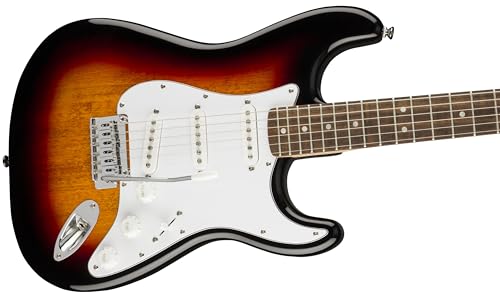
The instrument arrives as a standalone electric guitar engineered with classic Fender styling and modern hardware improvements designed to simplify maintenance.
- Poplar solid body finished in gloss 3-Color Sunburst
- Three Squier single-coil pickups in a standard S-S-S configuration
- Synchronized 2-point tremolo bridge with adjustable saddles
- Slim and comfortable “C”-shaped maple neck
- Laurel wood fingerboard fitted with standard frets
- Sealed die-cast tuning machines featuring vintage-style split shafts
- Fender two-year limited warranty protecting against manufacturing defects
Hardware Quality and the 2-Point Tremolo Bridge
The mechanical performance of an electric guitar depends heavily on bridge and tuner stability, and the squier affinity stratocaster hardware quality reflects noticeable engineering refinements. A major enhancement on this model is the squier affinity strat 2-point tremolo bridge, which departs from the vintage six-screw design. By rocking against two hardened pivot posts, the bridge encounters substantially less friction across its pivot points. This reduction in resistance allows smoother tremolo bar operation and encourages the bridge plate to return to zero pitch more reliably following light vibrato use. However, because the listing does not specify a high-mass steel sustain block, acoustic resonance and overall sustain remain modest compared to professional custom instruments.
The tuning pegs also demonstrate thoughtful component selection. Equipped with sealed die-cast tuning machines with split shafts, the guitar provides clean string anchoring. The split-shaft design allows players to trim the string, push the end directly into the center cavity, and wind the post neatly. This vintage mechanism avoids exposed sharp wire ends and virtually eliminates string slippage at the post. Furthermore, sealed die-cast housings protect internal lubrication from airborne debris and temperature fluctuations, ensuring consistent gear mesh over years of use. Much like using a dedicated testing instrument like the klein scout pro to verify electrical reliability in cabling networks, inspecting mechanical hardware tolerances ensures your guitar functions without unpredictable mechanical failures.
Despite these hardware improvements, the physical mechanics of a floating tremolo system introduce natural operational tradeoffs. Bending a single string pulls counter-tension against the rear bridge springs, causing the other strings to dip slightly flat during heavy double-stop bends. Players who prioritize rock-solid tuning stability over vibrato expression often tighten the rear claw screws inside the back cavity. Pulling the bridge plate flat against the poplar body eliminates floating movement, transforming the assembly into a hardtail-style bridge that maintains pitch even through forceful rhythm strumming.
Tuning Stability and Factory Setup Issues
When investigating real-world squier affinity stratocaster reliability, tuning retention ranks among the most significant concerns for prospective buyers. The squier affinity strat tuning stability is primarily governed by friction points along the string path rather than mechanical tuner slippage. The factory nut is molded from synthetic material, and string slots that are cut slightly narrow can pinch the nickel steel strings. When a string catches in the nut during a bend, it fails to return to tension, resulting in flat or sharp notes. Applying a small amount of graphite lubricant to the nut slots during an initial string change resolves the majority of these pitch discrepancies.
Every prospective owner should also anticipate addressing standard squier affinity stratocaster setup issues upon arrival. Mass-manufactured instruments endure extended shipping across varying climate zones, which alters neck relief and string clearance. Straight from the factory, the guitar may display minor fret buzz on lower strings or higher-than-desirable action across the upper frets. Adjusting the truss rod inside the maple neck, setting the individual saddle heights, and fine-tuning bridge intonation are ordinary maintenance tasks required to bring the guitar into optimal playing condition.
These setup requirements should not be interpreted as manufacturing defects, but rather as routine calibration common to all stringed instruments. When hobbyists assemble components using mechanical kits like design and drill systems, proper alignment of each individual fastener is necessary to achieve smooth mechanical interaction. Similarly, electric guitars require balanced tension between string gauges, the maple neck, and the rear bridge claw springs to achieve peak playability and flawless intonation.
Poplar Body and Neck Longevity
The timber selection on the Squier Affinity Stratocaster balances physical endurance, ergonomic comfort, and environmental stability. The body is carved from poplar, a medium-density wood that Fender has utilized for decades as a practical alternative to alder. Poplar provides consistent density across the slab, preventing structural soft spots. The body is crafted with a thin and lightweight profile, significantly reducing the physical strain placed on a player’s back and shoulders during extended standing performances or seated study sessions.
The neck structure utilizes solid maple formed into a slim and comfortable “C”-shaped neck profile, paired with a laurel fingerboard. Maple exhibits superior resistance to torsional twisting and lateral bowing, preserving neck straightness through seasonal humidity changes. Laurel provides a durable, smooth playing surface that withstands fingernail friction and string abrasion over years of daily fretting. Because laurel can ship somewhat dry from manufacturing facilities, treating the fingerboard with fretboard oil during an early string replacement enhances its natural grain and prevents surface dryness.
Factory fretwork on the modern Affinity series shows respectable consistency, although seasonal fret sprout remains a possibility in arid environments. When winter heating systems lower indoor humidity, the laurel fingerboard wood can shrink slightly, causing the metal fret ends to feel somewhat sharp along the neck edges. This common physical occurrence is easily managed with gentle fret-dressing files or a humidified storage environment, ensuring the neck profile stays smooth and comfortable throughout the year.
Warranty Coverage and Manufacturing Support
Purchasing an entry-tier instrument often involves risks regarding long-term factory support, but the squier affinity stratocaster warranty offers dependable consumer protection. Fender provides a 2-Year Warranty covering defects in materials and craftsmanship from the original retail purchase date. This two-year warranty period substantially exceeds the short 30-day or 90-day coverage windows typical of unbranded online guitars, ensuring that serious flaws like defective truss rods, neck warps, or cracked body glue joints are remedied by the manufacturer.
Nevertheless, buyers must understand the scope and limitations of this factory warranty. Fender explicitly excludes routine wear-and-tear items, such as fret wear, string corrosion, finish checking, and normal setup adjustments like bridge intonation or neck relief tweaks. The warranty also requires that the instrument be purchased through an authorized dealer, and owners must retain their original purchase receipts to validate any warranty claims. Defective electronic components, such as a dead pickup coil or a malfunctioning five-way selector switch, are fully covered under warranty terms.
Beyond formal warranty policies, the Fender ecosystem ensures unmatched availability of replacement components. Because Stratocaster dimensions are an industry-wide standard, sourcing replacement pickguards, potentiometers, tremolo springs, and output jacks is straightforward. Unlike proprietary boutique instruments that require custom parts or specialized tooling like an artilume t1 foldable laser engraver to fabricate bespoke fittings, any worn hardware on this Affinity Stratocaster can be replaced using widely available off-the-shelf components.
Squier Affinity Stratocaster Pros and Cons
Pros
- Smooth 2-point tremolo bridge assembly
- Sealed die-cast tuners with split shafts
- Slim and comfortable C-shaped neck profile
- Thin and lightweight poplar body
- Backed by a Fender two-year warranty
Cons
- Factory setup typically requires initial adjustments
- Single-coil pickups produce natural electrical hum
- Listing does not specify an included gig bag
Is the Squier Affinity Stratocaster Worth It
Answering whether the squier affinity strat is worth it requires assessing your musical goals, patience for maintenance, and technical background. For new players, choosing a squier affinity strat for beginners represents a smart, low-friction entry point into electric guitar. The lightweight poplar body, comfortable “C”-shaped maple neck, and versatile three single-coil pickup layout give novices an authentic playing experience that encourages frequent practice without imposing excessive physical strain.
For intermediate players and home recording hobbyists, this instrument serves as a highly adaptable modification platform. The standardized body routing, clean neck pocket fit, and reliable sealed tuners mean players can easily install upgraded pickups, higher-grade potentiometers, or locking saddles down the line. While the factory single-coil pickups produce classic Stratocaster chime and percussive clarity, they do introduce standard single-coil electrical hum under high-gain amplification, which can be controlled using a noise-reduction pedal or proper audio shielding.
On the other hand, experienced players expecting pristine, custom-shop fret dressing and zero setup effort straight out of the shipping carton should adjust their expectations. Any instrument built within this production tier requires a proper bench setup to play at its absolute best. When calibrated properly, the Squier Affinity Stratocaster delivers outstanding physical ergonomics, dependable tuning mechanics, and proven structural longevity that justify its place in any player’s musical journey.
FAQ
Is the Squier Affinity Strat for beginners?
Yes, the Squier Affinity Stratocaster is well-suited for beginners due to its slim “C”-shaped neck profile and lightweight poplar body. These structural dimensions reduce hand fatigue and shoulder strain, making long practice sessions comfortable for developing players.
How can I improve squier affinity strat tuning stability?
You can enhance tuning stability by lubricating the synthetic nut slots with graphite, thoroughly stretching new nickel steel strings, and tightening the bridge claw springs inside the back cavity to deck the 2-point tremolo bridge flat against the body.
What pickup configuration does this Stratocaster use?
The guitar features three Squier single-coil pickups in a standard S-S-S configuration. Controlled by a five-way selector switch with master volume and two tone knobs, it offers five distinct tonal combinations suited for rock, blues, pop, and funk.
Does the Squier Affinity Stratocaster come with a case or gig bag?
The listing does not specify an included gig bag, case, amplifier, guitar cable, or picks. Buyers receive the guitar fitted with nickel steel strings and the 2-point tremolo assembly, meaning protective bags and practice gear must be purchased separately.
What does the 2-year warranty cover on the Squier Affinity Stratocaster?
The Fender 2-Year Warranty covers defects in manufacturing, structural materials, and internal electronics, including faulty pickup windings or defective tuners. It does not cover normal fret wear, string breakage, cosmetic scuffs, or routine setup adjustments.


