As Amazon Associates, we earn from qualifying purchases. This means we may receive a small commission at no extra cost to you if you click through and make a purchase.
Wireless Connectivity
2.4GHz Wi-Fi band only
Maximum Suction Power
20,000 Pa (listed as 20 meters maximum suction)
Dust and Tank System
Self-emptying dust containment with automatic dock water refilling
Battery Life
Lithium-ion battery providing up to 242 minutes of runtime
Reviewing the published roborock curv2 flow specs reveals substantial suction capacity and specialized cleaning hardware engineered for demanding automated floor care routines.
Full spec sheet 6 more rows from the listing
| Mopping System | SpiraFlow real-time self-cleaning roller mop with 8 hydration points |
| Carpet Clearance Lift | 15 mm automated mop elevation with physical Roller Shield barrier |
| Main Brush Configuration | Dual Zero-Tangle counter-rotating short roller system |
| Navigation and Mapping | PreciSense LiDAR with Reactive AI obstacle recognition (200+ objects) |
| Dock Wash and Dry Temperatures | 167°F hot-water mop washing and 131°F heated air drying |
| Supported Voice Control | Built-in Hello Rocky voice control, Amazon Echo, and Google Home |
The Roborock Qrevo Curv 2 Flow targets homeowners seeking aggressive wet-and-dry floor maintenance without constant daily intervention, but evaluating long-term roborock curv 2 flow reliability requires looking past headline performance figures. Featuring a powerful 20,000 Pa suction motor, an active self-cleaning roller mop mechanism, and an all-in-one thermal docking station, this model promises to tackle dried spills and stubborn floor debris autonomously. For cautious shoppers, the primary question is whether its intricate moving parts, motorized mop lifting assemblies, and multi-stage cleaning dock can endure daily household wear without frequent mechanical jams or water leakage.
This comprehensive breakdown examines how these automated assemblies behave over prolonged usage cycles, focusing specifically on mechanical stress points, water routing integrity, and routine maintenance demands. We analyze the motorized roller scraper, the dual tangle-free brush rollers, the automated carpet barrier, and the high-temperature washing station to help you determine if this robotic setup delivers dependable automated cleaning or introduces unnecessary maintenance overhead to your weekly schedule.
What You Get With the Roborock Qrevo Curv 2 Flow


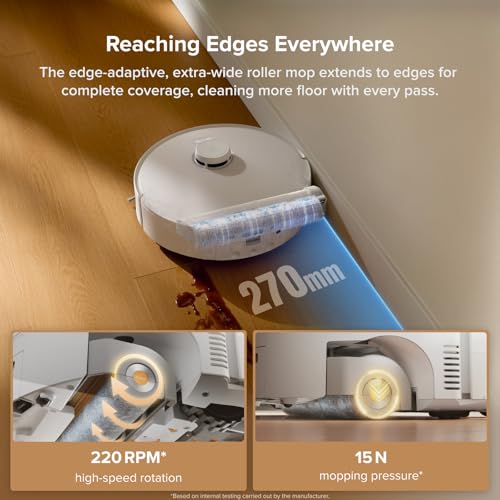

The package provides a complete automated cleaning station alongside the robotic floor cleaner, packaging core operational components directly in the box for straightforward initial assembly.
- Roborock Qrevo Curv 2 Flow robot vacuum and mop unit
- Multifunctional docking station with integrated clean and dirty water management
- Pre-installed disposable dust collection bag within the dock canister
- SpiraFlow real-time self-cleaning roller mop system with edge-adaptive positioning
- Dual Zero-Tangle brush roller mechanism certified by SGS
- High-temperature hot-water mop washing system reaching up to 167°F
- Hot-air drying module operating at 131°F to sanitize the roller
- Standard modular power cord
- Instruction guide detailing assembly, network pairing, and maintenance procedures
SpiraFlow Roller Mop Mechanics and Maintenance Overhead
Unlike traditional rotary dual-disc pads found across the wider roborock qrevo series robot vacuum family, this machine implements the cylindrical roborock curv2 flow mop roller. The SpiraFlow mechanism distributes clean water continuously through eight individual hydration nozzles directly along the roller cylinder. Simultaneously, an internal mechanical scraper presses firmly against the spinning sleeve to extract soiled liquid into an internal waste channel before the damp surface contacts your flooring again. This continuous flushing action prevents dirty wash water from smearing across hard floors during extended runs.
From a mechanical standpoint, introducing an active scraper and eight pressurized water jets creates specific roborock curv2 flow maintenance issues that cautious buyers must anticipate. While the continuous scraping action keeps the roller surface fresh across large rooms, viscous liquids like sticky syrups or drying sauces can gradually accumulate along the scraper lip. Over weeks of daily duty, fine grit and dried residues can lodge between the scraper blade and the cylinder housing, requiring owners to manually unlatch the roller cover, inspect the scraper edge, and wipe away hardened sludge to maintain uniform water extraction.
Water quality also plays a pivotal role in the long-term reliability of this mopping system. Because the eight precision hydration points utilize narrow distribution apertures, households situated in regions with hard municipal tap water face the realistic risk of mineral scale buildup over time. If these microscopic dispensing holes become partially obstructed by calcium or magnesium deposits, water application becomes uneven, leading to dry streaks on hardwood or tile. Maintaining this system requires users to check the spray outlets regularly and ensure clean water reservoirs remain free of sediment.
Multifunctional Dock Durability and Potential Failure Points
The automated docking station serves as the operational nerve center for the machine, handling dust evacuation, clean water replenishment, high-heat pad cleaning, and warm-air dehydration. During automated servicing cycles, the base flushes the roller with hot water reaching up to 167°F, which effectively emulsifies grease, liquid spills, and food residue. Following the wash routine, the dock engages a 131°F heated air blower to dry the roller thoroughly, preventing the growth of foul-smelling mildew and bacterial odors within the damp mop fibers.
Despite these convenient features, complex dock architectures introduce realistic roborock curv2 flow dock problems if maintenance protocols are neglected. The internal wash tray incorporates drainage channels and particulate filters to route dirty runoff directly into the wastewater tank. Over extended operation, pet dander, lint, and food solids settle in the base tray basin, creating a thick sludge that can clog the suction evacuation port. Although the detachable base makes manual cleaning straightforward, owners who neglect periodic tray rinsing risk experiencing drainage backups, foul basin odors, and dirty water overflow onto surrounding floor areas.
The electrical and mechanical complexity of high-temperature wash components warrants careful consideration compared to simpler designs like the roborock curv x dock architecture. Integrating a dedicated internal water heating element subjected to repeated thermal cycles places continuous stress on internal seals, thermistors, and high-pressure fluid valves. If limescale forms within the internal boiler lines or pump assemblies, heating efficiency can degrade, potentially throwing temperature sensor faults that require customer support intervention. Buyers should plan on using filtered water whenever possible to prolong the lifespan of these internal thermal channels.
Carpet Protection and Dual Zero-Tangle Pet Hair Management
Safeguarding interior rugs while running an active wet roller requires flawless synchronization between optical sensors and physical lifting assemblies. The roborock curv2 flow carpet protection suite combines two distinct defense layers: an automated 15 mm mop carriage lift and a deployable physical barrier known as the Roller Shield. When the machine transitions from tile or laminate onto carpeting, ultrasonic acoustic sensors detect the surface shift instantly, triggering the chassis motor to hoist the damp roller 15 millimeters upward while extending the Roller Shield underneath to eliminate incidental carpet fiber contact.
Managing shed fur in active households represents another major challenge, but the machine targets roborock curv 2 flow pet hair buildup through its certified Dual Zero-Tangle system. Rather than relying on a single bristle bar that quickly snares long human hair or animal undercoats, this model uses dual counter-rotating short rubber rollers. The opposing rotational forces channel loose hair strands outward toward collection chambers, yielding an SGS-certified zero percent entanglement rating. This engineering configuration significantly reduces the chore of snipping wound hair from the brush core compared to older robotic floor cleaning hardware.
However, cautious consumers must account for the moving components within the deployable Roller Shield mechanism. Any robotic system featuring motorized shields and multi-axis linkage arms introduces additional potential points of mechanical fatigue. If the robot routinely encounters deep high-pile rugs, thick shag runners, or uneven thresholds, mechanical resistance against the lifting actuator increases over time. Keeping the undercarriage clear of trapped debris and ensuring that rugs do not exceed the 15 mm clearance height is vital to avoid straining the small internal lift motors.
Navigation Sensors and Long-Term Software Reliability
Autonomous navigation relies on a sophisticated sensor suite pairing roof-mounted PreciSense LiDAR with front-facing Reactive AI structured light cameras. The system identifies more than 200 distinct object classifications under varying illumination levels, permitting smooth transit around power cables, scattered pet toys, and narrow table legs. The robot continuously updates real-time three-dimensional environmental layouts, storing up to four unique floor plans for multi-level residences while executing targeted dry and wet strategies via SmartPlan 3.0 app integration.
When operational glitches arise, common roborock curv 2 flow troubleshooting primarily revolves around optical cleanliness and wireless networking configurations. Because the Reactive AI vision array utilizes optical sensors and structured light emitters on the front bumper, dust accumulation, fingerprint smudges, or splash water droplets on the protective plastic window can diminish object detection precision. If the optical lens becomes obscured, the robot may exhibit overly timid navigation or misclassify normal floor patterns as physical obstacles, making regular lens wiping a required maintenance duty.
Another crucial connectivity constraint involves the wireless radio, as the hardware strictly supports 2.4GHz Wi-Fi networks and cannot connect to dedicated 5GHz bands. In modern households operating mesh Wi-Fi networks with merged single-SSID frequency bands, initial pairing can occasionally stall if the router attempts to force the robot onto a 5GHz connection. Setting up a dedicated 2.4GHz guest network or temporarily separating wireless frequency bands during setup remains the most dependable method to ensure uninterrupted app communication, scheduled automation runs, and seamless Hello Rocky voice command response.
Roborock Qrevo Curv 2 Flow Pros and Cons
Pros
- Massive 20,000 Pa suction for deep debris removal
- SpiraFlow self-cleaning roller mop with active scraping
- Certified zero-tangle dual roller system for pet hair
- 15 mm automatic mop lift with physical Roller Shield
- High-temperature 167°F mop washing and hot-air drying
Cons
- Requires dedicated 2.4GHz Wi-Fi network band
- Complex roller assembly demands periodic manual inspection
- Detachable dock base accumulates residue over time
Is the Roborock Qrevo Curv 2 Flow Worth It
Answering whether is roborock curv2 flow worth it depends entirely on your household layout, floor compositions, and willingness to perform routine mechanical hygiene. If your residence features predominantly hard surfaces such as tile, hardwood, and engineered stone interrupted by low-to-medium pile area rugs, this machine delivers unmatched convenience. The combination of intense 20,000 Pa suction, active roller mopping, automated shield protection, and hands-off 167°F hot-water dock sanitization handles demanding floor messes that overwhelm basic spinning-mop alternatives.
Conversely, shoppers searching for a completely hands-off cleaning appliance that never demands attention may find this advanced hardware overly complex. The intricate SpiraFlow scraper channel, the eight hydration emitters, the motorized Roller Shield barrier, and the docking wash tray all require periodic inspection and manual rinsing. If you reside in a small apartment with mostly high-pile carpeting, or if you prefer simpler vacuum-only machines that lack liquid pumps and thermal elements like the roborock saros 20x, the added maintenance overhead of this dual-wet cleaning system may not fit your lifestyle.
For large homes, multi-pet spaces, and busy environments where sticky kitchen spills and heavy pet shedding occur regularly, the Roborock Qrevo Curv 2 Flow represents a powerful cleaning investment. Provided you maintain the dock drainage tray, wipe optical sensors routinely, and keep the roller scraper free from hardened buildup, the system provides remarkably autonomous cleaning performance that justifies its operational upkeep.
FAQ
How does the SpiraFlow roller mop prevent cross-contamination on carpets?
The system utilizes an automated 15 mm mop carriage lift combined with a physical Roller Shield barrier that deploys underneath the wet roller cylinder. When ultrasonic sensors detect carpeting or rugs, the lifting assembly elevates the roller while the shield seals off the damp surface, preventing wet fibers from touching carpet pile during transit.
What should you do if the dock fails to empty or wash properly?
Inspect the detachable dock base to verify that dirty water drainage channels and debris filter screens are free of accumulated hair, food particles, or sediment. Additionally, confirm that clean and dirty water containers are seated securely with lids sealed airtight, and verify that the disposable dust bag inside the dry evacuation bay is not completely packed.
Does the Dual Zero-Tangle brush handle human and pet hair without jams?
Yes, the machine uses two counter-rotating short rubber rollers certified by SGS for a zero percent hair entanglement rate. The rotational mechanics and high-power suction guide loose strands toward the ends and directly into the vacuum intake, preventing hair from tightly wrapping around the main brush core.
Can the Roborock Qrevo Curv 2 Flow connect to 5GHz Wi-Fi networks?
No, the robot vacuum hardware only supports 2.4GHz Wi-Fi frequency bands. If your home network uses a dual-band mesh router broadcasting a unified network name, you must ensure the 2.4GHz band is accessible or configure a dedicated 2.4GHz network channel to enable initial pairing and app controls.
How often does the detachable dock base require manual cleaning?
Under standard daily cleaning routines in homes with pets or heavy dirt tracking, the detachable wash tray should be removed and rinsed every two to four weeks. Washing the tray under running tap water clears out residual sediment and sludge, preventing drainage blockages and unpleasant dock odors.