As Amazon Associates, we earn from qualifying purchases. This means we may receive a small commission at no extra cost to you if you click through and make a purchase.
Maximum Suction Power
36,000 Pa digital motor
Chassis Clearance Height
3.13 inches ultra-slim profile
Battery Cell and Runtime
Lithium-ion pack with up to 180 minutes of cleaning time
Obstacle Clearance System
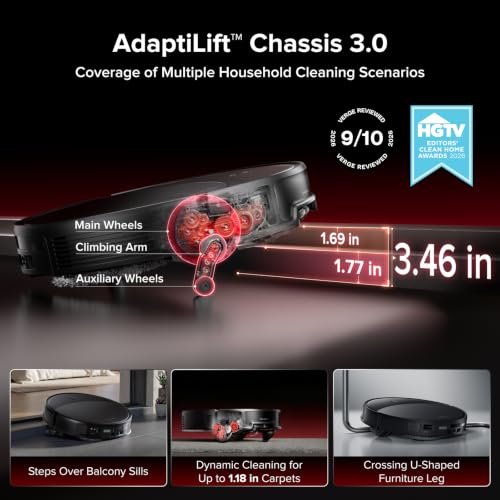
AdaptiLift Chassis 3.0 (up to 3.46 in double-layer steps, 1.18 in carpet)
Full spec sheet 6 more rows from the listing
| Navigation and Mapping Hardware | StarSight Autonomous System 2.0 with 3D ToF sensors and RGB camera |
| Obstacle Avoidance Capability | Visual and depth recognition of over 300 distinct obstacle types |
| Dock Thermal Washing and Drying | 212°F hot water mop cleaning and 131°F hot air pad drying |
| Automated Debris Collection | Up to 65 days of hands-free dock dust storage |
| Operating Sound Output | 55 dB operational noise level |
| Corner and Perimeter Cleaning | FlexiArm extending side brush and motorized mop arm |
Deciding whether to invest in the Roborock Saros 20X requires looking past headline performance figures and examining how its intricate mechanical systems behave across months of continuous operation. As automated floor care hardware evolves, manufacturers increasingly rely on dynamic motorized assemblies to conquer difficult architectural obstacles like raised room transitions, thick floor coverings, and cramped under-furniture spaces. The Saros 20X represents this peak in active mechanical design, integrating high-clearance motorized lifts and dual articulating brushes to deliver exceptional coverage. However, elevating hardware capabilities through mechanical articulation inevitably introduces additional physical wear surfaces, motor stress, and long-term upkeep demands that every cautious homeowner must weigh against daily convenience.
This technical breakdown investigates the physical architecture, cleaning systems, and long-term upkeep requirements of the platform. We examine the official roborock saros 20x specs, evaluate how the dynamic suspension handles structural thresholds, inspect the sensor array and obstacle classification mechanics, and assess the thermal demands of the high-temperature RockDock base station. By looking closely at real-world stress points, filtration upkeep, and pet hair extraction behavior, this review provides a clear look at whether this machine delivers durable, worry-free utility or demands too much maintenance attention over the course of its operating life.
What You Get With the Roborock Saros 20X



The standard retail packaging provides the essential robot hardware alongside the primary multi-stage servicing dock and baseline maintenance accessories needed to set up an automated floor cleaning cycle right out of the box.
- Roborock Saros 20X disc-shaped robot vacuum and mop unit
- Multifunctional RockDock base assembly with integrated thermal washing and drying systems
- Detachable RockDock ramp base for robot docking alignment
- Standard alternating-current power cable rated for 120-volt operation
- Factory-installed washable air filter housed inside the dust containment system
- Heavy-duty washable mopping pad designed for extended perimeter scrub coverage
- Illustrated instruction guide detailing setup protocol, app pairing, and initial docking requirements
AdaptiLift Chassis Longevity and Mechanical Wear
The standout mechanical feature of the machine is the roborock saros 20x adaptilift chassis, a motorized suspension system engineered to elevate the entire underside assembly on demand. In homes separated by high thresholds, traditional vacuum chassis scrape against trim strips or stall out completely. This dynamic suspension actively lifts the drive wheels and undercarriage, granting clearance over double-layer steps up to 3.46 inches high and maneuvering across plush carpets as deep as 1.18 inches. By raising the frame while maintaining ground seal pressure, the platform prevents the drive assembly from bottoming out on uneven hardwood joints, tile transitions, and heavy room dividers.
From an engineering and reliability standpoint, introducing an active motorized lifting mechanism adds mechanical vulnerability. Unlike fixed-axle designs, an active lift mechanism subjects internal gears, lead screws, and linkage pivot arms to repeated vertical strain each time the robot transitions between varying floor heights. If fine debris, grit, or pet dander enters the exposed wheel wells, the lifting actuators can experience increased friction. While fixed-chassis alternatives like the roborock qrevo s5v robot vacuum and mop, flexiarm edge mopping, 12,000pa suction, dual zero-tangle s avoid motorized chassis lifts entirely, the Saros 20X accepts this added physical complexity to achieve top-tier threshold clearance across multi-surface floor plans.
Over extended ownership periods, maintaining overall roborock saros 20x reliability depends on regular physical inspection of these suspension cavities. If you live in an environment with dense grit, beach sand, or heavy shedding, the lifting track requires periodic manual brushing to prevent debris accumulation from binding the lifter assembly. Homeowners must understand that while the dynamic chassis eliminates the frustration of stranded robots on tall thresholds, it demands occasional preventative cleaning that standard fixed-wheel vacuum platforms do not require.
Sensor Array Vulnerabilities and Obstacle Avoidance
Autonomous navigation on the unit relies on the StarSight Autonomous System 2.0, which combines high-speed 3D Time-of-Flight (ToF) distance sensors with an integrated front-facing RGB visual camera. This hardware combination gives the roborock saros 20x obstacle avoidance system the ability to identify and categorize more than 300 different household items, ranging from loose charging cables and slippers to stray pet toys. By processing depth maps alongside optical imagery in real time, the robot plots smooth bypass paths around temporary floor clutter rather than nudging items across the room.
Despite its precision, complex optical and depth-sensing hardware introduces specific operational sensitivities. Optical lenses mounted low to the floor operate directly in the path of airborne dust, floor grease, and moisture. If the front camera glass or ToF windows become coated with fine film or dried mop splatter, obstacle detection accuracy diminishes, which can lead to false obstacle detections or unexpected path deflections. Unlike raised navigational turrets found on traditional laser platforms such as the roborock x1 lidar system, the flush-mounted bumper sensors on the Saros 20X require routine wiping with a soft microfiber cloth to retain clear optical performance.
Software-level interaction through the Roborock App lets owners designate curtains and soft furniture skirts so the bumper does not misclassify hanging fabric as solid walls. Furthermore, the built-in RGB camera provides remote pet monitoring functionality. While this feature offers peace of mind, homeowners who prioritize strict network privacy must decide whether an active, room-level camera streaming through cloud services fits their household preferences.
Suction Power Performance and Handling Pet Hair
Debris extraction is driven by an ultra-high-output digital motor delivering a roborock saros 20x suction power rating of 36,000 Pa. This elevated suction level is engineered to draw deeply embedded soil, fine dander, and trapped crumbs out of hardwood micro-gaps and heavy floor textiles. To complement this extreme airflow, the underside cleaning assembly incorporates a dual anti-tangle system designed to segment long strands of hair before they can bind tightly around the roller bearings, feeding them directly into the primary suction chute.
For multi-pet households, using the roborock saros 20x for pet hair yields clean carpet fibers and clear baseboard edges, but high-power operation involves definite practical trade-offs. Running the digital motor at maximum suction capacity increases thermal load and accelerates battery depletion, reducing runtime well below the 180-minute baseline achieved in balanced cleaning modes. When working over thick carpets up to 1.18 inches deep, the motor works hard against the dense pile resistance. While traditional upright stick extractors like the roborock f25 ultra rely on wide manual air paths, the Saros 20X compresses heavy airflow into a compact undercarriage chassis.
The compact internal air path means that the washable filter must capture substantial volumes of fine pet dander and suspended dust. If the washable filter is not thoroughly cleaned and dried on a regular schedule, airflow restriction can cause the 36,000 Pa motor to pull harder against an obstructed chamber, elevating operating noise above the standard 55 dB baseline. Maintaining this high suction output over several years demands strict owner discipline regarding filter washing and routine brush cavity clearing.
Dock Maintenance Demands and Thermal Systems
The multifunctional RockDock is designed to minimize hands-on cleaning by handling dust bin evacuation, mop pad cleaning, and drying automatically. What sets this dock apart is its high-temperature cleaning system, utilizing 212°F hot water washing to dissolve oily residues, kitchen grease, and sticky tracked-in messes from the mopping textile. Following the wash cycle, the dock initiates 131°F hot air drying across the pad assembly, circulating heated air to prevent bacterial development and musty odors, while holding up to 65 days of dry debris in an internal bag.
However, running high-temperature thermal cycles introduces specific roborock saros 20x dock maintenance obligations that owners cannot ignore. Heating water to boiling temperatures within a closed domestic appliance inevitably accelerates mineral and scale buildup over time, particularly in homes with hard tap water. If descaling maintenance is neglected, scale deposits can clog the internal heating lines or water delivery jets. Furthermore, the one-piece cleaning tray collects slurry, hair fragments, and wet sediment washed from the pad, creating a thick sludge that eventually requires manual scrubbing to prevent dock drainage failures.
Owners should also inspect the sealing gaskets around the clean and dirty water tanks periodically to maintain an airtight hydraulic vacuum. If a tank lid is seated improperly, the station cannot pull wastewater from the basin into the recovery container, causing clean water to pool in the bottom tray. While the automated dock handles daily washing chores reliably, it trades daily pad washing for weekly tray maintenance and regular tank rinsing.
Warranty Coverage and Long-Term Ownership Support
Evaluating potential roborock saros 20x problems requires reviewing the official manufacturer support framework and warranty protection. Advanced consumer robotics feature an intricate mix of digital micro-controllers, wireless antennas, high-torque drive motors, and internal thermal components. When any of these elements encounter a defect, having clear warranty coverage and accessible service parts is critical to avoid premature hardware retirement.
Regarding the roborock saros 20x warranty, the listing does not specify the exact manufacturer warranty duration, terms of coverage, or regional warranty support conditions. Potential buyers should verify warranty duration and policy specifics with authorized retailers before purchasing. High-stress parts like motorized lift linkages, FlexiArm extension gears, and dock thermal heaters face continuous mechanical stress, making dependable replacement part availability essential for long-term ownership.
For buyers who value multi-year durability, maintaining a digital backup of floor maps, keeping firmware updated, and conducting basic quarterly preventative maintenance—such as clearing wheel axles and inspecting water seals—will help minimize electronic and mechanical faults. Taking a proactive approach to hardware care ensures that unexpected component wear does not cut short the service life of this high-investment appliance.
Roborock Saros 20X Pros and Cons
Pros
- 36,000 Pa high-power digital suction motor
- AdaptiLift chassis clears thresholds up to 3.46 inches
- Ultra-low 3.13-inch profile cleans under furniture
- RockDock washes mop pads with 212°F hot water
- Recognizes over 300 obstacle types via StarSight 2.0
Cons
- Motorized lifting chassis adds mechanical wear points
- Heated dock lines vulnerable to hard water mineral scale
- Listing does not specify manufacturer warranty terms
Is the Roborock Saros 20X Worth It
Determining whether the Saros 20X makes practical sense for your household depends on your home layout and tolerance for routine maintenance. If your floor plan features multi-level floor transitions up to 3.46 inches, plush carpets up to 1.18 inches thick, and low-clearance furniture as low as 3.13 inches, the Saros 20X provides unmatched physical accessibility. Its combination of active chassis lifting, low profile, and 36,000 Pa suction power allows it to clean complex spaces where traditional, fixed-chassis robotic vacuums regularly get stuck or wedge underneath cabinets.
Conversely, if your home features a simple, single-level layout consisting primarily of flat hardwood or smooth laminate, the mechanical complexity of the AdaptiLift suspension and dual articulating FlexiArms may provide more capability than you realistically need. Households in hard-water regions without home water softening systems will also need to commit to routine dock descaling to protect the 212°F hot water heating elements from mineral buildup. For these simpler living spaces, a less complex robot with fixed running gear often delivers a longer, lower-maintenance lifespan.
Ultimately, answering whether the roborock saros 20x is worth it comes down to a clear hardware trade-off: you gain industry-leading obstacle clearance, deep-pile carpet extraction, and comprehensive edge-to-edge mopping, in exchange for taking on the regular maintenance required by its motorized linkages, optical sensor lenses, and heated multi-stage docking base.
FAQ
How does the AdaptiLift chassis handle steep room thresholds?
The AdaptiLift Chassis 3.0 uses motorized suspension actuators to dynamically raise the main body up to 3.46 inches when approaching double-layer thresholds and steps. This physical clearance allows the drive wheels to climb over tall room dividers and thick rugs without high-centering or scraping the bottom scrub plates against floor molding.
Does the 36,000 Pa suction motor produce excessive noise during normal cleaning?
The robot is rated at an operating noise level of 55 dB during standard cleaning cycles, making it reasonably quiet when running in balanced modes. However, when the digital motor ramps up to its maximum 36,000 Pa output to pull pet hair or deep grit from thick carpets, acoustic output and power consumption increase significantly.
What regular cleaning does the RockDock one-piece tray require?
Although the dock performs automated 212°F hot water pad washing and 131°F hot air drying, wet sediment, lint, and dander settle in the one-piece cleaning tray over time. Owners should slide the tray out every few weeks to rinse out accumulated sludge, preventing drain clogs and maintaining proper wastewater extraction.
How does the StarSight 2.0 system recognize and avoid pet waste or cords?
The StarSight Autonomous System 2.0 uses a front-mounted RGB visual camera paired with 3D Time-of-Flight sensors to map room depth and identify over 300 distinct objects. This real-time visual categorization allows the navigation algorithm to spot thin charging cords, shoes, and obstacles, charting a clean path around them without physical contact.
Can the Saros 20X fit under low-profile sofas and bed frames?
Yes, the robot is built with an ultra-slim disc-shaped form factor measuring as low as 3.13 inches in total height. By embedding its primary navigation sensors directly into the front bumper and chassis rather than using a tall top-mounted turret, the unit navigates underneath low couches, beds, and entertainment stands that standard vacuums cannot access.