As Amazon Associates, we earn from qualifying purchases. This means we may receive a small commission at no extra cost to you if you click through and make a purchase.
Operating Wattage
1150 watts
Water Tank Capacity
0.6 liters
Item Weight
4.4 pounds
Max Pump Pressure
19 bar
Full spec sheet 6 more rows from the listing
| Operating Voltage | 120 volts |
| Machine Dimensions | 4.33 inches Deep x 12.79 inches Wide x 8.07 inches High |
| Control Interface | Two programmable buttons |
| Capsule Compatibility | Nespresso Original capsules |
| Operation Mode | Fully Automatic |
| Filter System | Reusable |
When selecting a nespresso original coffee machine that balances cramped kitchen counter space with consistent espresso extraction, the Nespresso Essenza Mini stands out as the most compact entry in the brand’s traditional capsule lineup. Produced in collaboration with De’Longhi, this single-serve brewer focuses strictly on delivering high-pressure extraction without the footprint or operational complexity of multi-boiler units. For consumers evaluating this unit, the central concern is whether such a miniature machine can sustain daily mechanical demands while maintaining brewing temperatures and avoiding premature component breakdown.
This review examines the engineering durability, pump performance, long-term maintenance requirements, and potential leak points of this dedicated nespresso original espresso machine. We analyze how its internal hardware handles daily thermal stress, the realities of owning a machine with a compact water capacity, how it compares to larger options, and what to expect regarding manufacturer warranty assistance when problems arise.
What You Get With the Nespresso Essenza Mini
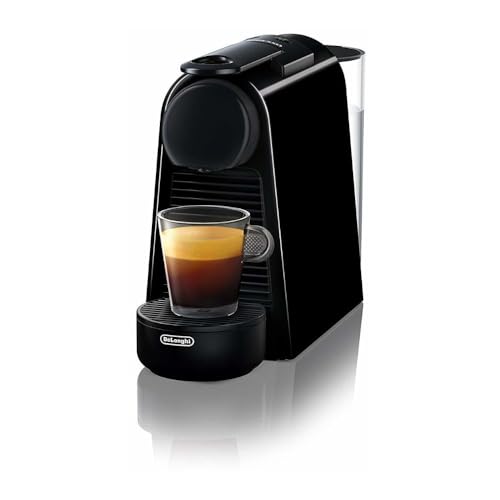


The product packaging provides the essential components needed to set up and operate the machine straight out of the box, keeping accessories minimal and focused entirely on single-serve espresso delivery.
- Nespresso Essenza Mini espresso machine manufactured by De’Longhi
- Detachable 0.6-liter water reservoir with hinged refill lid
- Removable drip tray and cup grid assembly
- Internal used-capsule container that collects spent pods
- Detailed user manual and setup documentation
Daily Reliability and 19-Bar Pump Endurance
The foundational component of the machine is its high-pressure fluid delivery system. Delivering nespresso essenza mini 19 bar pressure requires a compact vibration pump designed to overcome the resistance of tightly packed coffee grinds inside a hermetically sealed aluminum capsule. In real-world operation, achieving this pressure curve allows hot water to evenly saturate the grounds and pierce the foil face of the pod. For daily drinkers, nespresso essenza mini reliability depends on how well this internal pump tolerates the rapid buildup of mechanical resistance day after day.
Thermal management is driven by an 1150-watt heating block that brings water to brewing temperature within seconds. Because this system is optimized for quick single extractions rather than back-to-back continuous brewing, pulling multiple drinks consecutively can place stress on the heating circuit. The thermoblock cycles on and off rapidly to sustain extraction heat, which over months of heavy use can accelerate the wear of internal silicone hoses and plastic connectors. Buyers seeking a balance between lightweight engineering and heavy-duty cycling often compare this build with the nespresso inissia espresso machine, which uses a similar high-pressure hydraulic platform but features a slightly different chassis design.
For moderate households brewing one or two beverages per morning, the pump mechanism typically operates without significant degradation. However, operating the pump dry—such as when the 0.6-liter reservoir empties unnoticed mid-brew—can introduce air pockets into the fluid lines and generate excessive acoustic vibration. Ensuring the water supply never runs dry during an active pump cycle is the single most effective way to extend the lifespan of the internal fluid delivery system.
Internal Leaks and Common Failure Points
A frequent concern with ultra-compact pod brewers is the development of fluid leaks inside the housing. Documented nespresso essenza mini problems generally trace back to three specific areas: the puncture nozzle gasket, the drip tray overflow channel, and the spring-loaded valve at the base of the water reservoir. Because the mechanical lever applies considerable clamping force to seal the capsule against the extraction head, inserting dented, incompatible, or deformed pods can misalign the seal, causing pressurized hot water to escape around the capsule rim into the internal waste container rather than dispensing out the front spout.
The internal waste bin and drip tray have limited physical volume due to the machine’s slender frame. When spent capsules accumulate beyond the container’s capacity, the top capsule can obstruct the ejection mechanism, preventing the lever from fully closing or locking. Forcing the handle down against a jammed capsule risks warping the plastic linkage arms or tearing the internal elastomer seals that maintain pressure around the pod chamber during extraction. Emptying the used pod bin after every four to five extractions helps avoid mechanical jams and accidental water overflows into the base of the unit.
At the rear of the machine, the connection between the 0.6-liter reservoir and the machine base relies on a spring-loaded rubber seal. If hard water deposits or tiny coffee grounds settle into this valve seat, water can slowly seep out underneath the brewer onto the countertop overnight. Periodic inspection of the intake port and gentle cleaning of the tank’s lower valve prevent the slow degradation of this seal, keeping the kitchen bench dry and the intake pressure stable.
Routine Maintenance and Scale Prevention
Preserving extraction quality and internal hydraulic flow requires adhering to strict nespresso essenza mini maintenance routines. Because the internal water lines are narrow to fit inside the 4.33-inch chassis, calcium carbonate and other dissolved minerals in tap water will adhere to the walls of the heating block over time. Unchecked scale buildup reduces heat transfer efficiency, leading to lukewarm espresso shots, increased pump strain, and an eventual complete blockage of the fluid lines.
Descaling cycles must be run using solutions formulated for capsule machines, avoiding vinegar or harsh acids that can degrade internal rubber O-rings. Running a blank water shot through the chamber without a capsule before your first morning brew and immediately after your final shot helps flush out lingering coffee oils from the pyramid plate and dispensing spout. This simple habit prevents bitter residue from baking onto the hot extraction surfaces and keeps fluid channels clear of organic debris.
Unlike complex bean-to-cup platforms such as the philips series 3300 fully automatic espresso coffee machine, which requires regular lubrication and removal of an internal brew group, this capsule brewer maintains a completely sealed internal delivery path. Users do not need to clean grinds out of gears or adjust grinder burrs. However, the external removable parts—including the drip tray grid, drop bucket, and water tank—must be hand-washed regularly in warm water to prevent mold growth in the warm, damp spent-pod compartment.
Countertop Footprint and Practical Ergonomics
Designed primarily as a nespresso essenza mini for small kitchens, the unit measures 4.33 inches wide, 12.79 inches deep, and 8.07 inches high, weighing only 4.4 pounds. This slender profile makes it exceptionally easy to tuck into tight corners, studio apartments, or home office credenzas where traditional coffee appliances cannot fit. However, its small proportions require specific ergonomic compromises that buyers should evaluate before purchasing.
The top-loading capsule slot requires overhead clearance to lift the locking lever fully upward. If you intend to place the machine under low-hanging cabinets, measure the vertical swing of the handle to ensure you can insert capsules without pulling the unit forward every morning. Furthermore, the 0.6-liter water tank is positioned at the rear of the unit. Because of its modest volume, households making multiple drinks will need to lift the tank off its mounting bracket frequently, requiring clear access to the back of the brewer.
Cup clearance beneath the dispensing spout is another key operational factor. The removable drip tray can be lifted away to fit taller glassware, but wide mugs or large travel tumblers will not fit under the short spout. Consumers who prefer large-volume coffee beverages or multi-beverage workstations like the ninja coffee and barista will find the cup clearance and water volume on this unit restrictive, whereas dedicated espresso and lungo drinkers will find the form factor ideal.
Nespresso Essenza Mini Pros and Cons
Pros
- High-pressure 19-bar extraction pump
- Ultra-compact countertop footprint
- Fast 1150-watt heating system
- Simple programmable two-button interface
- Detachable 0.6-liter water reservoir
Cons
- Small 0.6-liter reservoir requires frequent refills
- Limited clearance for tall travel mugs
- No integrated milk texturing steam wand
Is the Nespresso Essenza Mini Worth It
Determining whether this machine represents a sound long-term investment depends largely on your daily beverage volume and how much value you place on counter space. If you are asking is nespresso essenza mini worth it for an apartment, an office desk, or a compact kitchen where fast, zero-mess espresso is the main priority, the machine delivers exceptional space efficiency and dependable 19-bar extraction. Its simple two-button interface removes digital complexity, lowering the likelihood of electronic circuit board malfunctions over time.
Conversely, this model is not well suited for large households or entertain-heavy environments where five or six drinks are pulled back to back. The 0.6-liter reservoir requires constant refilling, the spent-pod tray fills quickly, and the 1150-watt thermal block will heat-soak under relentless cycling. Buyers who drink American-style drip coffee in large travel mugs will find the small liquid volumes and limited cup clearance frustrating without adding hot water separately from a kettle.
For the dedicated solo espresso drinker who appreciates an uncluttered kitchen bench, the Essenza Mini strikes an effective balance between mechanical simplicity and solid extraction capability. As long as you maintain a regular descaling schedule and handle the locking lever gently, this compact De’Longhi-manufactured unit serves as a durable, fuss-free espresso solution.
FAQ
What types of pods work in a nespresso coffee machine original model?
The machine uses standard Nespresso Original capsules and third-party pods designed to the exact same physical dimensions. It does not accept dome-shaped Nespresso Vertuo capsules, which utilize a different extraction system and physical shape.
What are the exact nespresso essenza mini specs for kitchen counter clearance?
The machine measures 4.33 inches wide, 12.79 inches deep, and 8.07 inches high, with an overall weight of 4.4 pounds. You will also need a few inches of extra vertical clearance above the machine to allow the capsule-loading lever to swing open completely during pod insertion.
How does the nespresso essenza mini warranty handle pump and hydraulic failures?
The listing does not specify the exact warranty length or terms for this specific unit. Generally, De’Longhi and Nespresso provide manufacturer warranty coverage against defects in materials and mechanical workmanship, but buyers should consult their included user manual or contact customer support directly to confirm specific coverage details.
Can the brew buttons be customized to dispense different water volumes?
Yes. The two push buttons on top of the machine are fully programmable. By pressing and holding either button while a capsule is in place, you can set the machine to stop at your preferred liquid volume, which the memory retains for subsequent extractions.
Why does water collect in the spent capsule container?
A small amount of residual moisture is normal after an extraction cycle due to the release of hydraulic pressure inside the brewing chamber. However, if the container fills with substantial amounts of water, an internal seal may be misaligned or the puncture plate may require cleaning.