As Amazon Associates, we earn from qualifying purchases. This means we may receive a small commission at no extra cost to you if you click through and make a purchase.
Battery Run Time
Up to 120 minutes
Power Levels
3 selectable suction levels with automatic Carpet Boost
Cleaning System
4-Stage Cleaning with Dual Multi-Surface Rubber Brushes
Mopping Action
SmartScrub with Auto-Retract Mopping System
Understanding the underlying irobot roomba combo j9+ specs helps set realistic expectations regarding battery endurance, cleaning mechanics, and physical capabilities before setting up the device.
Full spec sheet 6 more rows from the listing
| Dock Functionality | Self-Emptying (60 days) and Auto-Refilling (30 days) |
| Battery Chemistry | Lithium Ion |
| Navigation Type | PrecisionVision Camera Navigation with Smart Mapping |
| Surface Suitability | Hard Floor, Carpet, and Tile |
| Drive Wheel Count | 2 primary drive wheels with front caster |
| Smart Control Integration | iRobot Home App, Amazon Alexa, Siri, Amazon Echo |
Deciding whether the Roomba Combo j9+ fits your household comes down to how much mechanical complexity you are willing to trade for hands-free floor cleaning. Designed as iRobot’s flagship two-in-one vacuum and mop, this model targets busy homeowners seeking to automate both dry vacuuming and wet mopping across mixed-floor layouts. By combining a motorized lift-up mop pad with a dock that empties dust and refills cleaning liquid, the irobot roomba j9 combo promises to eliminate the day-to-day chore of swapping mopping plates or carrying water reservoirs back and forth to the sink. For spaces where plush area rugs sit directly beside hardwood or tile, its promise of keeping carpets bone-dry without human intervention is undeniably appealing.
However, long-term automation is only as dependable as the hardware driving it. When a robot vacuum adds articulating metal-and-plastic swing arms, motorized hinges, internal liquid pumps, and quick-connect water valves, it introduces distinct mechanical failure points that simple vacuum-only units never encounter. In this detailed review, our editorial focus centers on long-term hardware reliability, auto-fill dock plumbing wear, and post-warranty maintenance demands. We will examine the core features, evaluate how the robot handles heavy pet shedding, inspect the mechanical risks behind its retractable mopping deck, and clarify whether this high-end appliance represents a durable investment for your home.
What You Get With the Roomba Combo j9+


The Roomba Combo j9+ arrives as a complete floor-care system designed for extended autonomous operation across dry and wet cycles, featuring several proprietary hardware innovations straight out of the box.
- Clean Base Auto-Fill Dock that handles dry debris self-emptying for up to 60 days and liquid reservoir replenishment for up to 30 days
- Auto-Retract Mopping System engineered with Dry Rug Intelligence (D.R.I.) to lift the wet mop pad completely onto the top deck of the chassis
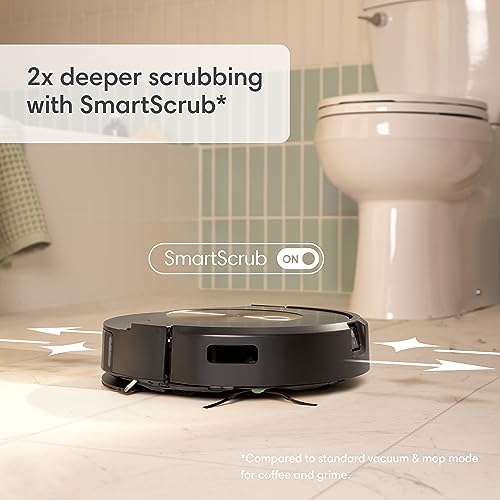
- SmartScrub technology delivering back-and-forth scrubbing passes under consistent downward mechanical pressure
- 4-Stage Cleaning System integrating Dual Multi-Surface Rubber Brushes, an Edge-Sweeping Brush, and high-power suction
- Carpet Boost sensor automation that adjusts motor draw across three distinct suction power levels
- PrecisionVision Navigation utilizing an onboard front camera to detect and steer around household obstacles including pet waste, power cords, socks, and shoes
- Dirt Detective software intelligence powered by iRobot OS that tracks historical cleaning data to prioritize high-traffic zones
- High-efficiency cartridge filter designed to trap airborne particles and fine dust inside the robot bin
- Rechargeable lithium-ion battery delivering up to 120 minutes of continuous runtime per charge cycle
Mechanical Mopping Arm Durability and Retraction
The defining engineering feature of the Roomba Combo j9+ is its overhead mop lift design. Most hybrid robot vacuums on the market simply raise their mop plates four to ten millimeters when encountering floor coverings. That minimal lift often results in damp edges on medium-pile or high-pile carpets. iRobot sidesteps this problem by using motorized articulating arms that swing the entire wet mopping pad up and over the robot, parking it securely on the top lid. This design delivers true carpet isolation, ensuring your carpets stay completely dry during mixed cleaning runs without requiring manual intervention.
While this approach solves the wet rug dilemma, evaluating the roomba combo j9+ mop retraction durability raises legitimate mechanical questions. The lift assembly relies on miniature drive motors, mechanical hinges, internal linkage wires, and micro-switch position sensors. Over thousands of cleaning runs, these articulating arms cycle up and down dozens of times per mission as the robot traverses between rooms. If fine grit, pet fur, or dried mopping solution accumulates inside the hinge recesses, the mechanical resistance on the lift motor increases. Unlike the heavy-duty fixed pads found on units like the roomba combo 10 max, mechanical arms demand that owners keep the upper deck and pivot points completely free from tangled hair and debris.
To avoid premature motor burnout or misaligned arms, owners must treat the mechanical swing assembly as a primary inspection point. Should an arm jam midway through a deployment cycle, the robot cannot seat the pad against hard floors with the downward pressure needed for SmartScrub, nor can it safely cross rugs without dragging the pad. Buyers must recognize that this unmatched carpet protection comes with the inherent trade-off of maintaining exposed moving mechanical joints over the lifespan of the machine.
Clean Base Auto-Fill Dock Reliability and Plumbing Maintenance
The Clean Base Auto-Fill Dock serves as the central operational hub, housing both a dry evacuation system and a pressurized liquid dispensing station. On paper, having a dock that empties the dustbin for 60 days and tops off the robot reservoir for 30 days delivers true cleaning independence. However, analyzing roomba j9 combo auto-fill dock reliability requires looking closely at how liquid transfers between the stationary base and a mobile robotic chassis. The base uses sealed rubber gaskets, internal tubing, and an auto-fill nozzle that docks into the robot fluid inlet each time it parks.
Liquid handling introduces failure modes that dry vacuum docks never suffer from, primarily mineral scale buildup, dried residue, and pressure seal degradation. If you run hard tap water through the system, dissolved minerals can slowly calcify inside the narrow dock piping and the internal dispensing valves. iRobot designs this liquid circuit to work with plain water or approved solutions such as irobot stayclean solution, which helps prevent gumming up the fluid lines. Using unapproved floor detergents with thick sudsing agents or oily fragrances can coat the fluid sensor contacts, leading to false low-water alerts or dock fill failures.
Consistent roomba combo j9+ maintenance on the dock itself is essential to protect against plumbing leaks and evacuation clogs. The dry debris channel uses high-velocity suction to pull waste from the robot bin into an enclosed cartridge bag. If wet debris enters the dry evacuation port—such as moist pet food or damp dirt scooped up during a mopping pass—it can cake onto the evacuation path, reducing airflow and straining the base vacuum motor. Routine care requires checking the base rubber seals monthly, flushing the liquid tank periodically, and wiping down the electrical contacts that synchronize charging and fluid transfer.
Dual Rubber Brushes and Carpet Boost for Pet Hair
For homes managing shedding dogs and cats, picking the right vacuum hardware comes down to brush roll engineering and sustained suction power. The Roomba Combo j9+ incorporates dual multi-surface rubber extractors rather than traditional bristle rollers. Because rubber lacks bristles for hair to weave through, long human strands and pet fur are guided outward toward the roller ends where they can be quickly cleared away. This dual-roller design makes the roomba j9 combo for pet hair exceptionally capable on low to medium-pile carpets where embedded dander resists single-roller vacuums.
The vacuum motor delivers up to 100% stronger suction compared to older Roomba Combo i Series units, which is critical when transitioning from bare floors to dense area rugs. Through built-in optical and acoustic sensors, the roomba combo j9+ carpet boost system automatically detects rug fibers and spins the vacuum motor up to its maximum setting across its three power tiers. This burst of elevated suction pulls deeply trapped pet hair and heavy grit out of the carpet backing before the robot deploys its mopping pad on adjacent tiles.
While the dual rubber rollers resist hair clogs better than conventional bristle designs, pet hair can still accumulate inside the removable end caps of the rollers. Over several weeks of heavy shedding, this hair buildup can press against the roller drive bearings, increasing friction and draining the 120-minute lithium-ion battery much faster than normal. While stripped-down vac-only models like the irobot roomba 105 vac require minimal roller maintenance due to their simpler intakes, maintaining peak suction on the j9+ requires popping out the green extractors every couple of weeks to strip off hair rings from the brass bushings.
Navigation Intelligence, Obstacle Avoidance, and Software Support
Autonomous navigation on the Roomba Combo j9+ relies on PrecisionVision Navigation backed by a front-facing camera. Rather than relying solely on bumper collisions or ceiling-facing optical sensors, the camera identifies common household hazards on the floor in real time. The machine is programmed to spot and steer around pet waste, stray charging cables, socks, and footwear. This computer-vision capability prevents the dreaded scenario of a robot dragging a phone cord across a room or smearing an indoor pet accident through your living areas.
Driving this hardware is Dirt Detective, an intelligent mapping system within iRobot OS. The software tracks historical cleaning runs, assesses which rooms accumulate the most soil, and structures subsequent missions accordingly. For example, Dirt Detective automatically prioritizes high-traffic kitchens and hallways while scheduling bathrooms for the very end of the run to maintain hygienic separation. Straight out of the box, the system creates complete multi-room floor maps up to seven times faster than prior Roomba mapping architectures, moving in neat, parallel passes with options for single or double-pass thoroughness.
Despite these high-tech conveniences, owners must keep software dependencies and warranty boundaries in mind. The manufacturer explicitly notes that a Wi-Fi connection and an initial software update are required before the robot can even begin its first cleaning mission. The system relies continuously on cloud connectivity to refine obstacle models and log cleaning history. When dealing with irobot roomba combo j9 warranty support, keep in mind that the standard manufacturer warranty covers factory defects in motors and electronic boards, but explicitly excludes consumable wear components such as cartridge filters, edge brushes, rubber extractors, and microfiber pads. Knowing what the warranty covers versus normal wear helps prevent unexpected maintenance expenses down the line.
Roomba Combo j9+ Pros and Cons
Pros
- Full overhead mop retraction keeps carpets dry
- Auto-fill dock handles debris and liquid
- Dual rubber brushes prevent pet hair tangles
- Automatic Carpet Boost optimizes suction on rugs
- PrecisionVision avoids pet waste and cords
- SmartScrub applies consistent downward pressure
Cons
- Motorized swing arms add mechanical failure points
- Dock liquid lines require descaling maintenance
- Initial Wi-Fi setup and software update mandatory
Is the Roomba Combo j9+ Worth It
Determining whether the is irobot roomba j9 combo worth it depends entirely on your home layout and your willingness to manage high-end mechanical components. If you live in a multi-surface home where plush area rugs are scattered throughout hardwood or tile living areas, the j9+ stands alone in its ability to mop hard floors thoroughly while keeping rugs completely dry. Its Clean Base Auto-Fill Dock removes the daily grind of filling water tanks and emptying dustbins, providing weeks of genuine hands-off operation when properly maintained.
Conversely, this machine is not the ideal purchase for buyers who want an appliance they can completely ignore for months at a time. The motorized mopping arms, water inlet seals, docking alignment ports, and dual rubber rollers represent precision mechanical components that will fail if neglected. If your residence features exclusively hard flooring with no carpeting, or if you prefer a simple vacuum that requires zero dock maintenance, the mechanical complexity and premium investment of this hybrid model will provide diminishing returns.
Ultimately, the Roomba Combo j9+ is best suited for tech-comfortable homeowners with pets and mixed flooring who value high-level floor automation and are willing to perform monthly preventative checkups. Provided you clean the roller bearings, inspect the dock fluid nozzles, and clear the swing-arm joints of dust, this flagship unit delivers an exceptionally thorough clean across both dry vacuuming and wet scrubbing cycles.
FAQ
How does the Roomba Combo j9+ ensure carpets stay dry during mopping?
The robot uses an Auto-Retract Mopping System governed by Dry Rug Intelligence. When acoustic and optical sensors detect carpet fibers, internal motorized arms lift the wet mop pad up and rest it flat on top of the robot chassis. This keeps the wet pad entirely elevated away from rug fibers, preventing the damp marks common with robot vacuums that merely elevate their pads a few millimeters.
How often does the Clean Base Auto-Fill Dock need manual maintenance?
The Clean Base holds dry debris for up to 60 days and liquid for up to 30 days under normal usage cycles. However, you should inspect the dock plumbing connections, clean the water tank filter screen, wipe down the charging contacts, and verify the rubber evacuation seals once a month to prevent clogs and mineral buildup.
Can the Roomba Combo j9+ operate without an active internet connection?
No, the product listing explicitly states that an initial Wi-Fi connection and a software update are mandatory before the robot can be initialized and used. While basic local start commands can be triggered via physical buttons afterward, smart mapping, Dirt Detective scheduling, and PrecisionVision obstacle avoidance updates require persistent connectivity through the iRobot Home App.
How does SmartScrub differ from standard robot mopping?
Standard robot mopping typically drags a damp pad in a straight line behind the vacuum with passive downward weight. SmartScrub commands the robot to move back and forth over the floor in a reciprocating pattern while applying continuous mechanical downward pressure, providing twice the scrubbing depth to remove sticky spills and dried footprints.
What floor types are supported by the Roomba Combo j9+?
The listing recommends the Roomba Combo j9+ for hard floors, tile, and carpet. Its 4-Stage Cleaning System and automatic Carpet Boost allow it to adjust suction power on rugs while deploying its rubber extractors and retractable mopping plate seamlessly across hard floor surfaces.