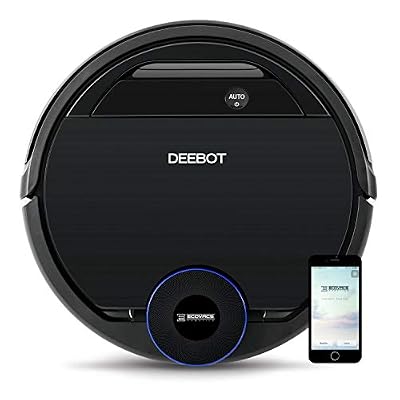
As Amazon Associates, we earn from qualifying purchases. This means we may receive a small commission at no extra cost to you if you click through and make a purchase.
Maximum Suction Power
6000Pa
Dust Dock Capacity
4 Liters (estimated 90-day retention)
Battery Chemistry and Runtime
Lithium Ion, up to 150 minutes
Chassis Height Profile
3.6 inches
A comprehensive review of the published hardware specifications reveals how the vacuum balances motor output, dimensional clearance, and containment capacity.
Full spec sheet 7 more rows from the listing
| Model Number | W3011020 |
| Number of Power Levels | 2 |
| Navigation and Sensor Array | LDS LiDAR, PSD Side Sensors, Cliff Drop Sensors |
| Obstacle Clearance Threshold | 1.7 cm climbing capability |
| Filtration System | Cartridge Filter |
| Smart Control Protocols | Matter, App Control, Voice (Apple Home, Alexa, Google Home, Home Assistant) |
| Surface Recommendations | Hard floor, wooden floor, short wool carpet, tile |
Selecting an automated floor cleaner requires balancing physical clearance, suction efficiency, and software stability. The SwitchBot K11+ enters the market as a compact robotic vacuum paired with an auto-empty base, engineered specifically for navigating crowded residential floor plans. With a low-profile chassis, upgraded 6000Pa motor rating, and native Matter compatibility across platforms like Apple Home and Home Assistant, it targets buyers who want minimal physical interaction with their cleaning hardware. For shoppers evaluating long-term dependability, the central question is whether its miniaturized footprint and hubless architecture deliver reliable daily maintenance without introducing mechanical bottlenecks or software dropouts.
In this detailed review, we examine the mechanical integrity, operational specifications, and day-to-day usability of the vacuum and its self-emptying dock. We analyze how its LDS laser navigation and PSD side sensors perform around tight furniture groupings, the reality of managing pet hair with its twin side brushes, the true maintenance footprint of its 4-liter dust station, and what to expect during Matter onboarding. By assessing component wear points, filter service intervals, and potential firmware hurdles, this guide equips buyers to make an informed, long-term investment decision.
What You Get With the SwitchBot K11+


The product package centers on compact cleaning automation, supplying the core hardware and self-emptying infrastructure needed for multi-month hands-off debris disposal right out of the box.
- SwitchBot K11+ Robot Vacuum unit featuring an ultra-slim 3.6-inch profile
- Compact self-emptying base station with an A4-sized footprint
- 4-liter high-capacity disposable dust bag holding up to 90 days of debris
- Pre-installed anti-tangle roller brush mechanism
- Anti-tangle twin side brush assembly for dual-edge sweep coverage
- Replaceable cartridge filtration unit
- Integrated LDS LiDAR navigation dome and PSD optical wall sensors
- Onboard lithium-ion battery providing up to 150 minutes of continuous runtime
- Universal Matter smart home provisioning code for multi-ecosystem pairing
LiDAR Navigation and Edge Mapping Accuracy
The primary advantage of the switchbot k11 plus lidar navigation system is its ability to operate independently of ambient lighting. Unlike vision-only optical cameras that fail in darkened rooms or cast irregular shadows under low furniture, the top-mounted LDS laser continuously pulses distance measurements to construct millimeter-accurate floor plans. Coupled with Position Sensitive Detector (PSD) side sensors, the vacuum tracks parallel to baseboards and sweeps tight perimeters around dining chair legs. This structural awareness minimizes hard bumper collisions, preserving baseboard paint and shielding delicate furniture legs from continuous physical impacts.
Chassis height remains a pivotal factor in robotic vacuum survival. At 3.6 inches tall, the machine can slip beneath low-clearance bed frames, entertainment consoles, and raised armchairs that routinely deflect taller competitors like the shark matrix robot vacuum and mop. However, buyers must note the trade-off inherent in mounting an LDS turret on an ultra-slim body: the sensor housing adds a localized elevation point at the center of the disc. If drapery or sagging couch underlinings catch the top turret, the vacuum can trigger false entrapment warnings, requiring users to mark off low-clearance areas using software-defined no-go zones.
Threshold management reflects a realistic mechanical ceiling. The listing specifies a 1.7 cm obstacle climbing threshold, which allows the robot to scale standard transitions between tile and hardwood or negotiate standard flat door sills. Homes featuring bulky wooden saddle thresholds, high-profile marble bathroom dividers, or deeply textured rugs may pose traversal challenges. When wheels spin against high thresholds, wear on the rubber tread accelerates, making proper room zoning within the mobile application essential for long-term drive train health.
Pet Hair Handling and Brush Maintenance Realities
Managing shedding pets requires focused airflow velocity and mechanical agitation. With an upgraded 6000Pa suction motor, deploying the switchbot k11 plus for pet hair ensures that loose fur, dry dander, and tracked litter are pulled directly from floor seams. The motor operates across two distinct power levels, allowing users to balance decibel output against air volume. On hard surfaces like tile and sealed oak, lower motor output suffices, while navigating short wool carpets demands the upper power tier to dislodge embedded fibers from carpet backing.
Roller brush longevity depends heavily on tangle mitigation. The vacuum employs a specialized tangle-resistant main roller alongside an Anti-Tangle Twin Side Brush system. Dual side brushes rotate inward to direct strands toward the central intake without looping hair tightly around the side spindles—a recurring failure point in single-brush designs. For daily cleanings in multi-pet homes, this configuration significantly lowers the rate of hair bind. However, no brush mechanism completely eliminates manual upkeep. Long strands inevitably wrap around the end bearings, necessitating periodic removal and physical clearing to prevent excessive motor resistance.
Filtration integrity plays a crucial role in maintaining 6000Pa suction efficiency over time. The vacuum relies on a replaceable cartridge filter to capture fine dust, dander, and microscopic particulates before air exhausts back into the living space. If pet fur matting against the pre-filter is left uncleaned, the vacuum experiences restricted intake volume, leading to motor strain and degraded switchbot k11 plus battery life. While heavy-shedding households might occasionally deploy a dedicated handheld like the shark pro cordless stick vacuum, carpets & hardfloors, clean sense iq technology, powerfins plus sel for deep upholstery cleaning, keeping the K11+ cartridge filter clean ensures the automated system handles routine daily floor maintenance effortlessly.
Self-Emptying Dock Durability and Long-Term Upkeep
The defining convenience feature of this setup is the switchbot k11 plus dust dock. Despite maintaining an ultra-compact footprint smaller than a standard sheet of A4 paper, the dock accommodates a generous 4-liter sealed dust bag. The manufacturer rates this capacity for up to 90 days of hands-free operation. In practice, real-world longevity depends heavily on the volume of collected debris; homes with multiple shedding dogs or constant tracking of outdoor dirt may fill the chamber in six to eight weeks. Even under heavy loads, the enclosed bag prevents dust clouds from escaping into the room during disposal cycles.
The mechanical health of the evacuation tower requires regular attention. When the vacuum docks, high-velocity evacuation motors pull accumulated debris out of the internal dustbin through the base port. If rigid debris—such as small plastic toys, thick twist ties, or dry plant twigs—enters the evacuation channel, it can create a partial blockage. Over time, air bypasses the clog, leaving dirt trapped inside the robot’s onboard bin. Establishing a disciplined switchbot k11 plus maintenance routine involves periodically inspecting the dock’s intake chute, clearing optical charging contacts, and verifying that the internal evacuation seal remains airtight.
Bag replacement integrity forms another critical link in dock reliability. The 4-liter containment system relies on well-fitted collar sliding mechanisms to lock shut when removed, preventing airborne allergen release. Users should always ensure replacement bags seat completely within the dock bracket before initiating cleaning cycles. Operating the evacuation station with an improperly seated collar can draw dust directly into the dock’s exhaust motor fan, risking mechanical failure and voiding warranty protections.
Matter Integration and Smart Home Protocol Stability
Software operability is anchored by native Matter protocol compliance. Conducting a smooth switchbot k11 plus matter setup bypasses proprietary bridging hardware, permitting native enrollment into Apple Home, Amazon Alexa, Google Home, and Home Assistant environments. Because Matter establishes standardized local communication protocols, commands such as cleaning initialization, pausing, and docking run over the local network fabric without routing latency through external cloud servers, drastically boosting responsiveness.
System stability, however, is tethered to the quality of your home network infrastructure. Matter devices communicate via standardized local IP exchanges, meaning network packet loss or poor 2.4 GHz signal distribution can result in temporary device unresponsiveness. In complex multi-node networks, smart home hubs and access points powered through managed hardware like ubiquiti unifi poe switches provide the steady broadcast traffic handling needed to prevent Matter nodes from dropping offline. Ensuring consistent network addressing prevents the robot from falling into disconnected states during scheduled cleaning routines.
Firmware management directly influences switchbot k11 plus reliability. While baseline cleaning functions can be initiated via voice commands through Apple Home or Alexa, advanced customizations—such as room partitioning, virtual boundary creation, and power level adjustments—remain managed through the native SwitchBot mobile application. For users experiencing mapping drift or failed dock returns, standard switchbot k11 plus troubleshooting involves cleaning the LDS lens with a microfiber cloth, wiping the infrared docking sensors, and initiating a quick map rebuild within the mobile app to refresh room boundaries.
SwitchBot K11+ Pros and Cons
Pros
- Compact 3.6-inch slim profile navigates tight spaces
- High 6000Pa suction power handles pet hair
- Native Matter support requires no proprietary hub
- 4L self-emptying station holds 90 days of debris
- Dual anti-tangle side brushes reach deep into corners
Cons
- Limited to short wool carpets and hard surfaces
- Only two suction power levels available
- Climbing ability capped at 1.7-centimeter thresholds
Is the SwitchBot K11+ Worth It
Deciding if the switchbot k11 plus is worth it comes down to matching your home’s floor architecture against its design strengths. If you live in an apartment, condominium, or single-story home dominated by hard surfaces, tile, or short wool carpets, the compact dimensions and powerful 6000Pa motor deliver efficient cleaning without occupying valuable floor space. The base station’s minuscule footprint is particularly advantageous for urban homes where sprawling auto-empty stations look intrusive or fail to fit between furniture groupings.
Smart home purists seeking local control will appreciate the native Matter implementation. Eliminating the requirement for an external proprietary bridge simplifies installation across Apple Home and Home Assistant environments. The 150-minute lithium-ion battery runtime comfortably manages medium-to-large single-level floor plans on a single charge cycle, while the 4-liter dock capacity drastically reduces weekly chores down to occasional quarterly maintenance.
Conversely, this vacuum is less suited for homes with plush, high-pile carpeting, thick shags, or prominent transition sills exceeding 1.7 cm. The specification sheet clearly limits floor recommendations to short wool carpets and rigid flooring. Furthermore, with only two selectable power levels, users lose granular control over intermediate acoustic and suction tiers. If your property features open layouts with deep-pile rugs, a heavier full-sized robotic cleaner remains the more durable choice; but for compact, multi-surface environments needing low-profile clearance, the K11+ represents a capable and balanced system.
FAQ
How does the SwitchBot K11+ handle pet hair tangles?
The vacuum combines a 6000Pa suction motor with a specialized tangle-resistant main roller and an Anti-Tangle Twin Side Brush system. The dual side brushes guide hair directly into the suction path rather than wrapping it around the outer drive gears, while the roller brush reduces strand binding across hard surfaces and short wool carpeting.
How long does the SwitchBot K11+ battery life last on a single charge?
The integrated lithium-ion battery provides up to 150 minutes of continuous runtime under standard operating conditions. Actual runtime varies depending on whether the unit operates in standard or maximum suction mode and the proportion of carpeted surfaces encountered throughout the cleaning cycle.
Does the SwitchBot K11+ require a proprietary hub for Matter support?
No, the vacuum features built-in Matter protocol support that allows direct connection to compatible smart home controllers—such as Apple Home, Google Home, Amazon Alexa, and Home Assistant—without purchasing a standalone SwitchBot hub.
What flooring types are compatible according to the switchbot k11 plus specs?
The manufacturer recommends using the vacuum on hard floors, wooden flooring, tile, and short wool carpets. It is not intended for deep shag carpets or high-pile rugs, and it climbs floor transitions up to a maximum threshold of 1.7 cm.
What basic SwitchBot K11+ troubleshooting steps resolve docking failures?
If the robot struggles to dock or empty its bin, first inspect the optical charging contacts on both the base and chassis for dust accumulation. Ensure the A4-sized dock sits on a level hard surface free from surrounding clutter, and check the base suction chute to confirm that rigid debris has not obstructed the evacuation channel.