As Amazon Associates, we earn from qualifying purchases. This means we may receive a small commission at no extra cost to you if you click through and make a purchase.
Power Consumption
1200 watts
Water Tank Capacity
2.1 liters (removable)
Dimensions (D x W x H)
8 inches x 9.5 inches x 14.2 inches
Total Unit Weight
20 pounds
The technical specifications of the Gaggia Classic Pro E24 highlight its adherence to traditional commercial dimensions and domestic electrical standards. The table below outlines the core specifications provided for the machine.
Full spec sheet 6 more rows from the listing
| Operating Pressure | 9 bar extraction |
| Housing Material | Solid brushed stainless steel |
| Portafilter Diameter | 58mm commercial stainless steel |
| Electrical Rating | 120 volts, corded electric |
| User Interface | Physical push buttons with indicator lights |
| Country of Origin | Italy |
Finding an espresso machine that balances commercial-grade components with long-term mechanical reliability is a common challenge for buyers stepping into serious home brewing. The Gaggia Classic Pro E24 represents an evolution of a platform that has anchored home espresso setups for decades. Rather than introducing complex digital interfaces or fragile electronic automation, this revision targets the mechanical fundamentals that matter most to durability-minded buyers: a factory-calibrated 9 bar extraction pressure, an updated boiler engineered to resist scale buildup, and a revised pump mounting system designed to dampen operating noise. For home baristas evaluating whether this Italian-built semi-automatic machine justifies a spot on their countertop compared to older iterations like the baseline gaggia classic pro, understanding how these mechanical updates perform over years of daily service is essential.
In this detailed Gaggia Classic Pro E24 review, we analyze the machine’s structural engineering, internal components, everyday workflow, and long-term serviceability. We examine how the updated boiler design addresses historical corrosion concerns, what the standard 9 bar pressure profile means for dialing in espresso, how routine maintenance affects component lifespan, and which user profiles will benefit most from its traditional semi-automatic workflow. If you are shopping with an emphasis on longevity, repairability, and commercial-standard parts, this breakdown provides the technical context needed to make an informed decision.
What You Get With the Gaggia Classic Pro E24

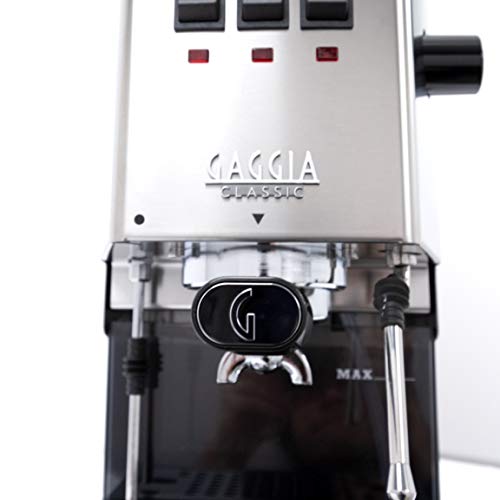


The Gaggia Classic Pro E24 ships with a focused selection of commercial-style hardware and accessories intended to support both traditional freshly ground espresso preparation and alternative single-serve formats. Built around a heavy-gauge brushed steel chassis manufactured in Italy, the package focuses on robust, reusable components rather than disposable accessories.
- Solid brushed stainless steel housing built in Italy
- Heavy-duty 58mm commercial-style stainless steel portafilter
- Commercial single-shot non-pressurized filter basket
- Commercial double-shot non-pressurized filter basket
- Pressurized filter basket compatible with pre-ground coffee and ESE pods
- Commercial three-way solenoid valve assembly
- Commercial-style steam wand for milk texturing and latte art
- Updated corrosion-resistant and scale-resistant boiler assembly
- Updated vibration-dampened pump mounting system
- Removable 2.1-liter water reservoir
Updated Boiler Engineering and Corrosion Resistance
The internal boiler has long been the centerpiece of discussion regarding long-term reliability in semi-automatic espresso equipment. In the Gaggia Classic Pro E24 boiler design, the manufacturer introduced specific updates intended to improve resistance to mineral scale buildup and galvanic corrosion. Traditional small-footprint espresso boilers are subject to extreme thermal cycling, which accelerates mineral precipitation out of heated tap water. When scale bonds to metal surfaces, it impedes heat transfer, increases energy consumption, and eventually causes clogs in delicate hydraulic channels. The updated boiler engineering aims to mitigate these vulnerabilities, providing a more resilient foundation for households dealing with varied water quality.
From an advocate’s perspective on machine durability, boiler composition directly dictates the service life of an espresso machine. Unlike appliances that use sealed thermoblocks, the boiler in the E24 is a discrete, serviceable component secured to the group head assembly. This design means that if mineral scale does accumulate over years of use, the entire assembly can be disassembled, descaled, or mechanically rebuilt. The ability to physically unbolt the boiler from the group collar allows home technicians to replace internal O-rings and inspect internal surfaces directly, ensuring that a single clogged channel does not render the entire machine obsolete.
This repair-friendly approach stands in sharp contrast to modern appliance-style machines such as the ninja autobarista™ pro fully automatic espresso machine in stainless steel, which prioritize push-button convenience over modular internal access. While fully automated systems hide their heating circuits behind integrated plastic casings, the E24 keeps its boiler assembly serviceable. For buyers who view their espresso equipment as an investment meant to last through years of daily service, having a robust, scale-resistant boiler architecture is one of the strongest arguments in favor of this platform.
Factory 9 Bar Pressure and Pump Mounting Updates
A major mechanical milestone for the platform is the inclusion of factory-calibrated 9 bar extraction pressure. Historically, domestic espresso machines were often tuned to 12 or 15 bars of pump pressure to accommodate forgiving pressurized baskets and unevenly ground supermarket coffee. However, extracting espresso at 15 bars often leads to channeling, where high-pressure water punches holes through the coffee bed rather than extracting flavor evenly. The Gaggia Classic Pro E24 9 bar calibration aligns the machine out of the box with commercial espresso standards, allowing home baristas using the included commercial filter baskets to achieve balanced, café-quality extractions without needing aftermarket spring modifications.
Equally notable for everyday kitchen use is the updated pump mounting system. Vibration pumps are inherently loud, as they oscillate rapidly to generate high hydraulic pressure. In earlier iterations, the mechanical vibrations of the pump were transferred directly through the chassis, creating a loud operating hum and causing cups placed on the drip tray or top warming plate to rattle. The updated pump mounting in the E24 incorporates revised dampening contact points that isolate pump oscillation from the exterior steel casing, resulting in a noticeably quieter brewing cycle that feels more refined during early morning use.
Complementing the calibrated pump pressure is the inclusion of a commercial three-way solenoid valve. This electro-mechanical valve relieves hydraulic pressure from the group head the exact instant the brew switch is flipped off. By redirecting pressurized water directly into the drip tray, the valve prevents “puck sneeze”—a messy blowout of grounds when unlocking the portafilter—and extracts excess moisture from the spent coffee bed. The result is a dry, solid puck that knocks out cleanly, dramatically speeding up cleanup between consecutive shots and protecting the group head gasket from excessive wear caused by lingering hydraulic pressure.
Routine Maintenance Requirements and Common Failure Points
Understanding Gaggia Classic Pro E24 maintenance is crucial for preventing avoidable breakdowns. Despite the updated boiler’s improved resistance to corrosion, no espresso machine is completely immune to the effects of water minerals. Owners must adhere to a strict descaling schedule based on local water hardness, using manufacturer-approved descaling solutions rather than harsh acids that could damage internal seals. In addition to descaling the hydraulic path, regular backflushing with espresso detergent is required to clear coffee oils and microscopic grounds out of the commercial three-way solenoid valve. Neglecting to backflush the solenoid valve is one of the most common causes of drainage blockages, which can cause water to back up around the group collar.
When assessing potential Gaggia Classic Pro E24 problems, the majority stem from operational neglect or user error rather than manufacturing defects. Because the machine utilizes a commercial 58mm stainless steel portafilter and standard non-pressurized baskets, it demands an exacting, espresso-capable burr grinder. Attempting to pull shots with pre-ground coffee through the commercial baskets will result in fast, sour, under-extracted espresso, while grinding too fine can choke the 9 bar pump entirely. Users who do not own a dedicated espresso grinder must rely on the included pressurized basket, which artificially creates backpressure but sacrifices the nuanced flavor profiles possible with fresh beans.
Where the E24 excels over mass-market competitors is the universal availability of Gaggia Classic Pro E24 parts. The machine uses standardized commercial fittings, standard silicone group gaskets, universal 58mm shower screens, and standard switches. In budget espresso machines like the casabrews 5418 pro, a torn proprietary gasket or broken plastic valve can permanently end the machine’s life due to an absence of replacement components. With the Gaggia platform, virtually every bolt, hose, valve, and wire harness can be sourced independently, making the machine exceptionally friendly to DIY maintenance and multi-year ownership.
Workflow and Usability for Home Baristas
The operational experience of the Gaggia Classic Pro E24 for home baristas is deliberately mechanical and tactile. Control is managed via three dedicated rocker-style push buttons mounted on the front panel: power, brew, and steam. There are no digital screens, programmable volumetric shot buttons, or automated pre-infusion cycles. The user manually starts and stops the extraction, requiring direct attention and a timer to execute consistent shot recipes. For enthusiasts who enjoy the craft of espresso, this tactile interface offers total control; for casual drinkers wanting automated morning coffee, it represents a steep learning curve.
Milk texturing is handled by a commercial-style steam wand equipped with a two-hole tip. Unlike automated frothing wands with plastic sleeves that inject coarse air into milk, this commercial wand requires manual technique to introduce air and create a vortex. When operated correctly, the 1200-watt heating element provides sufficient steam pressure to roll milk into velvety microfoam suitable for pouring latte art. However, because the machine relies on a single boiler for both brewing and steaming, users must wait briefly between pulling a shot and steaming milk for the boiler to reach steaming temperatures, followed by a brief purge of the group head to cool the boiler back down for subsequent shots.
Flexibility is enhanced by the inclusion of multiple filter baskets. The commercial single and double shot baskets provide uncompromised extraction potential for freshly ground coffee, while the pressurized basket accommodates ESE (Easy Serving Espresso) pods and grocery-store pre-ground coffee. This versatility allows households with mixed preferences to brew specialty single-origin espresso on weekends while relying on quick, mess-free ESE pods on busy weekday mornings, all utilizing the same solid 20-pound platform.
Gaggia Classic Pro E24 Pros and Cons
Pros
- Factory-calibrated 9 bar extraction pressure
- Commercial 58mm stainless steel portafilter
- Updated corrosion-resistant boiler engineering
- Vibration-dampened pump mounting for quieter operation
- Heavy-duty solid steel housing made in Italy
- Commercial three-way solenoid valve
Cons
- Fully manual semi-automatic workflow required
- Requires regular descaling and backflushing maintenance
- Heavier 20-pound counter footprint
Is the Gaggia Classic Pro E24 Worth It
When asking whether the Gaggia Classic Pro E24 is worth it, the answer depends entirely on your tolerance for a hands-on routine and your commitment to machine longevity. If you are an aspiring home barista seeking an authentic café-style extraction workflow, the combination of a 58mm commercial portafilter, 9 bar factory extraction pressure, and a commercial three-way solenoid valve makes this one of the most compelling semi-automatic machines available. The heavy 20-pound brushed steel housing and Italian manufacturing deliver a level of structural integrity that plastic-clad consumer machines cannot replicate.
Conversely, buyers seeking rapid, one-touch milk beverages or automated dosing may find the traditional workflow frustrating. If you do not intend to invest in a capable espresso grinder, do not wish to learn manual milk steaming, or prefer an appliance that manages temperatures and milk frothing automatically—such as the de’longhi classic signature espresso machine—the manual demands of the E24 will feel unnecessarily tedious. The machine rewards skill, patience, and meticulous cleaning, making it unsuitable for environments where hands-off speed is the primary priority.
From a reliability and advocacy perspective, the Gaggia Classic Pro E24 reliability profile stands well above disposable kitchen appliances. Its updated boiler addresses historical corrosion vulnerabilities, its pump mounting reduces acoustic fatigue, and its modular architecture ensures that worn parts can be replaced rather than discarded. For buyers who prioritize sustainability, repairability, and pure espresso extraction performance, the E24 remains an outstanding benchmark in the semi-automatic class.
FAQ
What extraction pressure does the Gaggia Classic Pro E24 use?
The Gaggia Classic Pro E24 operates at a factory-calibrated 9 bar extraction pressure. This matches commercial café standards, allowing for balanced extraction through non-pressurized baskets without the need for aftermarket spring modifications.
Can the Gaggia Classic Pro E24 brew with coffee pods?
Yes. The machine includes a pressurized filter basket specifically designed to accommodate pre-ground coffee and standardized ESE (Easy Serving Espresso) pods, offering convenience for users who do not wish to grind fresh beans for every shot.
How does the updated boiler design improve longevity?
The updated boiler in the E24 revision is engineered to better resist scale buildup and galvanic corrosion. This modification helps prevent mineral adhesion on internal surfaces and maintains efficient heat transfer over extended periods of daily use.
What size portafilter does the machine include?
The machine includes a heavy-duty 58mm commercial-style stainless steel portafilter. This standard commercial diameter gives users access to industry-standard tamper sizes, distribution tools, and aftermarket precision filter baskets.
Is the Gaggia Classic Pro E24 self-serviceable?
Yes. The machine is designed with modular commercial components and a solid steel housing that can be disassembled using standard tools. Replacement parts such as gaskets, solenoid valves, switches, and boiler components are widely available for maintenance and repair.