As Amazon Associates, we earn from qualifying purchases. This means we may receive a small commission at no extra cost to you if you click through and make a purchase.
Dust Collection Capacity
0.6 liters
Maximum Battery Runtime
Up to 100 minutes on hardwood floors
Chassis Profile Height
2.85 inches
Program Warranty Window
3 months (Renewed Guarantee)
Understanding the hardware parameters of the robotic cleaner ensures proper operational expectations. Below are the verified specifications provided directly by the product listing:
Full spec sheet 6 more rows from the listing
| Model Designation | T2126-Renewed |
| Battery Cell Chemistry | Lithium Ion |
| Operating Sound Emission | 55 decibels |
| Filtration System | Washable filter |
| Primary Navigation Interface | Infrared obstacle evasion and mechanical drop sensors |
| Controller Interface | Remote control and physical on-device buttons |
The eufy RoboVac 11S MAX renewed model addresses a distinct segment of home cleaning: buyers who desire automated floor maintenance without the security vulnerabilities, software updates, or connectivity headaches of cloud-tethered appliances. When assessing a renewed eufy 11s vacuum, prospective owners primarily need to understand mechanical endurance, hardware durability, and the practical scope of refurbished warranty coverage. This certified unit delivers physical floor sweeping through traditional bumper navigation, infrared avoidance, and direct remote-based commands, meaning long-term satisfaction depends entirely on motor health, roller maintenance, and battery stamina rather than smartphone app polish.
In this technical evaluation, we examine the mechanical integrity, real-world utility, and ownership trade-offs of this screenless robotic vacuum cleaner. We scrutinize the factory inspection standards for renewed inventory, analyze the three-month coverage window, evaluate hardware cleaning limits across hard floors and carpet, and outline the troubleshooting realities of screenless appliances. For shoppers weighing a budget-conscious purchase against complex autonomous platforms, our breakdown delivers the objective mechanical facts needed to determine if this simplified cleaner fits your household.
What You Get With the eufy RoboVac 11S MAX


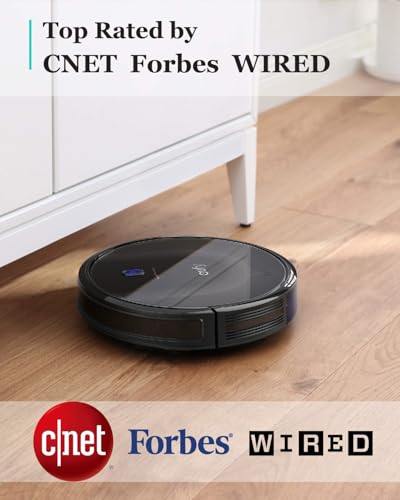

The certified like-new package focuses entirely on core cleaning components without the ancillary base stations found on premium models. Because this is an Amazon Renewed unit designated under model name T2126-Renewed, the listing specifies that each device undergoes professional inspection, testing, and restoration to meet strict operational performance standards, though the exterior chassis may exhibit minor cosmetic scratches or surface imperfections from previous handling.
- Certified refurbished eufy RoboVac 11S MAX robotic vacuum cleaner chassis
- Tempered glass-top protective cover designed to resist cosmetic scratching
- Dedicated infrared remote control for drive commands, schedule timing, and mode selection
- Integrated Lithium-ion battery providing up to 100 minutes of continuous runtime on hard surfaces
- Automated self-charging base station with return-to-base docking capabilities
- High-capacity 0.6-liter dust collection box with integrated washable filter assembly
- BoostIQ technology sensor suite delivering automated suction adjustments within 1.5 seconds
- Infrared obstacle evasion sensors and downward-facing drop-sensing safety tech
- Dual spinning side brushes and central rotating brush roll
- Three-month warranty backed by renewed program standards
Refurbished Warranty Coverage and Long-Term Reliability
Investing in a renewed electronic cleaning appliance requires careful consideration of mechanical wear points versus financial savings. A refurbished eufy 11s vacuum comes backed by a three-month warranty window, which represents a substantially compressed guarantee compared to original retail packaging. Within this 90-day period, the certified refurbished designation promises that the unit has been professionally inspected, cleaned, and tested by technicians to operate like new. However, buyers should recognize that cosmetic imperfections such as light casing scratches or minor scuffs on the bumper edge are explicitly permitted under this standard. The functional internals—including the drive wheels, suction motor, and battery pack—are tested to meet original manufacturer performance thresholds.
The core question regarding eufy 11s vacuum reliability centers on mechanical fatigue. Unlike stationary appliances, robot vacuums subject their drive assemblies, wheel springs, and rotating brush motors to continuous friction, dust intrusion, and physical shock. When evaluating the eufy robovac 11s max warranty, the primary risk is that underlying wear on electric motors or lithium cells may only manifest after repeated thermal cycles. If an internal component fails on day ninety-one, warranty claims are no longer honored under the three-month renewed policy. Buyers must thoroughly stress-test the machine during the initial weeks of ownership, observing wheel tracking, charging contact consistency, and run duration to catch potential assembly defects before the protection period expires.
For households that prefer zero-maintenance hardware ecosystems, higher-end automated vacuums such as the eufy – x10 pro omni wi-fi connected robot vacuum & mop with self washing and self drying auto empty deliver comprehensive warranty packages alongside advanced auto-emptying stations. However, increased complexity brings more failure points, such as water valves, pump motors, and electronic logic boards. In contrast, the simplified electro-mechanical architecture of the 11S MAX minimizes catastrophic circuit failures, meaning that long-term survival typically comes down to basic motor bearings and routine debris clearance rather than complex proprietary controller boards.
Navigation, Sensors, and Troubleshooting Without Wi-Fi
A defining operational characteristic is that this appliance is an entirely offline cleaning robot. The product listing explicitly clarifies that the device does not support Wi-Fi or mobile application connectivity; all configurations, schedules, and mode selections are managed using the included physical remote control and the single primary button on the chassis. Operating a eufy 11s vacuum without wifi provides immediate privacy advantages, as the machine transmits zero floor maps, image feeds, or home layout telemetry to external cloud servers. Furthermore, it completely eliminates software bugs, network dropouts, router pairing failures, and firmware updates that occasionally render modern smart vacuums non-operational.
However, the lack of network connectivity directly influences how homeowners manage operational errors. When performing eufy 11s vacuum troubleshooting, there is no companion smartphone application to provide plain-text error descriptions or pinpoint where the machine became immobilized. Instead, the unit communicates mechanical distress through audible warning beeps, status light flashes, and bumper micro-switch state indicators. If the rotating brushroll becomes choked with pet hair, or if a wheel drive encounters high electrical resistance due to thread tangles, the vacuum stops and sounds a specific numeric sequence of acoustic tones. Users must reference the physical manual or diagnose mechanical blockages manually, checking the side sweepers, brush cage, and drive treads for bound debris.
Navigation reliance falls entirely upon downward drop-sensing technology and front-mounted infrared evasion sensors. The low-profile 2.85-inch height allows the chassis to slip under low furniture clearance zones where taller LiDAR-turret vacuums cannot venture. The infrared sensors detect large vertical obstacles, prompting the microprocessor to decelerate before gentle bumper contact occurs. While bounce-style random path navigation requires more running time to touch every floor quadrant compared to systematic laser mapping, the simplicity of the hardware means there are no delicate optical spinning mirrors to accumulate dust, scratch, or burn out motor coils over years of continuous deployment.
Floor Surface Compatibility and Suction Dynamics
Matching the cleaner to your specific floor composition is essential for achieving acceptable cleaning performance. According to the manufacturer data, the 11S MAX is engineered specifically for hard floors, tile surfaces, and medium-pile carpeting. When operating as a eufy 11s vacuum for low pile carpet, the machine utilizes its proprietary BoostIQ technology to maintain cleaning efficacy. BoostIQ monitors motor resistance and brush drag, automatically ramping up suction velocity within 1.5 seconds when transitioning from smooth timber or tile over to textured carpet fibers. This automated ramp prevents the battery from draining unnecessarily on smooth floors while delivering the mechanical lift required to extract embedded dirt from woven piles.
The structural limitation of this platform lies in the single factory power level profile. While BoostIQ dynamically adjusts motor output, the vacuum lacks manual granular speed settings found on high-end digitized units. On thick shag rugs or high-pile tufted wool carpets, the ultra-low 2.85-inch ground clearance can cause the front bumper or chassis belly pan to drag, triggering an overload alert on the main drive wheels. Consequently, the vacuum performs optimally in spaces with hard wood, linoleum, ceramic tile, and tightly woven area rugs. Homes requiring heavy-duty deep-carpet agitation might supplement this automated sweeper with a dedicated upright stick vacuum like the ix141h shark vacuum for periodic heavy fiber extraction.
Noise management is another primary operational strength of this vacuum platform. Producing a measured acoustic profile of roughly 55 decibels, the sound output is comparable to a modern microwave or steady household hum. This low acoustic footprint enables scheduled autonomous cleaning cycles while occupants are resting or working from home without inducing sound fatigue. The tempered glass top cover also contributes to structural rigidity and acoustic dampening, while simultaneously preventing the superficial micro-scratching commonly seen on high-gloss plastic robot vacuum chassis.
Battery Degradation and Component Maintenance Schedules
Power management determines whether a robotic vacuum remains a daily convenience or becomes an early electronic discard. The internal Lithium-ion cell delivers a rated eufy 11s vacuum battery life of up to 100 minutes of continuous runtime on hardwood flooring. Under typical operating circumstances, running continuously across medium-pile carpeting with BoostIQ actively engaged will moderately reduce overall operational time per cycle due to increased motor draw. Once cell voltage falls below a predetermined operational threshold, the vacuum shuts down suction power and utilizes remaining reserve power to locate the infrared homing beacon of its self-charging dock.
Because all lithium-ion chemistries degrade after hundreds of charge-discharge cycles, buyers must plan for eventual battery service. Fortunately, the modular design of this chassis allows users to replace the battery pack by removing two standard screws on the lower underside cover. Unlike heavily integrated smart vacuums that lock replacement components behind authorized service tools, eufy 11s vacuum replacement parts are widely produced and simple to swap with basic household hand tools. Readily available wear components include replacement side-sweeping nylon brushes, bristle-and-rubber composite brush rolls, rubber drive belts, and replacement charging docks.
Filtration and debris storage demand consistent human intervention. The integrated dustbin holds 0.6 liters of dry matter, a relatively generous volume for a sub-three-inch chassis. However, lacking an automated clean-base disposal tower, the bin must be manually unlatched, dumped, and periodically cleared of fine particulate build-up. The inclusion of a washable primary filter element lowers recurring ownership expenses, as owners can rinse the assembly under cold tap water to clear packed fine dust. It is critical that the filter dries thoroughly for 24 hours before reinsertion; operating the machine with a damp filter can draw moisture directly into the high-speed suction motor turbine, causing catastrophic electrical short circuits and bearing corrosion.
eufy RoboVac 11S MAX Pros and Cons
Pros
- Slim 2.85-inch profile fits under low furniture
- Quiet 55-decibel operation
- No Wi-Fi setup or app account required
- Scratch-resistant tempered glass-top cover
- Washable filter reduces ongoing replacement costs
- BoostIQ automatically increases suction on carpets
Cons
- Limited 3-month refurbished warranty window
- No app alerts for screenless troubleshooting
- Not compatible with high-pile or plush carpeting
- Random bounce navigation lacks room mapping
Is the eufy RoboVac 11S MAX Worth It
Determining whether this renewed robot vacuum represents a smart acquisition requires evaluating your personal tolerance for manual maintenance versus technical complexity. If you are questioning, is eufy 11s vacuum worth it, the answer is an emphatic yes for shoppers who prioritize privacy, physical simplicity, and basic floor maintenance over app controls. For small apartments, single-level condominiums, and homes dominated by hardwood or flat tile, the combination of a 2.85-inch clearance profile, whisper-quiet 55-decibel sound output, and autonomous BoostIQ cleaning delivers genuine utility without software frustrations.
Conversely, this renewed vacuum will disappoint buyers who expect automated room-by-room mapping, boundary exclusion zones, or app-controlled deep cleaning schedules. Households with dense high-pile carpeting, active multi-pet shedding environments, or sprawling floor plans with multiple elevation shifts will find the 100-minute battery and bounce-style navigation inefficient. Buyers seeking an end-to-end hands-off experience complete with active mopping and pressurized roller washing would be better served investigating advanced flagships like the eufy s1 pro vacuum, which handles wet and dry debris simultaneously through complex self-cleaning infrastructure.
Ultimately, this certified refurbished unit succeeds as an unpretentious, reliable mechanical workhorse. Provided you accept the shortened three-month warranty window, commit to regular manual emptying of the 0.6-liter dustbin, and routinely snip wrapped hairs from the roller bearings, the 11S MAX offers dependable baseline floor cleanliness at a fraction of the mechanical and financial overhead demanded by connected smart-home appliances.
FAQ
How do you troubleshoot a eufy RoboVac 11S MAX that stops with beeping codes?
Because this model lacks a display screen and Wi-Fi interface, it reports mechanical faults using sequences of audible beeps accompanied by a flashing red or solid red status light. Common issues include tangled side brushes, a jammed main roller, dirty drop sensors, or stuck bumper switches. To resolve these errors, flip the vacuum upside down, manually inspect and rotate the wheels and brush assembly, use a dry cotton swab to clean the infrared drop sensors along the bottom perimeter, and tap the front bumper to ensure the mechanical micro-switches spring back freely.
Can the eufy RoboVac 11S MAX clean high-pile or plush carpet?
No, the product listing explicitly rates the machine for hard floors, tile, and medium-pile carpets. Due to its ultra-low 2.85-inch ground clearance, high-pile, shag, or dense plush carpets will cause the chassis to bottom out, creating excessive resistance against the drive wheels and central brushroll. This triggers the internal motor overload protection, causing the vacuum to halt operation and sound a distress alert.
Does this model connect to a 5GHz or 2.4GHz home Wi-Fi network?
The 11S MAX does not connect to Wi-Fi networks of any frequency. The listing specifies that all operations, scheduled cleaning routines, edge cleaning modes, and directional steering are executed exclusively via the included infrared handheld remote control or the physical power button located on the top tempered glass plate.
What should you inspect immediately after receiving a refurbished unit?
Because the Amazon Renewed program provides a three-month warranty, you should inspect the vacuum immediately upon delivery. Check the exterior for significant structural damage, verify that the 0.6-liter dustbin latches tightly, inspect the brushroll bearings for residual hair or debris, and confirm that the docking station powers on. Run the machine through multiple full charge and discharge cycles during the first two weeks to ensure the lithium-ion battery sustains its advertised 100-minute runtime profile on hard flooring.
How often does the washable filter inside the dustbin need cleaning?
To preserve airflow efficiency and prevent suction motor strain, the washable filter should be tapped clean over a waste bin after every two to three cleaning cycles. If fine dust restricts air movement, rinse the filter assembly thoroughly under clean running water without detergents. You must let the filter air-dry completely for at least 24 hours before reinstalling it into the 0.6-liter dustbin to avoid pulling moisture into the internal electrical motor.