As Amazon Associates, we earn from qualifying purchases. This means we may receive a small commission at no extra cost to you if you click through and make a purchase.
Power Ratings
1500 Watts, 120 Volts
Tank Capacity
24 fluid ounces
Dimensions
15"D x 12"W x 15.8"H
Weight
19 pounds
Full spec sheet 6 more rows from the listing
| Machine Type | Drip Coffee Machine |
| Operation Mode | Fully Automatic |
| Grinder Type | Integrated Conical Burr Grinder |
| Coffee Input | Whole Bean |
| Filter Type | Reusable Filter |
| Materials | Plastic and Stainless Steel |
When shopping for a delonghi combi coffee maker that combines whole-bean grinding with single-serve drip brewing, the De’Longhi TrueBrew presents an ambitious all-in-one solution. Designed to eliminate single-use plastic pods, this machine grinds whole beans on demand and dispenses freshly brewed coffee directly into your mug. However, housing a high-speed grinder, heating system, and automated dosing mechanics inside a 19-pound chassis creates mechanical complexity. Careful buyers need to know whether the push-button convenience justifies the daily maintenance and long-term durability trade-offs.
In this delonghi truebrew review, we examine the mechanical design, daily operation, and maintenance realities of this fully automatic machine. We explore how its conical burr grinder performs over time, evaluate how the proprietary brewing system functions, and detail the cleaning steps necessary to avoid blockages. This guide covers the factory specifications, included components, potential failure points, and specific buyer profiles to determine whether this machine represents a reliable long-term addition to your kitchen counter.
What You Get With the De’Longhi TrueBrew
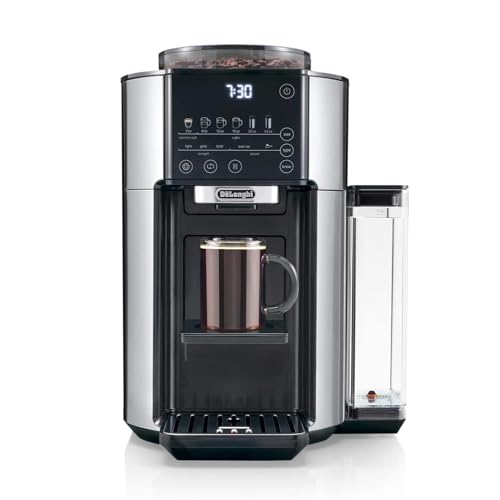


The De’Longhi TrueBrew package includes the automatic coffee maker and essential tools for whole-bean brewing without disposable pods or paper filters. The manufacturer provides the following hardware and integrated features:
- De’Longhi TrueBrew automatic coffee machine in stainless steel and plastic.
- Built-in conical burr grinder engineered to grind fresh beans for each cup.
- Proprietary Bean Extract Technology that grinds, doses, and brews automatically.
- Six brew sizes: 3-ounce espresso style, 8-ounce, 12-ounce, 16-ounce, 20-ounce, and 24-ounce options.
- Five brew styles: Light, Gold, Bold, Over Ice, and Espresso Style.
- Reusable internal filter designed for zero-waste brewing without paper filters.
- Removable water tank with a 24 fluid ounce capacity.
- Touchscreen interface with a built-in clock and programmable auto-on settings.
- Included accessories: measuring scoop and water hardness test strip.
Built-In Grinder Reliability and Long-Term Mechanical Wear
The built-in conical burr grinder is the central feature of this unit, grinding fresh beans before each cycle. Combining a motorized grinder and hot water extraction inside one enclosure introduces durability challenges. Running at 1500 watts, the motor must supply enough torque to crush dense whole beans consistently. Over hundreds of cycles, mechanical resistance can stress the internal motor gears, particularly if users brew multiple large servings back to back without letting the housing cool down.
A key factor in delonghi truebrew reliability is the internal bean chute. Beans are ground by the burrs and fall directly into the brewing chamber. Because steam naturally rises during hot water extraction, moisture can enter the lower chute opening. When rising steam meets dry coffee particles, it forms a sticky paste that clings to the walls. Over time, this buildup restricts bean flow and leads to under-dosed brews. Because the delonghi truebrew specs do not list a pre-ground bypass chute, any grinder jam leaves the machine unable to brew until cleared.
Bean selection also directly impacts burr longevity. Dark roast beans feature surface oils that coat the burr teeth and hopper surfaces. These oils trap fine dust, creating a gummy layer that prevents beans from feeding smoothly. To protect the burrs and motor, users should select dry, medium roasts and inspect the hopper regularly. While the exterior stainless steel provides solid build quality, the internal gear assembly requires sensible use to prevent premature wear.
Daily Maintenance Demands and Grinder Cleaning Realities
Automated appliances promise convenience, but they require consistent daily upkeep. Unlike standard drip makers where cleaning means throwing away a paper filter, delonghi truebrew maintenance involves keeping both grinding and brewing areas clear. Routine delonghi truebrew grinder cleaning prevents old coffee oils from oxidizing inside the burr assembly, which ruins flavor and attracts moisture. Because the unit utilizes a reusable internal filter rather than paper liners, the internal chamber collects fines that must be rinsed regularly to prevent mesh clogging.
Fluid line maintenance is just as important for longevity. The 1500-watt heating system is susceptible to mineral buildup from tap water. De’Longhi includes a water hardness test strip so users can calibrate cleaning intervals, but regular descaling is essential. Running an effective descaling solution such as dezcal liquid descaler through the 24-ounce reservoir dissolves calcium deposits before they restrict water flow. Neglecting descaling leads to inaccurate cup volumes and eventual heating errors on the touchscreen display.
The internal waste bin also requires daily attention. After brewing, the machine drops spent grounds pucks into an internal container. Because these pucks are warm and moist, leaving them in the closed machine for days encourages mold and bacterial growth. Owners must empty the grounds bin and rinse the drip tray every day. Treating the unit like a hands-off pod maker will cause odors, hygiene concerns, and mechanical jams along the ejection path.
Understanding Bean Extract Technology and Common Mechanical Failure Points
At the center of the brewing cycle is De’Longhi’s proprietary delonghi bean extract technology, which automatically grinds, doses, and tamps coffee before dispensing water. This system uses mechanical tracks, optical sensors, and micro-switches to ensure the brew group aligns correctly beneath the grinder and showerhead. When analyzing reported delonghi truebrew problems, many faults occur when loose grounds cover optical sensors or obstruct moving tracks. If the machine cannot confirm the brew group’s position, it stops the cycle and displays an error.
Hydraulic wear also occurs over extended use. Unlike compact espresso machines such as the delonghi eletta explore, which push small fluid volumes under high pressure, this drip machine moves up to 24 ounces per brew cycle. Pumping higher volumes places continuous thermal and hydraulic stress on internal silicone hoses and rubber gaskets. If an internal seal degrades, water can leak into the machine base, risking electrical shorts in the lower control boards.
The touchscreen panel is another component that requires careful care. While the interface is intuitive, touch controls in kitchen environments face steam, grease, and moisture. Splashes or steam rising from open mugs can affect touchscreen responsiveness over time. To protect the electronics, place the machine away from low cabinets that trap steam, and wipe the front panel dry after every use.
Brew Style Performance and Iced Coffee Capabilities
The TrueBrew offers five brew styles: Light, Gold, Bold, Over Ice, and Espresso Style. Using the delonghi truebrew for iced coffee is a popular option for buyers who want chilled drinks without watery dilution. Traditional iced coffee methods melt ice rapidly, resulting in a thin beverage. The Over Ice setting adjusts the extraction profile by delivering a more concentrated coffee dose at an optimized volume, ensuring that melting ice chills the drink while preserving a balanced flavor profile.
For hot coffee, the machine provides three standard strengths alongside a concentrated option. The Gold setting follows standard extraction parameters for balanced acidity and sweetness, while the Bold setting slows water delivery to extract richer notes from medium and dark roasts. The 3-ounce espresso style setting provides a short, dense extraction for quick drinks or milk-based recipes. While it does not deliver true high-pressure espresso with thick crema, it produces a rich base that far surpasses standard drip strength.
Compared to versatile brewers like the ninja coffee bar, which use manual scoops of pre-ground coffee in standard brew baskets, the TrueBrew holds a clear advantage in bean freshness due to its built-in burrs. However, its 24 fluid ounce maximum capacity limits it strictly to single servings and personal travel mugs. If your household needs full 10-cup or 12-cup carafes for morning gatherings, the TrueBrew’s smaller tank requires frequent refills and sequential single-cup brewing.
De’Longhi TrueBrew Pros and Cons
Pros
- Built-in conical burr grinder
- Automated Bean Extract Technology
- Six cup sizes up to 24 ounces
- Five versatile brew styles including Over Ice
- Reusable filter eliminates plastic pod waste
Cons
- Requires whole beans with no pre-ground bypass
- Small 24-ounce maximum water tank capacity
- Daily internal grounds container cleaning required
Is the De’Longhi TrueBrew Worth It
Deciding whether the De’Longhi TrueBrew makes sense depends on whether you prioritize push-button whole-bean freshness over mechanical simplicity. For single-cup drinkers and commuters filling travel tumblers up to 24 ounces, it offers real convenience. It eliminates recurring pod expenses and plastic waste while delivering better cup quality than pre-ground pod brewers.
However, buyers seeking an appliance with minimal maintenance should think twice. Combining a grinder, water heater, and automated brew group inside one unit demands regular descaling, chute cleaning, and daily waste disposal. If you skip cleaning the internal chamber, empty grounds irregularly, or use oily beans, the unit will quickly experience motor strain or sensor faults.
So, is delonghi truebrew worth it for you? It is worth buying if you want freshly ground single-serve coffee and commit to the daily cleaning routine an automated burr system requires. If you prefer low-effort maintenance or need large carafes for family gatherings, a separate standalone grinder paired with a standard drip brewer remains a simpler, more durable setup.
FAQ
How does Bean Extract Technology work on the De’Longhi TrueBrew?
De’Longhi’s Bean Extract Technology automates the entire brewing sequence. When you select a cup size and brew style, the system doses the beans, activates the conical burrs, transfers grounds into an internal chamber, tamps them, and pumps heated water through the coffee bed. This automated process replaces manual measuring and tamping to deliver consistent single-serve drip coffee.
Can you use pre-ground coffee in the De’Longhi TrueBrew?
The manufacturer listing states that the De’Longhi TrueBrew is designed specifically for whole bean coffee input through its built-in grinder. The listing does not specify a bypass chute or compartment for pre-ground coffee. Operating the machine properly requires whole beans in the hopper for the automated dosing system to function.
How often does the De’Longhi TrueBrew require descaling?
Descaling frequency depends on your local water hardness and daily brew volume. The included water hardness test strip helps set proper maintenance intervals. For moderate water, descaling every one to two months prevents mineral scale from clogging the 1500-watt heating elements and maintains proper brewing temperatures.
What is the maximum cup size the De’Longhi TrueBrew can brew?
The De’Longhi TrueBrew features six brew sizes: a 3-ounce espresso style cup, followed by 8, 12, 16, 20, and 24-ounce options. The maximum single brew size and water tank capacity is 24 fluid ounces. This accommodates travel mugs and large cups, but does not support full multi-cup carafes.
What causes common grinder and brewing problems in combi coffee makers?
Common mechanical problems in combination coffee makers include oily bean buildup, moisture in the grinder chute, and mineral scale in the fluid lines. Oily beans leave residue on burrs that slows bean feeding, while steam entering the chute causes grounds to clump. Routine cleaning and regular descaling resolve most of these issues.


