As Amazon Associates, we earn from qualifying purchases. This means we may receive a small commission at no extra cost to you if you click through and make a purchase.
Shutter Speed Range
1/8000 second maximum to 30 seconds minimum
ISO Sensitivity Range
Expanded minimum ISO 100
Image Sensor
26.0 MP APS-C format Exmor R back-illuminated CMOS
Processing Engines
BIONZ XR processor with dedicated AI Processor unit
An examination of the documented sony a6700 specs reveals a camera built around dense imaging architecture and high-throughput data processing. The table below outlines the core technical parameters provided by the manufacturer.
Full spec sheet 7 more rows from the listing
| Lens Mount Compatibility | Sony E-mount |
| Still Image Resolution | 26.0 effective megapixels (RAW and JPEG support) |
| Image Stabilization | Sensor-shift (in-body 5-axis image stabilization) |
| Maximum Video Capture | 4K at up to 120p; 4K 60p oversampled from 6K capture |
| Video Color Profiles | 4:2:2 10-bit internal recording (All-Intra and Long GOP) |
| Display Interface | 3.0-inch vari-angle touchscreen monitor (16:9 aspect ratio) |
| Exposure Modes | Aperture Priority, Auto, Manual, Program, Shutter Priority |
Selecting a dedicated hybrid camera body requires weighing high-performance imaging technology against long-term field endurance. The Sony a6700 sits as Sony’s modern APS-C flagship, integrating a 26.0-megapixel back-illuminated Exmor R CMOS sensor with advanced BIONZ XR processing architecture and a dedicated artificial intelligence co-processor. For creators investigating the camera sony a6700 system, this platform promises pro-tier capture metrics previously restricted to full-frame cinema gear, such as 10-bit 4:2:2 sampling and 4K recording up to 120p. However, compressing high-bandwidth data pipelines into a compact, lightweight magnesium-alloy enclosure naturally introduces practical trade-offs regarding sustained thermal dissipation, stabilization boundaries, and overall field reliability.
This technical breakdown assesses how the camera behaves under demanding workloads and prolonged operational stress. Rather than simply reiterating marketing claims, our analysis inspects potential hardware bottlenecks, such as internal heat generation during extended movie capture, the physical mechanics of the sensor-shift system, and the practical operational stamina of its processing platform. We review the manufacturer specifications, detail what equipment comes packaged with the camera body, explore real-world use cases, and examine whether this high-resolution hybrid matches your specific production workflow.
What You Get With the Sony a6700



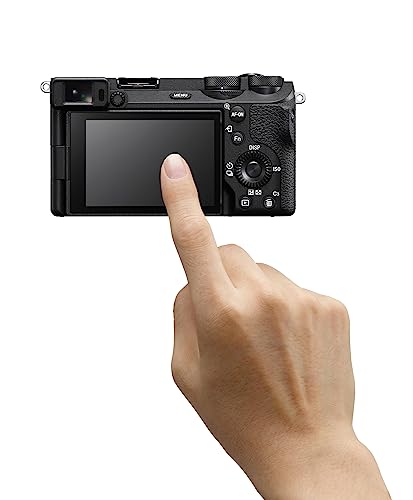
The Sony a6700 arrives as an interchangeable-lens camera body designed for photographers and videographers who utilize the E-mount ecosystem. The listing specifies the core camera body and its underlying imaging hardware, while leaving lens selection and specialized peripheral support up to the buyer.
- Sony a6700 APS-C mirrorless camera body in black finish
- 26.0-megapixel APS-C format Exmor R back-illuminated CMOS image sensor
- BIONZ XR image processing engine paired with a dedicated AI processing unit
- Native Sony E-mount interface compatible with full-frame and APS-C E-mount lenses
- 3-inch articulating LCD display screen configured with touch controls
- Internal sensor-shift image stabilization mechanism
- Advanced video recording features supporting 4K 60p (oversampled from 6K) and 4K 120p high-frame-rate capture
- 10-bit 4:2:2 internal recording modes supporting Long GOP and All-Intra compression
- Mechanical and electronic exposure control options spanning shutter speeds from 1/8000 second to 30 seconds
- Integrated real-time recognition autofocus system featuring dedicated face and subject tracking
Thermal Endurance and Sustained Video Capture
Evaluating the Sony a6700 for video requires an honest assessment of compact camera thermal dynamics. Driving a 26.0-megapixel sensor at 6K readouts to oversample 4K 60p footage generates immense computational load. When operating in high-bandwidth 10-bit 4:2:2 All-Intra modes or capturing 4K at 120 frames per second, the BIONZ XR processor and sensor pipeline generate concentrated heat inside an enclosure that lacks active internal cooling fans. While dedicated outdoor devices like a reveal game camera utilize ultra-low-power microcontrollers engineered to endure direct ambient heat for extended periods, high-bitrate mirrorless cameras concentrate thermal energy directly behind the sensor assembly.
Thermal limitations become a practical factor during long interviews, live event streaming, or uninterrupted documentary shoots. Sony a6700 overheating behavior is fundamentally dictated by ambient temperature, display positioning, and capture framerates. Users who record long clips in standard 4K 24p or 30p generally experience dependable sustained operation, particularly if the rear LCD screen is pulled away from the body to allow passive heat dissipation through the rear chassis. However, continuous capture at 4K 60p or maximum-throughput 120p will inevitably raise internal temperatures toward the camera’s thermal cutoff threshold, prompting automatic safety shutdowns to preserve the sensitive silicon components.
To maximize continuous recording reliability during professional engagements, operators must plan around these hardware realities. Adjusting internal power-saving temperature thresholds from standard to high grants longer continuous runtimes before a shutdown occurs, but the camera body will become noticeably warm to the touch. For hybrid shooters working in short to moderate takes, the thermal capacity of the system poses few obstacles. Conversely, studio videographers seeking an uninterrupted, multi-hour continuous recording hub should recognize that compact, weather-sealed hybrid bodies naturally prioritize portability over the bulky heat sinks found in dedicated cinema rigs.
Sensor Stabilization Limits and Sensor Reliability
The integrated Sony a6700 image stabilization system relies on a physical sensor-shift mechanism that suspends the 26.0MP Exmor R CMOS sensor within an electromagnetic carriage. This system compensates for angular shake across pitch, yaw, roll, and horizontal/vertical translations. Unlike stationary monitoring equipment like a kasa indoor pan tilt camera 1080p that relies on external motorized mechanical gears to swivel an entire housing, in-body stabilization mechanisms must move the delicate sensor silicon microscopic distances in real time without introducing physical misalignment.
While the sensor-shift assembly excels at steadying handheld still photographs at slower shutter speeds down toward the 1/30 to 1/4 second range depending on focal length, its limits become visible during aggressive handheld video capture. Handheld walking shots can produce characteristic high-frequency jitter or peripheral distortion when paired with wide-angle lenses, as the mechanical limits of the internal carriage reach their physical boundaries. For smooth tracking shots, operators generally need to supplement the in-body stabilization with motorized gimbals or apply post-production digital smoothing, which incurs an additional field-of-view crop.
From a hardware longevity perspective, Sony a6700 sensor reliability remains high when the camera is treated with proper mechanical care. However, magnetic sensor suspension assemblies are inherently delicate. Subjecting the camera body to repeated severe mechanical shocks, excessive drop impacts, or continuous heavy vibrations—such as mounting the camera directly to stiff vehicle brackets without dampening—can place mechanical strain on the stabilization actuators. Ensuring the camera is powered down properly locks the sensor carriage securely, protecting the alignment of the 26.0MP back-illuminated plane over years of regular use.
Autofocus Tracking and Hardware Processing Demands
One of the primary selling points of this platform is the dedicated AI processing unit working alongside the primary BIONZ XR engine. The Sony a6700 autofocus tracking architecture uses algorithmic deep learning to identify and maintain focus on complex subjects. Rather than relying solely on contrast changes or basic phase detection, the dedicated co-processor evaluates human pose estimation, tracking subjects even when their faces turn away from the lens, wear sunglasses, or pass behind momentary obstacles. The system extends its recognition profiles beyond humans to include animals, birds, insects, cars, trains, and airplanes.
The practical benefit in the field is a notable reduction in missed focus during fast-paced action photography or solo video presentations where an operator cannot manually pull focus. The tracking framework updates focus coordinates across the 26.0-megapixel sensor plane virtually instantaneously. This makes tracking erratically moving subjects, such as wildlife or athletes operating at shutter speeds up to 1/8000 of a second, exceptionally consistent. For content creators filming solo talking-head content, the tracking system locks onto the presenter reliably without hunting or drifting toward background clutter.
However, this computational power introduces real trade-offs in power draw. Continuously running the AI processor, sensor-shift stabilization, high-refresh LCD monitor, and high-frequency autofocus motors simultaneously taxes the power delivery system. In continuous field production, Sony a6700 battery life varies significantly based on how aggressively these computational features are engaged. While stationary indoor monitors such as a samsung smartcam full hd camera draw stable power from constant AC wall connections, a field mirrorless camera depends entirely on rechargeable cell chemistry. Operators executing full-day production shoots must carry multiple spare batteries and take advantage of USB-C power delivery during stationary setups to prevent unexpected downtime.
Chassis Durability and Ergonomic Considerations
The external design of the Sony a6700 balances the demands of extreme portability with the functional needs of enthusiast photographers. Built with a compact mirrorless form factor, the body provides an improved front grip over earlier a6000-series iterations, allowing users to balance heavier E-mount zoom lenses more securely. The magnesium alloy chassis provides structural rigidity without adding excessive weight to a travel kit. However, prospective buyers should understand the physical compromises that accompany compact rangefinder-style enclosures.
Ergonomically, the camera includes front and rear control dials, an exposure compensation dial, and customizable shortcut buttons that streamline adjustments across Manual, Aperture Priority, and Shutter Priority modes. The inclusion of a 3.0-inch fully articulating side-opening touchscreen display dramatically improves workflow versatility compared to older tilt-only screens, allowing high- and low-angle framing in both horizontal and vertical formats. However, the compact top plate leaves limited room for dedicated physical controls, requiring users to navigate the updated touch-sensitive menu interface for deeper operational parameters.
Sealing and port durability represent another area where buyers must maintain realistic expectations. The camera chassis incorporates weather-resistant gaskets around primary seams and doors, but the manufacturer listing does not specify a formal IP immersion or dust rating. The ports, including the single memory card compartment, display hinge, and interface flaps, require careful handling in severe rainstorms or dusty environments. While the body can easily withstand standard outdoor use and moderate humidity, it is not an indestructible industrial tool and should be protected with proper environmental covers during intense weather events.
Sony a6700 Pros and Cons
Pros
- 0MP back-illuminated Exmor R CMOS sensor
- High frame rate 4K recording up to 120p
- Dedicated AI processor for real-time subject tracking
- Internal 10-bit 4:2:2 All-Intra recording
- Built-in 5-axis sensor-shift image stabilization
Cons
- Compact chassis prone to thermal limits during sustained 4K 120p
- Listing does not include lenses or memory cards
- High processing demand impacts continuous battery runtime
Is the Sony a6700 Worth It
Deciding whether the camera fits your workflow requires looking beyond raw resolution figures. Is the Sony a6700 worth it for your specific production needs? If you are a hybrid creator who divides your time equally between high-resolution still photography and advanced cinematic video, the camera offers immense capability. The pairing of a 26.0MP back-illuminated APS-C sensor with 10-bit 4:2:2 internal color sampling and real-time AI subject recognition brings modern flagship functionality into an accessible, highly portable form factor.
For still photographers specializing in street, travel, landscape, and candid action, the camera is an exceptional tool. The compact chassis pairs effortlessly with lightweight APS-C prime lenses, delivering pristine RAW image files with expansive dynamic range and low-noise characteristics starting at base ISO 100. Fast autofocus acquisition and a maximum shutter speed of 1/8000 second allow photographers to freeze rapid motion with confidence, while the sensor-shift stabilization provides sharp handheld exposures in fading natural light.
On the other hand, commercial video operators who primarily film continuous, uninterrupted long-form events—such as multi-hour conferences, theatrical stage productions, or continuous podcast recordings—should carefully weigh the thermal boundaries of a compact mirrorless chassis. While the camera excels at short-form cinema capture, narrative B-roll, and run-and-gun vlogging, continuous recording in heavy 4K formats can push internal temperatures toward thermal throttling thresholds. For creators who respect its physical boundaries, the Sony a6700 stands as one of the most versatile and computationally sophisticated APS-C cameras on the market.
FAQ
Does the Sony a6700 feature in-body image stabilization?
Yes. The camera incorporates a 5-axis sensor-shift image stabilization mechanism built directly into the chassis. This system physically shifts the 26.0-megapixel APS-C CMOS sensor to compensate for camera movement across five axes, assisting handheld still photography at lower shutter speeds and reducing minor shakes during handheld video recording.
What video frame rates and formats does the camera support?
The camera supports advanced 4K recording up to 60p, oversampled from a 6K full-pixel readout for maximum clarity and detail. It also supports high-frame-rate 4K capture at up to 120p for slow-motion playback. Video can be recorded internally in rich 10-bit 4:2:2 color using either Long GOP or All-Intra compression formats.
Does the camera package include a lens?
The specific listing evaluated here covers the Sony a6700 mirrorless camera body only. It does not include an E-mount lens, memory card, or secondary carrying accessories. Buyers must acquire compatible Sony E-mount lenses separately to begin shooting.
How does the AI processor improve autofocus performance?
The dedicated AI processor runs deep-learning algorithms that perform real-time subject recognition. Rather than merely detecting general contrast or simple human eye outlines, it recognizes human body poses and tracks diverse subjects, including animals, birds, insects, and vehicles, maintaining focus even when targets turn away or move erratically.
What are the shutter speed limits on the Sony a6700?
The camera provides an exposure control range with a maximum shutter speed of 1/8000 of a second for freezing high-speed action in bright sunlight, down to a minimum shutter speed of 30 seconds for long-exposure nighttime and landscape photography.


