As Amazon Associates, we earn from qualifying purchases. This means we may receive a small commission at no extra cost to you if you click through and make a purchase.
Acoustic Output Range
23 dB on lowest operational setting
Total Unit Weight
16 pounds
Physical Dimensions
14.4 inches deep by 14.4 inches wide by 22.7 inches high
Filtration Technology
Proprietary HEPASilent dual mechanical and electrostatic filtration
Full spec sheet 6 more rows from the listing
| Model Number | 3613111100 |
| Rated Floor Area | 3,048 sq ft (Cleans 674 sq ft in 12.5 min; 3,235 sq ft in 60 min) |
| Filter Media Type | Activated carbon and synthetic particulate barrier |
| Particle Retention Threshold | 0.1 micron |
| Power Consumption | 46 watts at peak draw |
| Control Compatibility | Manual console buttons, iOS app, Android app, Amazon Alexa |
Selecting a high-capacity air cleaner for expansive living zones requires balancing raw airflow volume against ongoing maintenance demands and component reliability. The Blue Pure 211i Max targets large residences, open architectural layouts, and multi-room spaces that demand continuous atmospheric turnover. If you are dealing with seasonal wildfire smoke, pervasive household dust, or multi-pet dander, this floor-standing unit claims rapid remediation through dual-stage filtration and automated air monitoring. However, investing in a unit of this scale involves evaluating long-term operational factors beyond standard marketing specifications, including recurring filter maintenance, mechanical intake design, and reliance on mobile connectivity for air quality tracking.
This technical breakdown provides an objective, reliability-focused examination of the system’s core mechanics and user experience. We analyze how the proprietary mechanical and electrostatic filtration processes handle heavy contaminant loads, assess the accuracy and longevity of the integrated air quality sensor, and evaluate how the fan operates under sustained everyday use. Furthermore, we inspect physical build characteristics, smart features, and operational limitations so you can decide whether this large-format air cleaner aligns with your home environment and upkeep expectations.
What You Get With the Blue Pure 211i Max

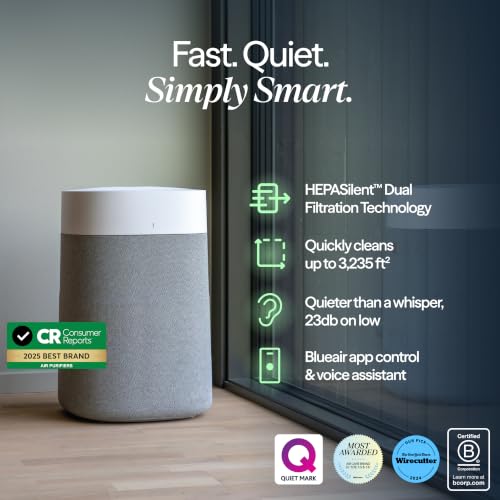
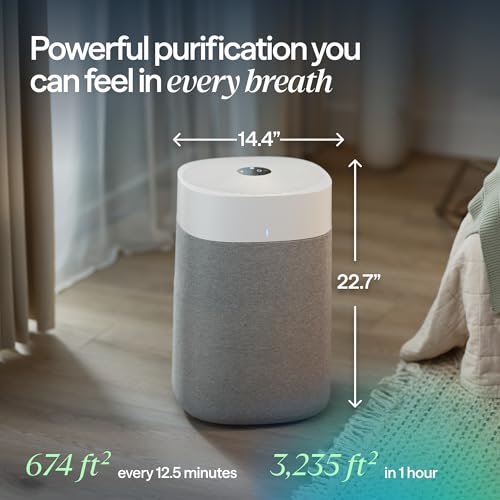

The system arrives configured as an integrated tower designed for immediate deployment in high-volume rooms, combining cylindrical filtration with top-mounted exhaust mechanics.
- Main air cleaning unit featuring a minimalist Scandinavian cylindrical design in a white and slate color finish.
- Proprietary HEPASilent dual-stage composite filter with activated carbon for fine particle capture and gas phase adsorption.
- Integrated 360-degree fabric pre-filter exterior that traps large visible debris before it reaches the interior filter core.
- Built-in particulate air quality sensor that monitors ambient particulate shifts in real time.
- Corded electric power supply system rated for steady 46-watt household electrical draw.
- Onboard physical control interface complemented by remote app integration via iOS, Android, and Amazon Alexa.
Filtration Mechanics and Real-World Filter Replacement Lifespans
Evaluating the blue pure 211i max hepasilent system requires understanding the mechanical difference between standard mechanical barriers and hybrid particle capture. Traditional air cleaners rely purely on dense, high-resistance media to trap microscopic particles, which often requires significant motor force and generates noticeable operational noise. The hybrid system here combines a low-density physical filter with electrostatic charging. As airborne contaminants enter through the 360-degree intake, an internal ionizer charges the incoming particles, causing them to cling magnetically to the synthetic fibers. This allows the unit to capture 99.97% of airborne matter down to 0.1 micron, including viral particulates, wood smoke, pet dander, mold spores, and pollen, while keeping airflow resistance relatively low.
Routine blue pure 211i max filter replacement represents the primary long-term maintenance responsibility for owners. Because the device processes such a substantial volume of air—circulating up to 3,235 square feet in an hour—the physical media collects heavy deposits of pet hair and fine dust rapidly in active spaces. The outer fabric pre-filter captures large fibers and dust jackets, protecting the inner core, but the internal activated carbon layer gradually saturates as it adsorbs volatile organic compounds and pet odors. If you are comparing coverage profiles across different product tiers, such as assessing the mid-range blue air signature platform, tracking actual ambient particulate levels will offer a clearer picture of true media longevity than relying solely on a fixed calendar schedule.
When operating the blue pure 211i max for large rooms, air circulation patterns dictate how evenly the filtration core loads. Positioning the unit too close to drapery, wall corners, or upholstered furniture restricts the cylindrical 360-degree perimeter, causing the filter to choke prematurely on one side while underutilizing the opposite quadrant. Ensuring a clear perimeter around the 14.4-inch circular frame maintains uniform suction, preventing localized clogs and extending the functional window before replacement warnings illuminate on the control panel.
Sensor Reliability and Smart App Connectivity Constraints
Automated operation hinges directly on the integrated blue pure 211i max air quality sensor, an onboard optical module that measures fluctuating particulate concentrations. When left in automatic mode, the unit reads surrounding ambient air and modulates fan speeds upwards whenever smoke, aerosol sprays, or stirred-up dander enter the intake path. While optical sensors provide prompt feedback during rapid air pollution events, they are inherently sensitive to settled lint and dust accumulating on the internal lens over extended months. Without routine vacuuming of the sensor intake port, owners may experience erratic fan behavior, where the purifier revs to maximum velocity because a stray piece of debris has lodged inside the reading chamber.
Digital management relies on blue pure 211i max app connectivity, which allows users to monitor indoor air quality trends, schedule operational routines, and track filter degradation from a smartphone. The system communicates via iOS and Android applications and accepts voice prompts through Amazon Alexa integration. While the application provides visual timelines of ambient particulate spikes, users who prefer an entirely offline household should note that the physical console retains essential button controls. You can toggle primary operational speeds and initiate auto mode directly on the machine without binding it to a mobile account or home Wi-Fi network.
Reliability-conscious consumers should also review the software support profile. According to the manufacturer listing, software update support duration is currently listed as unknown. For long-term hardware deployments, an unconfirmed firmware support timeline means app features, cloud connectivity, and platform bridges could face deprecation before the electric motor reaches the end of its mechanical lifespan. Buyers prioritizing longevity without network dependencies will appreciate that basic daily functions do not lock behind an application wall, though advanced scheduling remains app-dependent.
Noise Levels and Energy Footprint in Shared Spaces
Acoustic performance often determines whether a high-output air cleaner remains running or gets shut off due to household irritation. The blue pure 211i max noise level is rated at an impressively modest 23 decibels on its lowest setting, which translates to a soft, barely audible hum suitable for bedrooms, home nurseries, and quiet study areas. At this introductory baseline, the motor produces a smooth aerodynamic profile without high-pitched electronic whine, making it practical for light sleepers who require continuous overnight particle filtration.
However, when the unit accelerates toward maximum throughput to clear smoke or pervasive cooking odors across 3,048 square feet of rated floor area, acoustic output increases significantly. The rush of air through the top discharge grille becomes prominent, serving as a functional white-noise generator rather than an unobtrusive background device. In comparison to smaller compact alternatives like the blueair blue pure 411i max air purifier, which works best in closed personal quarters, this larger model shifts substantially more physical air mass, inevitably producing turbulent air noise at full velocity.
From an efficiency standpoint, the listed blue pure 211i max air purifier specs highlight a peak power draw of only 46 watts. Running an appliance continuously throughout the day can lead to cumulative electrical consumption, but a 46-watt maximum motor ceiling ensures that even intensive, 24-hour purification cycles have a minimal impact on standard household utility bills. The combination of low acoustic output at baseline speeds and restrained electrical consumption makes the hardware well-suited for round-the-clock operation in open living rooms.
Common Operating Problems and Warranty Considerations
Long-term ownership reveals several blue pure 211i max common problems that prospective buyers should anticipate before purchase. The most frequent operational complaint stems from the 360-degree fabric pre-filter sleeve. Because it sits on the outside of the chassis, it acts as a visual collector for human hair, pet fur, and carpet fluff. While this protects the main internal filter, it means the unit quickly develops a visibly dusty exterior unless vacuumed or machine-washed on a regular bi-weekly schedule. Neglecting this outer layer creates mechanical drag, forcing the 46-watt motor to work harder against restricted airflow.
Another point of friction involves network synchronization drops. When home routers cycle or change frequency bands, reconnecting the purifier through the mobile interface can occasionally require cycling the device power or unpairing the unit entirely. For shoppers seeking focused room cleaning without smart connectivity overhead, evaluating specialized units such as the compact blue air 511i may offer an easier maintenance profile for modest secondary rooms.
Warranty safeguards are an essential consideration when investing in large floor-standing appliances, yet the product listing does not specify explicit blue pure 211i max air purifier warranty duration or coverage exclusions. Typically, manufacturers require product registration and proof of purchase through authorized vendors to access multi-year motor warranties, while excluding wear items like filter cartridges. Careful buyers should document their purchase details and confirm warranty enrollment terms immediately upon unboxing, ensuring that support remains accessible if the internal blower motor or integrated sensor suffers an untimely defect.
Blue Pure 211i Max Pros and Cons
Pros
- Cleans expansive spaces up to 3,235 square feet hourly
- Whisper-quiet 23 dB minimum operational noise rating
- Captures microscopic particles down to 0.1 micron
- Low 46-watt maximum energy draw
- Dual operation via manual console and mobile app
Cons
- Substantial 14.4-inch footprint occupies noticeable floor space
- Software update support period listed as unknown
- Listing does not specify manufacturer warranty terms
Is the Blue Pure 211i Max Worth It
Determining whether the blue pure 211i max is worth it comes down to room dimensions, ceiling height, and your tolerance for recurring filter upkeep. If you manage an open-concept living area, a converted loft, or an expansive apartment spanning over 1,000 square feet, the 211i Max delivers exceptional air turnover rates. Its ability to exchange air across 674 square feet in under 13 minutes ensures that cooking fumes, seasonal pollen, and pet dander are rapidly stripped from the breathing zone before settling onto surfaces.
Conversely, purchasing this 16-pound, 22.7-inch-tall tower for an average single bedroom or isolated home office represents clear over-specification. The physical footprint of 14.4 inches in diameter commands meaningful floor space, and the high-volume airflow may create unwanted drafts in tightly enclosed quarters. For smaller floor plans, investing in a smaller footprint device avoids paying for air-processing capacity that your room volume simply does not require.
Ultimately, this model is best suited for homeowners who value rapid particulate clearance, quiet baseline running speeds, and the convenience of automated sensor adjustments. Provided you are willing to clean the external fabric pre-filter regularly, replace the internal composite filter as recommended, and navigate potential app hiccups, the hardware offers robust, reliable air movement capable of handling demanding indoor air environments.
FAQ
How does HEPASilent filtration differ from standard True HEPA?
HEPASilent technology pairs physical mechanical filtration with an electrostatic charge that ionizes incoming particles, causing them to cling to the internal filter fibers. This allows the internal media to be less dense than a traditional True HEPA barrier, enabling higher airflow and lower acoustic noise while still retaining 99.97% of airborne particles down to 0.1 micron.
Can the Blue Pure 211i Max run without a Wi-Fi connection?
Yes. While mobile connectivity unlocks air quality tracking graphs and remote scheduling, the unit includes physical on-device push buttons. You can cycle fan speeds, toggle automated sensor mode, and operate the machine without connecting it to an internet router or smartphone app.
What square footage is the Blue Pure 211i Max best suited for?
The unit is designed for expansive spaces, carrying a manufacturer floor rating of 3,048 square feet. It can circulate the air in a 674-square-foot room every 12.5 minutes, or provide a complete air exchange for spaces up to 3,235 square feet in one hour, making it ideal for open living rooms and large apartments.
What should I do if the air quality sensor gives inaccurate readings?
Over time, household dust can accumulate inside the optical sensor chamber located on the body of the purifier. To restore accuracy, gently vacuum the sensor opening with a brush attachment to clear any trapped lint or hair that may be triggering false pollution readings.
What is the warranty coverage for the Blue Pure 211i Max?
The product listing does not specify the exact warranty period or terms for this model. Buyers should retain their sales documentation and register the unit directly through the manufacturer’s official support channels upon arrival to verify coverage terms.