As Amazon Associates, we earn from qualifying purchases. This means we may receive a small commission at no extra cost to you if you click through and make a purchase.
Power Source
Two 3V CR2032 coin cell batteries
Device Dimensions
1.56 in x 2.09 in x 0.55 in
Warranty and Service
1-year limited warranty and service coverage
Wireless Protocol
Z-Wave technology
Full spec sheet 5 more rows from the listing
| Estimated Battery Life | Approximately 3 years under typical indoor conditions |
| Operating Conditions | Indoor use only, 32°F to 120°F (0°C to 49°C) |
| Maximum Sensor Spacing | 1 inch between sensor and magnet; requires 0.5-inch clearance on non-magnet side for battery access |
| Wireless Transmission Range | Up to 250 feet to Base Station in open-air, line-of-sight conditions |
| System Requirement | Ring Alarm Base Station required for system functionality |
If you are looking to secure a perimeter gate, backyard shed, or detached pool entryway, installing the Ring Alarm Contact Sensor (2nd Gen) outdoors seems like an easy way to expand your existing home security network. However, using this specific hardware in an exterior setting presents significant operational challenges. The manufacturer explicitly designs and rates this second-generation unit strictly for indoor residential entryways, meaning it lacks the factory weatherproofing, sealed gaskets, and broad thermal tolerance needed to endure exposure to the elements. While homeowners frequently attempt to install a ring contact sensor outdoor by attaching it to a wooden fence or placing it inside a protective casing, doing so introduces severe reliability pitfalls, battery failures, and warranty issues.
This review examines whether you can realistically adapt the hardware for exterior perimeters and what compromises arise when pushing indoor electronics beyond their intended operational envelope. We explore moisture intrusion vulnerabilities, sub-freezing battery degradation, physical alignment limitations on shifting outdoor gates, and the direct impact on your manufacturer coverage. You will also learn how signal transmission behaves across exterior distances and how to determine whether attempting an outdoor workaround makes practical sense for your property.
What You Get With the Ring Alarm Contact Sensor (2nd Gen)


The second-generation contact sensor arrives configured for rapid, non-destructive deployment on interior doors and window frames, emphasizing a compact profile that fits narrow trim styles better than older designs. Inside the packaging, the manufacturer supplies the essential components required to integrate the sensor directly with an existing Ring Alarm ecosystem, provided you already possess the mandatory hub hardware.
- Ring Alarm Contact Sensor hardware featuring an updated slim design for increased placement options.
- Dedicated magnetic sensor companion piece engineered to align directly adjacent to the main sensor unit.
- Two pre-installed 3V CR2032 coin cell batteries providing power to the internal transmission board.
- Adhesive mounting backing designed for tool-free installation directly to door and window frames.
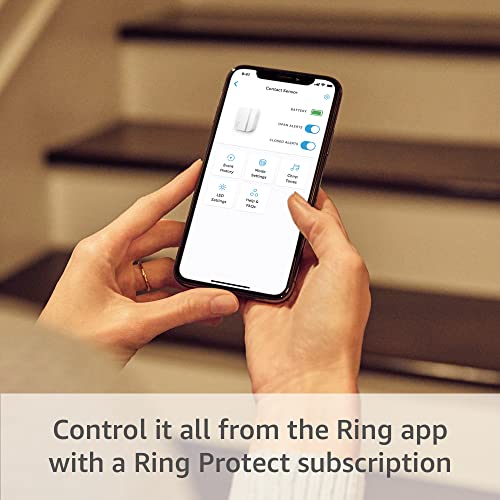
- Instant mobile alert capability when monitored entry points open, which requires an active Ring Protect subscription sold separately.
- System integration requirement with the Ring Alarm Base Station, which acts as the mandatory communication bridge.
Weather Vulnerabilities and Water Intrusion Risks
The primary concern when asking is ring contact sensor waterproof comes down to the unit’s mechanical enclosure. The Ring Alarm Contact Sensor (2nd Gen) possesses no International Protection (IP) moisture rating, silicone o-rings, or ultrasonic plastic seals. The shell consists of a two-piece friction-fit plastic casing with deliberate openings to facilitate battery compartment access. When exposed to direct rainfall, blowing snow, or lawn sprinklers, water readily penetrates the seam lines. Once moisture enters the interior chamber, it settles directly across the printed circuit board, corroding the delicate conductive traces and causing electrical shorts that trigger false open or closed signals.
Even if you mount the sensor underneath an awning or deep roof overhang, ambient humidity creates a destructive microclimate. Daily temperature cycles cause air inside the unsealed sensor housing to expand during daytime warmth and contract as evening cools, drawing moist air directly across the internal electronics. This condensation cannot evaporate quickly from the cramped enclosure, creating rust on the battery contacts and degrading the sensitive magnetic reed switch. Homeowners who monitor outdoor spaces often combine perimeter sensors with outdoor surveillance cameras like the ring stick up cam, but while purpose-built exterior equipment features rubberized gaskets and weather-sealed ports, the standard contact sensor remains completely exposed to atmospheric moisture.
To circumvent these moisture hazards, some security owners look into a third-party ring contact sensor outdoor enclosure, such as a weather-resistant junction box, a silicone sleeve, or a plastic hobby project box sealed with silicone sealant. While an aftermarket enclosure can divert direct rainfall, it introduces distinct mechanical compromises. Sealing the sensor inside an airtight casing traps ambient humidity present during installation, amplifies internal summer heat, and makes routine battery replacement cumbersome because the casing must be disassembled or cut open whenever the coin cells deplete.
Operating Temperature Limits and Cold Weather Battery Drain
Reviewing the ring alarm contact sensor 2nd gen specs reveals an operating temperature window strictly bounded between 32°F and 120°F (0°C to 49°C). These thermal thresholds reflect the chemistry of standard consumer-grade lithium coin cells and the tolerance of indoor-rated electronic microcontrollers. In regions where winter temperatures drop below freezing, deploying the hardware externally pushes the device beyond its operational envelope. When ambient temperatures drop beneath 32°F, the chemical reaction inside the CR2032 coin cells slows down significantly, leading to an immediate drop in operating cell voltage that the system frequently misinterprets as a dead battery.
Consequently, evaluating ring contact sensor battery life in cold weather reveals a stark divergence from the manufacturer’s rated three-year operational lifespan. While indoor ambient stability allows the dual 3V coin cells to discharge slowly over several years, sub-freezing exposure can drain usable cell capacity in a matter of weeks or months. Cold-induced voltage sag causes the sensor to drop offline intermittently during winter nights, right when perimeter security is critical. Once ambient daytime temperatures rise back above freezing, the battery chemistry may recover slightly, resulting in erratic disconnect and reconnect notifications that undermine confidence in your security setup.
At the opposite extreme, direct summer sunlight creates severe thermal stress that easily exceeds the maximum ring contact sensor operating temperature of 120°F. When mounted to a dark-painted wooden gate, a metal fence post, or an uninsulated shed door exposed to full afternoon sun, surface temperatures can soar past 130°F. Sustained high heat accelerates chemical breakdown of the lithium cells, warps the lightweight plastic housing, and can cause the interior magnetic reed switch mechanism to stick or fail. Without the thermal stability found inside climate-controlled structures, the sensor suffers premature wear at both ends of the thermometer.
Physical Alignment on Gates and Mechanical Movement
Installing a ring contact sensor for outdoor gate monitoring introduces major physical alignment hurdles that do not exist on standard interior architectural doors. The device specification requires a maximum distance between sensors of no more than 1 inch to register a closed circuit. Furthermore, the installation design mandates leaving at least half an inch of clear space along the non-magnet side of the chassis so the owner can slide the cover open to replace depleted batteries. Achieving and maintaining these tight tolerances on exterior hardware proves exceptionally difficult over long periods.
Outdoor gates, whether constructed from wood, vinyl, or ornamental wrought iron, are subject to significant environmental movement. Wooden gate posts swell during rainy seasons and shrink during dry spells, while vinyl posts flex under wind loads and temperature fluctuations. Over several months, this natural settling causes gates to sag or shift out of plumb by a half-inch or more. If an outdoor gate shifts past the 1-inch threshold, the sensor permanently registers the gate as open, triggering false intrusion alerts or preventing you from arming your security system without manually bypassing the zone.
Mechanical vibration represents another serious failure point on exterior entry points. Exterior gates frequently slam shut under the force of heavy spring-loaded gate hinges or sudden wind gusts. The Ring Alarm Contact Sensor attaches using double-sided adhesive tape engineered for smooth, painted interior drywall and primed wooden jambs. When subjected to coarse outdoor wood, powder-coated metal, and repetitive mechanical shock, standard adhesive degrades rapidly. Without mechanical screw anchors—which the listing does not specify as included for the sensor body—the unit risks falling off the fence post, damaging its plastic shell upon hitting the ground.
Base Station Range and Warranty Terms Outdoors
Wireless communication reliability presents another significant hurdle when moving the sensor away from your primary living space. The sensor communicates using Z-Wave wireless technology, which offers an open-air, line-of-sight range of up to 250 feet back to the Ring Alarm Base Station. However, residential outdoor environments are rarely clear line-of-sight. Exterior building materials such as brick, stucco, stone veneer, and low-emissivity glass windows severely attenuate Z-Wave radio frequency signals. If your gate or detached garage sits fifty or seventy feet from the home, penetrating multiple exterior insulated walls can degrade signal strength to the point of packet loss.
While home automation setups often deploy exterior security equipment like the spotlight cam pro battery or incorporate intermediate Z-Wave plug-in extenders along interior exterior-facing walls, maintaining an uninterrupted link to an outdoor gate remains challenging. An intermittent wireless connection causes the Base Station to periodically mark the contact sensor as unresponsive, creating dead zones in your perimeter monitoring. Unlike Wi-Fi cameras that can connect to mesh access points, Z-Wave requires either direct connection to the Base Station or routing through compatible Z-Wave repeaters, which must themselves be protected from exterior weather.
Beyond wireless performance, navigating the ring alarm contact sensor warranty is essential for careful buyers. The product includes a 1-year limited warranty and service agreement. However, the manufacturer documentation explicitly states that the hardware is designated for indoor use only across a 32°F to 120°F operating envelope. If you submit a warranty claim after water corrodes the internal circuit board or thermal exposure splits the plastic frame, customer support can rightfully deny coverage due to misuse outside rated specifications. If you are comparing versatile monitoring devices, understanding environmental ratings is critical, much like evaluating a ring cam plus battery against stationary equipment before making an investment.
Ring Alarm Contact Sensor (2nd Gen) Pros and Cons
Pros
- Compact slim profile fits narrow frames
- Up to three-year battery life indoors
- Tool-free adhesive installation
- Reliable 250-foot line-of-sight Z-Wave range
- Instant alerts via Ring Protect subscription
Cons
- Strictly indoor rated with no waterproofing
- Narrow 32°F to 120°F operating temperature range
- Outdoor placement voids one-year warranty
- Requires Ring Alarm Base Station to function
Is the Ring Alarm Contact Sensor (2nd Gen) Worth It
Determining whether the Ring Alarm Contact Sensor (2nd Gen) represents a worthwhile purchase depends entirely on where you intend to position the hardware. For its true designed purpose—monitoring interior doors, casement windows, French patio doors, and basement egress points within a climate-controlled residential envelope—the sensor delivers exceptional value. Its slim chassis, three-year projected battery life, and seamless direct integration with the Ring Alarm Base Station make it one of the most reliable and unobtrusive indoor sensors available for Ring system owners.
Conversely, if your primary goal is finding an out-of-the-box solution to monitor an exterior yard gate, an exposed driveway barrier, or an unheated shed in a harsh winter climate, purchasing this sensor hoping it survives outdoors is not worth the operational headache. Between the voided one-year warranty, rapid battery depletion during sub-freezing winter weather, and inevitable water damage from rain and condensation, an unprotected indoor unit will almost certainly fail prematurely. The recurring false alarms and maintenance chores required to keep an indoor sensor functioning on a shifting wooden gate quickly outweigh any initial convenience.
If you still choose to attempt an exterior installation, you should treat it as an experimental setup rather than a primary security barrier. The sensor is only worth considering for outdoor applications if you install it inside a meticulously sealed, weatherproof enclosure, mount it under a deep overhang away from direct sunlight, and position it well within the 250-foot line-of-sight Z-Wave transmission radius of your Base Station. For genuine, fail-safe perimeter security, relying strictly on indoor-rated hardware leaves critical gaps in your home defense plan.
FAQ
Can Ring contact sensor be used outdoors?
The Ring Alarm Contact Sensor (2nd Gen) is officially rated for indoor use only within a temperature range of 32°F to 120°F. The listing does not designate it as an outdoor device. While some users place it outdoors inside aftermarket weather enclosures, doing so violates manufacturer guidelines, voids the one-year limited warranty, and leaves the electronics vulnerable to condensation and temperature-related failures.
Is Ring contact sensor waterproof?
No, the Ring Alarm Contact Sensor (2nd Gen) is not waterproof. It possesses no IP moisture ingress rating, rubber gaskets, or sealed enclosures. Rain, snow, lawn sprinklers, and humid condensation can easily seep into the casing seams, leading to terminal circuit board corrosion and battery terminal rust.
What is the operating temperature of the Ring contact sensor?
The official operating temperature range for the sensor is 32°F to 120°F (0°C to 49°C). Temperatures dropping below freezing cause the CR2032 coin cell batteries to suffer chemical voltage drop, while temperatures exceeding 120°F from direct solar exposure can warp the plastic casing and impair the magnetic sensor mechanism.
How far can the Ring contact sensor be from the Base Station?
The sensor utilizes Z-Wave wireless protocol with an operational range of up to 250 feet to the Ring Alarm Base Station under unobstructed, open-air line-of-sight conditions. Real-world indoor-to-outdoor transmission distances are substantially shorter due to signal attenuation from exterior brick, siding, glass, and structural framing.
What is the maximum gap allowed between the sensor and the magnet?
The maximum operational distance between the primary sensor body and its accompanying magnet is 1 inch. Additionally, the manufacturer recommends leaving at least half an inch of clearance on the non-magnet side of the sensor to allow the casing to slide open when replacing the two CR2032 batteries.


