As Amazon Associates, we earn from qualifying purchases. This means we may receive a small commission at no extra cost to you if you click through and make a purchase.
Form Factor Dimensions
7.76 x 3.86 x 2.87 inches
Optical Resolution
2K 4MP (2048 x 2048)
Waterproof Enclosure Rating
IP65 Certified Outdoor Weatherproofing
Operating Power Source
Battery Powered (Supports 8-24VAC Hardwire Topping)
Full spec sheet 6 more rows from the listing
| Brand | REOLINK |
| Model Designation | Reolink Video Doorbell 2nd Gen-B |
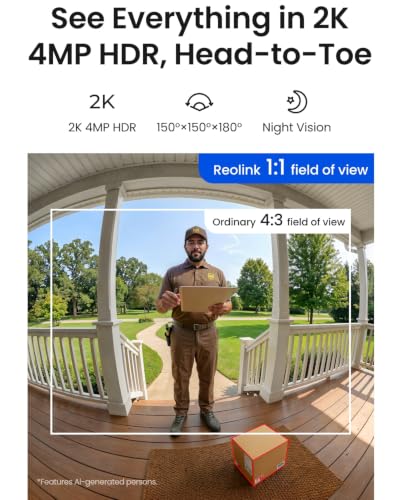
| Aspect Ratio and FOV | 1:1 Head-to-Toe (150° Horizontal / 150° Vertical / 180° Diagonal) |
| Wireless Connectivity | Dual-Band Wi-Fi (2.4GHz / 5GHz) |
| Local Storage Compatibility | MicroSD Card (up to 512GB), Reolink Home Hub, NVR, Local FTP |
| Smart Home Integration | Google Assistant, IFTTT, Home Assistant (via Reolink Home Hub) |
Finding a wire-free security solution that respects user privacy without locking essential hardware behind a monthly paywall has become a persistent challenge for homeowners. The Reolink Battery Video Doorbell answers this demand directly by combining high-definition surveillance with self-hosted storage architecture. Designed for properties where running continuous low-voltage conduit is impractical, this battery-operated unit delivers on-demand visitor monitoring, smart package verification, and standalone video logging. Rather than relying on cloud-tethered operational models, it provides users with genuine ownership over their recorded footage straight out of the box.
In this detailed review, we evaluate the real-world endurance, physical construction, and software ecosystem of the reolink 2nd gen battery doorbell. We examine how everyday environmental variables influence operating longevity, how local storage integrates with domestic networks, and what trade-offs you must accept when moving away from wired hardware. For those debating whether to choose wire-free convenience over dedicated installations like the reolink video doorbell poe system, this analysis outlines the essential technical benchmarks you need to make an informed buying decision.
What You Get With the Reolink Battery Video Doorbell
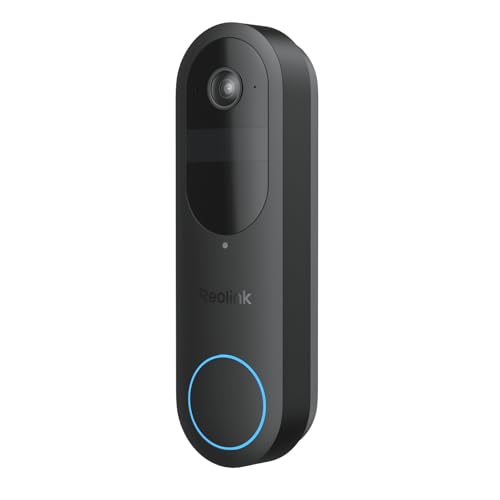

The retail package for the Reolink Battery Video Doorbell supplies the core components required to mount, power, and configure a standalone wireless entrance monitor.
- Reolink Video Doorbell 2nd Gen-B exterior camera unit finished in weatherized black casing.
- High-resolution 2K 4MP optical sensor delivering 2048 by 2048 video capture.
- Square 1:1 aspect ratio lens configuration featuring a 150-degree horizontal, 150-degree vertical, and 180-degree diagonal field of view.
- Internal rechargeable power cell designed for standalone wire-free operation.
- Terminal connection points supporting 8 to 24VAC wiring for continuous battery maintenance.
- Dual-band wireless network radio supporting both 2.4GHz and 5GHz connection frequencies.
- On-device artificial intelligence algorithm capable of filtering people, motor vehicles, pets, and delivery packages.
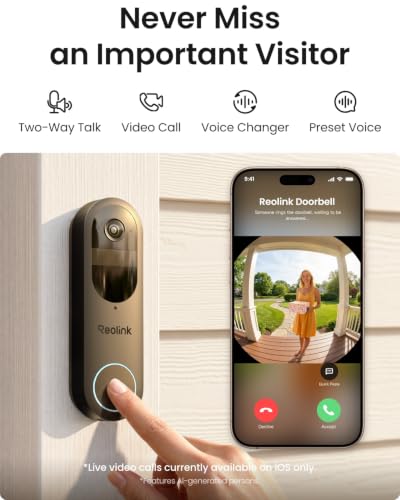
- Two-way microphone and speaker setup featuring synthetic voice alteration and prerecorded audio reply functionality.
- MicroSD expansion slot compatible with memory cards up to 512GB in capacity.
- Wall mounting bracket and surface alignment hardware designed for exterior doorframe installation.
Real-World Battery Endurance and Power Delivery Options
Manufacturer claims regarding battery longevity often reflect idealized testing environments that do not match daily domestic activity. The listing indicates that reolink video doorbell battery life can reach up to ten months on a single cycle, but this calculation is explicitly premised on an average of only five minutes of daily video recording. In active residential settings where passing foot traffic, street vehicles, and household members frequently trigger the passive infrared sensors, active capture times increase quickly. Homes situated close to urban sidewalks or active driveways will experience substantially shorter intervals between recharges because every wake cycle demands energy to illuminate the infrared LEDs, engage the image processor, and broadcast data across the network.
Seasonal climate fluctuations introduce an additional physical hurdle for wire-free front door cameras. Low temperatures naturally alter lithium battery chemistry by raising internal cell resistance and reducing ion mobility, which causes available capacity to drop sharply during freezing winter mornings. When evaluating reolink doorbell battery cold weather behavior, you should anticipate more frequent warning alerts and quicker depletion whenever the thermometer dips beneath the freezing threshold. While the IP65-rated housing provides dependable sealing against sleet, snow, and wind-driven rain, it cannot insulate the internal chemical cells from sustained sub-zero temperatures.
To eliminate charging downtime entirely, the hardware incorporates rear terminal connections engineered to hook directly into existing 8 to 24VAC doorbell circuits. Unlike standard wired doorbells that draw operational power directly from line voltage alone, this device uses the electrical connection to trickle charge the onboard battery continuously. This hybrid approach ensures that the unit maintains its operational reserve without requiring manual detachment from the wall mount for USB charging. If you are comparing this design against alternative battery models such as the battery doorbell plus video doorbell, having both standalone wireless flexibility and optional low-voltage continuous top-up gives this unit distinct practical utility.
Local Storage Stability and Subscription Freedom
The primary appeal of this hardware lies in its rejection of mandatory subscription fees for fundamental camera utilities. Analyzing the reolink battery doorbell local storage capabilities reveals a comprehensive set of onboard and networked options rarely found on consumer video doorbells. Users can insert a high-end microSD card directly into the doorbell body, with support extending all the way to 512GB. This allows weeks of motion-triggered event logs to remain stored locally behind encrypted access walls. Because the footage stays on physical silicon rather than a remote third-party server, playback retrieval is immune to internet outages that would render subscription-only cameras completely blind.
Beyond onboard removable media, the doorbell integrates smoothly into broader private home security infrastructures. It supports synchronization with the proprietary Reolink Home Hub, standalone network video recorders, and network-attached storage destinations using standard File Transfer Protocol (FTP). This multi-tier destination setup safeguards your recordings: even if an intruder attempts to dislodge or damage the front-facing exterior unit, previously transmitted footage remains safe inside your interior storage bank. While optional cloud storage tiers exist for off-site backup, the core feature set operates uninhibited without spending a single recurring dime.
Alert transmission is managed with balanced constraints on the default tier. The platform provides localized AI identification of humans, cars, animals, and packages directly on the edge processor, pushing dynamic notifications straight to your mobile display. On the free management tier, users receive up to twenty-five rich push notifications with preview snapshots per day. Once that threshold is crossed, the mobile app continues to deliver text-based alert notices without interruption, ensuring you are still informed of doorway activity without being forced into an upgrade funnel.
Wireless Signal Integrity and Chime Architecture
A wireless security camera is only as reliable as its radio frequency link, making reolink battery doorbell wifi reliability a critical consideration for prospective buyers. Exterior walls, stucco mesh, insulated siding, and thick metal entry doors create considerable attenuation for radio signals. To overcome these common structural hurdles, this doorbell utilizes dual-band Wi-Fi connectivity across both 2.4GHz and 5GHz spectrum bands. The 5GHz channel provides increased transmission bandwidth and lower interference in crowded suburban airspace, which noticeably reduces the latency when loading live 2K video streams. Meanwhile, the 2.4GHz frequency offers superior propagation distance and barrier penetration for front doors positioned far away from the interior wireless router.
Audio signaling and interior alerts require careful planning during setup. When evaluating reolink video doorbell chime compatibility, buyers must note that traditional in-wall mechanical and electronic ding-dong chimes are not natively driven by the doorbell’s battery-operated circuitry. The manufacturer specifies full compatibility with the dedicated Reolink Chime Plus module for generating audible alerts throughout the interior of the home. When a visitor presses the front button, the unit sounds its exterior tone, activates paired wireless chimes, and triggers an immediate video call notification to your paired smartphone or tablet screen.
This automated video calling capability enables two-way interactive communication without having to launch the application manually and wait for connection handshakes. Users who value personal privacy can engage the integrated voice changer tool, which synthesizes incoming speech to mask age or gender characteristics when addressing unknown individuals on the porch. For situations where answering directly is inconvenient, pre-recorded audio messages can be deployed with a single screen tap. While simpler compact units like the blink – video doorbell prioritize minimalist footprints, the Reolink model focuses on providing robust communication options alongside dual-band network stability.
Physical Mounting and Long-Term Outdoor Resilience
A secure mechanical foundation is essential for any exterior hardware exposed to public walkways. The physical reolink battery doorbell installation process involves attaching a heavy-duty mounting bracket directly to the doorframe or exterior siding with supplied hardware fasteners. Measuring 7.76 inches tall, 3.86 inches wide, and 2.87 inches deep, the camera carries a noticeably larger footprint than slender hardwire-only alternatives. This physical bulk is necessary to house the oversized battery cell, the dual-band antenna array, and the optical sensor assembly, so homeowners with narrow decorative moldings must verify clearance measurements prior to mounting.
The optical configuration features a true 1:1 aspect ratio that produces a square 2048 by 2048 pixel image. Standard horizontal widescreen aspect ratios frequently cut off the ground plane right below the lens, creating a blind spot where delivered packages typically sit. With a 150-degree horizontal, 150-degree vertical, and 180-degree diagonal viewing angle, the optical sensor delivers true head-to-toe visual coverage. You can clearly inspect the identity of a visitor standing close to the threshold while simultaneously monitoring parcel boxes placed directly against the baseboard below.
Long-term physical durability is certified through an IP65 waterproof housing standard. This technical classification guarantees total protection against dust ingress and resistance to pressurized water spray from any angle, ensuring driving thunderstorms, melting snow, and sprinkler overspray will not compromise internal electronics. The matte black exterior shell resists ultraviolet degradation and surface fading under sustained sun exposure. Furthermore, the inclusion of High Dynamic Range (HDR) processing balances harsh mid-day porch shadows and backlit street scenes, preventing washed-out facial recordings when intense sunlight strikes your entrance directly according to the reolink battery doorbell specs.
Reolink Battery Video Doorbell Pros and Cons
Pros
- No mandatory monthly subscription for smart detection
- High-resolution 2K 4MP head-to-toe video coverage
- Local storage up to 512GB via microSD
- Dual-band 2.4GHz and 5GHz Wi-Fi connectivity
- Supports optional 8-24VAC hardwire trickle charging
Cons
- Limited to 25 free rich app notifications daily
- Requires Reolink Chime Plus for interior audible chime
- Cold temperatures accelerate wireless battery discharge
Is the Reolink Battery Video Doorbell Worth It
When weighing all technical parameters, deciding if the reolink battery video doorbell is worth it comes down to how much you value data independence and mounting flexibility. For homeowners who cannot run complex low-voltage wiring through masonry or historic construction, this camera provides a thoroughly modern 2K surveillance portal without structural alterations. It liberates buyers from the perpetual cycle of monthly cloud subscription fees, offering edge-based artificial intelligence recognition and extensive local storage compatibility that keeps personal household footage safely within domestic boundaries.
However, this wire-free architecture is not universally optimal for every property profile. If your front entrance faces a high-density urban street where pedestrians, city buses, and domestic animals pass by every few minutes, the continuous wake triggers will exhaust the internal battery far quicker than the advertised benchmark. Properties with extreme call volumes or users who require uninterrupted twenty-four-hour continuous video logging should bypass battery-operated models entirely in favor of dedicated hardwired PoE or wired AC units designed to handle sustained thermal and electrical loads.
For the average single-family home or suburban entryway with moderate foot traffic, the hardware provides an exceptional balance of image clarity, physical durability, and ownership autonomy. The option to trickle-charge the battery via existing low-voltage wiring transforms the unit into a low-maintenance fixture, bridging the divide between wireless ease and hardwired longevity. If maintaining strict control over your personal data footprint while capturing expansive head-to-toe 2K video is your priority, this model stands as a premier non-subscription choice.
FAQ
How long does the Reolink video doorbell battery last on a single charge?
The battery is rated to deliver up to ten months of operation under standardized conditions based on approximately five minutes of daily video recording. In actual residential use, real battery longevity varies according to daily motion trigger volume, environmental temperature, network signal strength, and live view usage. Busiest entryways can expect anywhere from one to three months between charges unless wired to an 8 to 24VAC transformer for continuous trickle charging.
Can the Reolink Battery Video Doorbell record continuously around the clock?
No, the Reolink Battery Video Doorbell does not support continuous 24/7 video recording when operating under internal battery power. Battery-operated cameras enter a low-power sleep mode to conserve energy and wake only when motion is detected, when the doorbell button is pushed, or when you access the live stream. For continuous recording without interruption, you must utilize a dedicated hardwired camera system designed for constant power draw.
Does the Reolink battery doorbell work with standard mechanical chimes?
The listing specifies that full audible chime compatibility is achieved using the Reolink Chime Plus accessory. Traditional existing mechanical wall chimes are not natively integrated to sound when the wire-free doorbell button is pressed, even if the unit is connected to low-voltage transformer wiring for battery topping. Instead, the unit triggers digital video calling alerts to your mobile phone and rings compatible wireless chimes.
How does freezing weather impact the doorbell performance?
Sustained sub-zero temperatures temporarily diminish the internal chemical efficiency of all lithium-ion power cells, leading to faster voltage drop and reduced operating duration during cold winter months. While the doorbell features an IP65-rated weatherproof shell that repels snow and sleet, low temperatures will require you to recharge the battery more frequently if the unit is running strictly wire-free without low-voltage AC trickle charging.
Can I operate this doorbell without paying for a subscription?
Yes, all core functionalities of the doorbell operate completely free of recurring subscription charges. Onboard artificial intelligence filters people, vehicles, animals, and packages locally on the device. Footage can be stored securely on a local microSD card up to 512GB, a Reolink Home Hub, an NVR, or an FTP server, allowing total video archiving freedom without ongoing service plans.


