As Amazon Associates, we earn from qualifying purchases. This means we may receive a small commission at no extra cost to you if you click through and make a purchase.
Power Source
Battery Powered
Package Dimensions
2.05 x 11.18 x 10 inches
Product Weight
3.52 ounces
Warranty Description
Limited Warranty
Full spec sheet 6 more rows from the listing
| Brand | Nintendo |
| Model Name | Joy-Con(L/R) |
| Compatible Hardware Platform | Nintendo Switch |
| Controller Form Factor | Gamepad (split modular pair) |
| Connectivity Protocols | Bluetooth 3.0, NFC, IR |
| Total Button Count | 16 physical inputs |
Expanding your gaming setup with extra joy-con pairs nintendo switch owners frequently seek requires balancing instant multiplayer convenience against known long-term hardware wear. Purchasing an official set of Nintendo Joy-Con controllers immediately doubles your potential participant count for local cooperative sessions and party games, providing two fully functional modular pads in a single package. However, before investing in another set of Neon Red and Neon Blue controllers, sensible buyers must understand how these compact devices hold up under sustained play, what technical capabilities they deliver, and where physical wear tends to manifest.
This pragmatic guide examines the complete nintendo joy-con specs, evaluating everything from internal motion-sensing hardware and wireless protocols to mechanical analog stick durability. We explore common concerns surrounding nintendo joy-con stick drift reliability, explain the joy-con warranty and repair policy, and assess joy-con battery life and durability against daily gaming demands. By looking closely at real-world operational challenges, Bluetooth stability, and modular ergonomics, we help you decide whether an additional controller pair makes sense for your household or if alternative configurations better suit your playstyle.
What You Get With the Nintendo Joy-Con


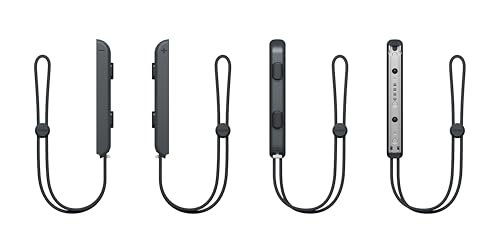

The standard retail package provides a complete two-piece controller setup designed to work seamlessly with the Nintendo Switch console in multiple orientations. While the listing notes the included components simply as the item itself, the package supplies the two primary modular units that make up the complete gamepad system.
- Left Joy-Con controller in Neon Blue featuring a pressable analog stick, directional arrow buttons, L, ZL, SL, SR, minus, capture, release, and SYNC buttons
- Right Joy-Con controller in Neon Red featuring a pressable analog stick, A, B, X, Y, R, ZR, SL, SR, plus, release, and SYNC buttons
- Integrated 3-axis accelerometer and 3-axis gyro-sensor inside each controller for independent motion detection
- Built-in NFC (Near-Field Communication) antenna housed within the right Joy-Con for reading amiibo figures and cards
- Infrared (IR) motion camera sensor located at the base of the right controller
- Bluetooth 3.0 wireless radios embedded inside each unit for cable-free console communication
- Internal rechargeable battery power source in both left and right units
- Full sixteen-button configuration distributed across both controllers
Hardware Longevity and Analog Stick Durability
For any prospective buyer, nintendo joy-con stick drift reliability remains the single most critical durability concern. Unlike traditional full-size controllers that house standard potentiometers with larger contact surfaces, these miniature pads use ultra-compact analog modules engineered to fit inside their sub-half-inch profile. Over time, friction between the internal electrical wiper contacts and the conductive graphite resistive tracks can create microscopic wear debris, causing the console to register phantom movement even when the stick remains untouched at dead center. Evaluating long-term hardware wear requires the same rigorous scrutiny one applies when reading a thorough dyson ball animal 3 extra review, where mechanical contact points inevitably experience stress over time.
Nintendo addresses these wear problems through their joy-con warranty and repair policy, which provides official servicing channels for hardware displaying unprovoked cursor drift. While the manufacturer listing specifies a standard limited warranty, Nintendo has established dedicated support programs across multiple territories specifically to service drifting sticks with minimal friction for consumers. Even so, relying on warranty claims means dealing with shipping transit times, packaging logistics, and console downtime while your controllers are inspected and repaired at an official service depot.
Preventive maintenance can mitigate minor input errors caused by ambient debris rather than physical wiper degradation. Gently lifting the flexible rubber dust skirt beneath the thumbstick cap and clearing trapped particles with dry compressed air often stabilizes erratic readings. Recalibrating analog sticks through the Nintendo Switch system settings menu can also correct small zero-point drift, though true mechanical potentiometer wear eventually requires manufacturer repair or component replacement to restore reliable operation.
Multiplayer Flexibility and Ergonomic Compromises
The primary reason to buy extra joy-con pairs nintendo switch owners depend on is their instant versatility as two independent gamepads. Because each half includes its own 3-axis accelerometer, 3-axis gyro-sensor, four face buttons, clickable stick, and inner rail SL and SR buttons, one retail box immediately provides two separate nintendo switch multiplayer controllers. For games like Mario Kart 8 Deluxe or Super Mario Party, this split layout lets four players compete simultaneously without requiring you to purchase bulky individual controllers for visiting guests.
However, splitting the pair into two individual controllers introduces noticeable ergonomic compromises. Each half measures barely an inch and a half across, leaving minimal surface area for adult hands to grip securely during high-intensity gameplay. The asymmetrical stick placement means one player controls an analog stick centered on the gamepad face while the other player navigates with an edge-mounted stick. Furthermore, the left unit uses four separate circular directional buttons rather than a continuous cross-style D-pad, which can feel unfamiliar during retro 2D platforming sessions.
When weighing official joy-con vs third party controller options, authentic Nintendo hardware provides proprietary features that aftermarket clones frequently omit. Third-party alternatives routinely drop the embedded NFC reader required for scanning amiibo or rely on generic rumble motors that lack the nuanced vibration feedback found in official Joy-Con hardware. Furthermore, many third-party multiplayer pads cannot slide directly onto the Switch tablet rails, restricting their utility solely to detached wireless use.
Wireless Connection Stability and Motion Control Latency
The Joy-Con communicate with the Nintendo Switch console via Bluetooth 3.0, delivering input signals and motion sensor telemetry without physical cables. In an unobstructed room, joy-con motion controls latency is low enough to deliver instantaneous tracking in rhythm, fitness, and sports titles. The onboard 3-axis gyroscope and accelerometer update orientation data rapidly, ensuring that delicate angle adjustments and swift racket swings register on screen without perceptible delay.
Nevertheless, nintendo switch joy-con pairing issues and temporary signal drops can occur when physical obstructions or crowded 2.4 GHz frequencies interfere with transmission. Because the internal antennas are packed tightly beside lithium batteries and metal rail brackets, resting a Joy-Con behind a raised knee or sitting across a large living room behind a solid coffee table can occasionally cause brief input lag or missed button presses. Similar calibration and signal upkeep challenges appear across modern electronic tools, as detailed in our analysis of precision crafting gear like the cricut joy 2.
Resolving wireless connection drops usually requires pressing the dedicated SYNC button situated on the inner sliding rail to refresh the Bluetooth link. Nintendo also regularly bundles Joy-Con controller firmware updates into Nintendo Switch system software releases. Keeping the controller firmware up to date through the system settings menu helps eliminate pairing hitches, improves connection stability, and optimizes battery consumption during busy multiplayer sessions.
Power Management and Daily Charging Logistics
Examining joy-con battery life and durability shows that the internal power cells offer dependable multi-session endurance, though keeping multiple pairs charged requires some forethought. The product listing specifies that the controllers are battery powered, though the listing does not specify the exact milliampere-hour rating or operational hours per charge. In everyday use, the low-energy Bluetooth 3.0 protocol and efficient microcontroller sleep states allow these pads to sustain extended gaming marathons before requiring a recharge.
Charging logistics become more complicated when you introduce an extra set of Joy-Con to your home. Because the package includes the controller hardware without dedicated charging docks or standalone cables, recharging an extra pair typically requires sliding them onto the Switch console rails while the tablet is docked. Managing device duty cycles and charging schedules mirrors the operational upkeep necessary for automated digital tools, a workflow we regularly evaluate when reviewing equipment like the xmaker joy ai.
Over several years of regular charging cycles, the internal lithium-ion batteries will slowly lose total holding capacity. Because the Joy-Con shells use proprietary tri-wing fasteners, opening the housing to replace a worn battery requires specific tools and technical comfort. Fortunately, because Joy-Con draw modest current during active gameplay and sit safely powered down when detached, complete battery failure is significantly less common than analog stick wear or button contact fatigue.
Nintendo Joy-Con Pros and Cons
Pros
- Splits into two independent motion-capable multiplayer gamepads
- Built-in NFC reader for amiibo figures and cards
- Smooth motion tracking via internal gyro and accelerometer
- Seamless attachment to Nintendo Switch console rails
- Official limited warranty support from Nintendo
Cons
- Potentiometer design susceptible to analog stick drift
- Compact split ergonomics cause fatigue during long sessions
- Listing does not specify charging dock or grip
Is the Nintendo Joy-Con Worth It
Deciding whether is an extra joy-con pair worth it ultimately depends on your household gaming habits. If you frequently host four-player party sessions, enjoy motion-centric games, or rely heavily on handheld gaming on the go, an extra pair of official Joy-Con is an indispensable accessory. Their modular design allows them to serve as handheld extensions, a split two-hand wireless controller, or two separate gamepads for visiting guests, delivering flexibility that no standard gamepad can replicate.
On the other hand, players who spend most of their gaming time solo and prefer docked play on a television will find standard full-size wireless controllers far more comfortable. The Joy-Con feature compact thumbsticks, shallow digital shoulder triggers, and flat grip profiles that can lead to hand fatigue during long, demanding campaigns. Solo players who do not require amiibo scanning or dual-hand motion controls will achieve better ergonomics with traditional pro-style pads.
In summary, the official Joy-Con pair remains the definitive choice for multiplayer versatility and authentic Nintendo Switch functionality. While analog stick durability and charging routines require mindful attention, the build quality, motion precision, and reliable limited warranty backing make an extra Joy-Con pair a worthwhile investment for social gaming households.
FAQ
Can each Joy-Con be used as a standalone controller?
Yes. Each Joy-Con features its own analog stick, four face buttons, shoulder triggers on the inner rail, and internal motion sensors. This enables a single pair to serve as two independent controllers for supported multiplayer titles.
Does the Nintendo Joy-Con include motion controls?
Yes. Both the left and right Joy-Con contain an independent accelerometer and gyro-sensor, providing responsive motion tracking when used separately, connected in a grip, or attached to the console.
How do you fix Nintendo Switch Joy-Con pairing issues?
If a controller disconnects or fails to register, press the small circular SYNC button on the rail to reset the wireless connection. You can also reattach the Joy-Con directly to the console tablet to re-pair it, and ensure your controller firmware is updated via the console system settings.
What does the limited warranty cover regarding analog stick drift?
The product includes a limited warranty from Nintendo that covers manufacturing defects. In many regions, Nintendo has established streamlined repair procedures specifically handling analog stick drift to recalibrate or replace affected modules.
What accessories are included in the package?
The listing identifies the package contents as the item itself, which comprises the Neon Red and Neon Blue Joy-Con pair. The listing does not specify included charging cables, standalone grips, or multiport docks.