As Amazon Associates, we earn from qualifying purchases. This means we may receive a small commission at no extra cost to you if you click through and make a purchase.
Product Dimensions
10.38 x 3.62 x 8.94 inches
Total Package Weight
10.56 ounces
Item Quantity
30 disposable refill pads
Scent Profile
Original Scent (bleach-free odor profile)
Full spec sheet 6 more rows from the listing
| Brand | Clorox |
| Manufacturer | Clorox Company |
| Item Model Number | 044600314112 |
| Target Pathogen Efficacy | Kills 99.9% of germs and viruses |
| Stain Removal Benchmark | Removes hard water and lime stains 2X faster than manual brush and cleaner |
| Wand Handle Inclusion | Sold separately (the listing does not specify a handle in this refill pack) |
A standard toilet brush is one of the most unhygienic implements in any household, routinely sitting in a stagnant puddle of dirty water inside a dark plastic holder where bacteria multiply between cleanings. The Clorox ToiletWand is engineered to address that exact failure point by replacing the permanent bristled wand with single-use, preloaded cleaning sponges that click on and eject directly into the waste bin. This specific package supplies a 30-count carton of disposable cleaning head refills, giving homeowners a substantial reserve of fresh scrubbing pads designed to disinfect bowl surfaces without requiring contact with contaminated surfaces. For shoppers seeking to upgrade bathroom sanitation, switching to this disposable approach removes the traditional caddy mess, provided the mechanical aspects of the system hold up under pressure.
Before adopting any disposable system, buyers need to consider the functional realities beyond the marketing claims, especially regarding latch retention, ongoing supply costs, and chemical efficiency. This comprehensive evaluation breaks down the mechanical behavior of the attachment head, detailing what can go wrong when tackling heavy scrubbing angles beneath the bowl rim. We will analyze the core capabilities of the cleaning formula against mineral build, assess compatibility across porcelain and specialty fixtures, review mechanical wear points, and determine whether the convenience of disposable refills provides genuine reliability over the long term.
What You Get With the Clorox ToiletWand



This refill package focuses strictly on replenishment, providing a bulk quantity of disposable heads intended for existing system owners or those purchasing the handle separately. Each component is manufactured to integrate directly with the proprietary quick-release mechanism of the wand.
- Thirty disposable cleaning refill pads preloaded with active disinfectant cleaner
- Hexagonal pad geometry engineered specifically to navigate bowl curves and deep rim channels
- Original Scent cleaning formula developed to sanitize without generating strong bleach fumes
- Broad surface compatibility rated for porcelain, chrome, enamel, and synthetic marble
- Touch-free mechanical engagement tabs on each pad for hands-free loading and disposal
- High-potency formulation documented to kill 99.9% of germs and viruses
- Compact box packaging measuring 10.38 by 3.62 by 8.94 inches for cabinet storage
Mechanical Latch Durability and Pad Detachment Risks
The operational success of any click-on cleaning tool depends entirely on the mechanical strength of the coupling interface. With the Clorox ToiletWand, the wand handle features expanding plastic teeth that bite into the internal plastic collar of each refill pad. Under normal vertical scrubbing motions against the open bowl face, this physical connection holds steady. However, the connection is subjected to substantial torsional stress when an operator levers the tool under the rim. If excessive lateral torque is applied, the retaining clips can slip or flex, leading to unexpected head detachment. A pad dislodging below the waterline presents an immediate plumbing hazard, as these dense cleaning pads are non-flushable and can obstruct standard drain traps if inadvertently swept away.
Another mechanical stress point involves the release button positioned along the handle shaft. Over dozens of cycles, toilet cleaning solutions, mineral deposits, and water can work their way into the sliding button housing. While the pads themselves are replaced with every wash, the wand handle remains an ongoing mechanical assembly. Users who scrub with aggressive downward pressure often inadvertently compress the push-button mechanism, triggering a premature pad drop. Routine maintenance requires rinsing the handle jaws in clean running water after use to prevent detergent crusting from interfering with the jaw tension, ensuring each fresh pad snaps into place with a definitive mechanical lock.
When evaluated alongside traditional cleaning routines, such as applying a dedicated liquid like scentiva toilet bowl cleaner with a standard brush, the mechanical wand requires greater mindfulness regarding physical technique. Brushes made of molded plastic have no moving parts and cannot drop their heads into the trapway. Conversely, the wand trades that indestructible structural unity for touchless disposal. To maintain attachment security throughout a rigorous clean, users must allow the preloaded detergent and the textured pad face to do the abrasive work, rather than muscling the wand handle as if it were a solid metal rod.
Scrubbing Performance Against Hard Water and Mineral Scale
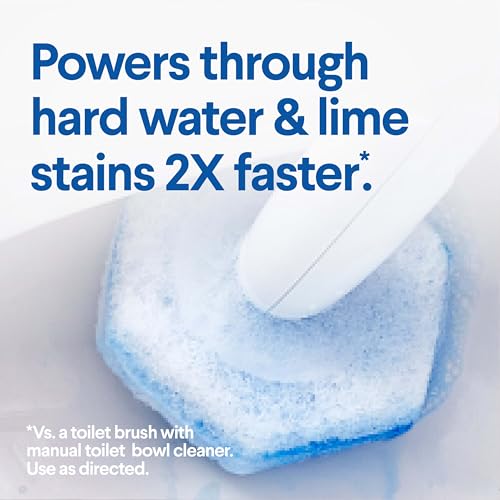
Hard water rings and heavy lime buildup represent the most demanding challenges for bathroom cleaners. The listing data for the Clorox ToiletWand system specifies that it removes hard water and lime stains twice as fast as a manual brush-and-cleaner combination. This enhanced efficacy stems from the concentrated chemical saturation inside the pad fibers combined with the hexagonal scrubbing face. Rather than dispersing loosely into the bowl water, the cleaning solution activates immediately upon contact with moisture, maintaining a concentrated barrier at the contact surface where the pad meets stubborn mineral scale.
The hexagonal geometry plays a pivotal role in physical cleaning mechanics. Traditional circular or oval brush heads frequently skip across the angular underside of toilet bowl rims, leaving mineral crust undisturbed in recessed water jets. The pointed corners of the hexagonal pad concentrate physical abrasion directly into these tight corners, scraping away accumulated lime deposits that harbor bacteria. For households dealing with recurring ring formations caused by high mineral content in municipal or well water, this localized contact provides superior mechanical scouring without demanding extra chemical additives.
While the pad excels at targeted mineral removal, its operational lifespan during a single cleaning session is finite. Unlike hands-off bubbling treatments such as clorox foaming toilet bombs that work passively over extended soak times, the wand pad depends on active friction. The dense blue cleaning foam saturating the pad begins to deplete after several minutes of vigorous scrubbing in standing water. Once the detergent reservoir is fully exhausted, the pad transitions into a simple scouring sponge, which means extremely neglected bowls may require a second fresh pad to complete both the disinfection stage and deep mineral removal.
Surface Compatibility and Glaze Protection
Protecting the vitreous china glaze of a toilet bowl is essential for long-term bathroom maintenance. Once a protective ceramic glaze is scratched by harsh scouring tools, microscopic pores open up, accelerating stain retention and bacterial adhesion. The manufacturer explicitly rates these disposable refills for porcelain, chrome, enamel, and synthetic marble surfaces. The non-scratch abrasive composition of the pad provides sufficient friction to lift stubborn rings while remaining soft enough to preserve the glossy outer finish of high-end bowls and delicate synthetic materials.
Compatibility with chrome elements is particularly useful for commercial-style fixtures, flush valves, or integrated bidet attachments where cleaner overspray frequently causes discoloration. Traditional cleaners utilizing concentrated bleach can corrode or pit metallic finishes if left to dwell. Because this Original Scent formulation cleans without generating harsh bleach odors, it delivers an effective scrub without the corrosive risks associated with high-concentration hypochlorite cleaners. For homeowners looking to balance chemical safety with active disinfection, alternating or comparing this with formulas like lysol bleach free hydrogen peroxide toilet bowl cleaner demonstrates the clear shift away from caustic fumes in modern household sanitization.
Despite broad compatibility across enamel and synthetic marble, caution should always be observed on unsealed or cracked materials. While synthetic marble vanity bowls and custom powder room fixtures tolerate the chemistry when rinsed promptly, allowing the concentrated foam to dry on porous stone or degraded enamel surfaces can cause localized dulling. Rinsing the fixture with clean water immediately after completing the scrub cycle ensures that no residue remains to interact with delicate decorative finishes over time.
Hygiene Benefits Versus Ongoing Consumable Waste
The primary justification for choosing disposable toilet cleaner refills over a traditional manual brush is microbiological hygiene. Independent testing cited by the manufacturer documents that the system eliminates 99.9% of germs and viruses during use. In a conventional bathroom setup, a standard plastic brush is dragged through contaminated bowl water and returned damp to its floor caddy, creating a humid reservoir where pathogens persist. The wand method breaks this contamination loop entirely: the user clicks a fresh, sterile pad onto the wand, cleans the bowl, and presses the ejection button to drop the soiled pad directly into the trash can without touching it.
This sanitary advantage comes with clear structural trade-offs in waste generation and recurring expense. Every individual cleaning session consumes one multi-layer pad consisting of cleaning foam, abrasive scrub backing, and a rigid plastic mounting collar. Because the structural backing requires sufficient stiffness to lock into the wand teeth, it cannot biodegrade quickly and cannot be flushed into septic or sewer systems. Buyers seeking to reduce single-use plastic waste must weigh the tangible sanitary upside of a sterile, disposable pad against the environmental cost of disposing of 30 plastic-backed heads over several months of maintenance.
For high-traffic environments, households with young children, or during seasonal viral outbreaks, the hygiene benefits generally outweigh the disposal footprint. Eliminating the dripping, foul-smelling toilet brush caddy from the bathroom floor instantly removes a primary vector for household cross-contamination. Storing the dry, unloaded wand handle in a clean cabinet while keeping the 30-count box tucked away ensures the bathroom floor stays clear of standing water reservoirs, significantly improving ambient room cleanliness.
Clorox ToiletWand Pros and Cons
Pros
- Touch-free pad ejection prevents contact with waste
- Preloaded cleaner eliminates 99.9% of germs
- Hexagonal shape scours under-rim channels effectively
- Removes hard water stains twice as fast
- Safe on porcelain, chrome, enamel, and synthetic marble
Cons
- Wand handle sold separately from refill pack
- Non-flushable pads create recurring household waste
- Aggressive lateral pressure can cause pad detachment
Is the Clorox ToiletWand Worth It
The Clorox ToiletWand system is unequivocally worth the investment for homeowners who prioritize personal hygiene, odor elimination, and hands-free convenience above all else. If you find the reality of storing a damp, bacteria-laden toilet brush in your bathroom distasteful, the ability to clean thoroughly and immediately discard the contaminated head into the trash provides unmatched peace of mind. It is especially well-suited for guest bathrooms, small apartments where brush caddies sit uncomfortably close to showers or sinks, and households during cold and flu season when pathogen control is critical.
Conversely, this system is less practical for budget-driven shoppers or large facilities with dozens of commercial stalls requiring daily deep scrubbing. Because the 30-count refill carton represents an ongoing consumable purchase, operational costs will always exceed the one-time acquisition of a heavy-duty industrial brush and bulk liquid sanitizers. Additionally, users who tend to apply brutal physical force while cleaning may find themselves frustrated by occasional pad detachment if they twist the head aggressively against sharp trapway contours.
For the typical residential buyer, the balance tips firmly in favor of the system. The combination of verified 99.9% germ elimination, effective lime and hard water removal, broad fixture compatibility, and touchless disposal makes the Clorox ToiletWand one of the most practical sanitation upgrades available for modern residential bathrooms.
FAQ
Can Clorox ToiletWand refill pads be flushed down the toilet?
No, the refill pads must never be flushed. Each pad contains a dense abrasive scrubbing sponge and a rigid plastic mounting collar designed to lock onto the wand handle. Flushing these pads will cause severe clogs in home drainage pipes, municipal sewer lines, or septic systems. Always use the wand handle’s quick-release button to drop the spent pad directly into a lined trash can.
Does this 30-count package include the wand handle?
No, the listing does not include the wand handle in this package. This item is strictly a 30-count refill box intended for consumers who already own the Clorox ToiletWand handle or who are purchasing the starter handle assembly separately.
How do you prevent the pad from detaching during heavy scrubbing?
To avoid premature head detachment, ensure the wand teeth fully click into the plastic pad collar during loading. When scrubbing under the bowl rim or down near the trapway, maintain even, flat pressure against the porcelain rather than twisting the wand handle sideways. Twisting creates lateral torque that can force the plastic locking clips to release unexpectedly.
Is the cleaning formula safe for synthetic marble and enamel fixtures?
Yes, the manufacturer specifies that the formulation is safe across porcelain, chrome, enamel, and synthetic marble surfaces. The pad is designed to scrub away mineral stains without scratching protective glazes. To keep delicate surfaces in optimal condition, always rinse the bowl thoroughly with water after scrubbing so cleaner does not dry on the material.
Does the Clorox ToiletWand produce strong bleach fumes?
No, these refills feature an Original Scent formulation that cleans and sanitizes without the overpowering chemical odor associated with standard bleach products. It eliminates 99.9% of germs while leaving a fresh scent that makes bathroom cleaning considerably more pleasant in small, enclosed powder rooms.