As Amazon Associates, we earn from qualifying purchases. This means we may receive a small commission at no extra cost to you if you click through and make a purchase.
Optical Sensor Resolution
3 Megapixels (2304×1296 / 2K)
Power Delivery Method
Wired connectivity (requires external power source)
Storage Architecture
MicroSD card slot (up to 512GB supported) and NAS compatibility
Lens Specifications
f/1.8 aperture with 140° wide-angle field of view
Full spec sheet 6 more rows from the listing
| Night Vision Modes | Spotlight Color Night Vision and IR Detection Mode |
| Ingress Protection Rating | IP65 dust and water resistance |
| Wireless Connectivity Protocols | Wi-Fi 6, Bluetooth, WPA3 security |
| Smart Home Platform Integration | Apple HomeKit, Amazon Alexa, Google Assistant, Samsung SmartThings |
| Onboard and Cloud Intelligence | Local motion/person detection; optional HomeGuardian cloud AI |
| Mounting Configurations | Freestanding, Wall Mount, and Ceiling Mount |
Evaluating a smart security camera requires looking past marketing promises and examining whether the hardware delivers consistent operation under real environmental and network stresses. The Aqara Camera G100 enters the market as a wired indoor and outdoor surveillance solution built to bridge standalone monitoring with modern smart home automation platforms. For shoppers asking if this specific camera is the right purchase, the answer depends heavily on your smart home ecosystem: it offers a compelling blend of local recording and third-party compatibility, but firmware compromises and Apple ecosystem constraints alter how it behaves in practical deployment.
Whether you plan to mount the unit under an exposed roof soffit or place it on an interior shelf, understanding what to expect from the aqara g100 camera before running permanent wiring is critical. This comprehensive assessment investigates video stream reliability, weather endurance, storage handling, and real-world network stability. We analyze how the device manages cloud and local workloads, dissect documented quirks such as HomeKit video downscaling, and provide a clear verdict on whether this camera justifies a place in your home security architecture.
What You Get With the Aqara Camera G100
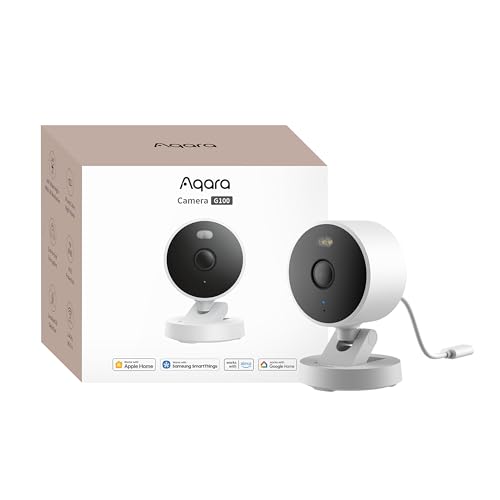

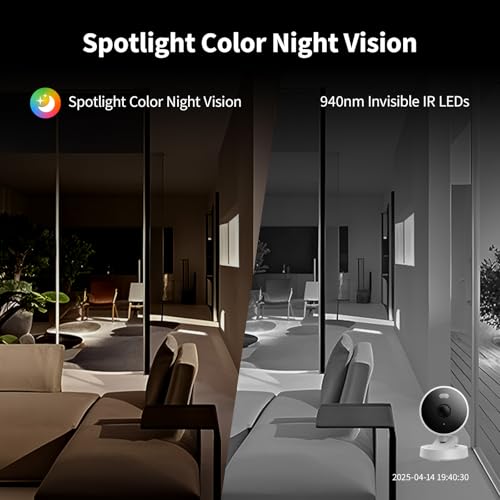

The Aqara Camera G100 package delivers a compact, white surveillance unit engineered for flexible placement across indoor and outdoor living areas. Based on the manufacturer listing, the device incorporates essential optics, illumination hardware, and versatile mounting gear designed to support diverse physical deployment scenarios:
- Aqara Camera G100 2K indoor and outdoor surveillance unit in white finish.
- Optical sensor providing 2304×1296 (3MP) recording resolution with an f/1.8 wide-angle lens and 140-degree field of view.
- Integrated dual-mode night vision system featuring an onboard LED spotlight for full-color illumination alongside infrared detection mode.
- Weather-resistant housing carrying an official IP65 ingress protection rating.
- Multi-position mounting hardware supporting freestanding placement, wall mount installation, or ceiling mounting.
- Local recording capability supporting microSD cards up to 512GB (memory card not included) and network-attached storage integration.
- Wi-Fi 6 and Bluetooth wireless connectivity running modern WPA3 encryption protocols.
- Native integration support for Apple HomeKit Secure Video, Amazon Alexa, Google Assistant, and Samsung SmartThings.
Outdoor Durability and Enclosure Integrity
Deploying the aqara camera g100 for outdoor use introduces environmental variables that indoor-only cameras never encounter. The chassis is rated with an aqara g100 ip65 waterproof rating, signifying complete protection against dust ingress and resistance to low-pressure water jets projected from any direction. In practical outdoor installations, this level of sealing protects internal circuitry from standard rainfall, wind-driven sleet, and airborne particulate accumulation. However, an IP65 designation is distinctly different from continuous immersion ratings. The unit should never be positioned where water can pool around the base, nor should it be exposed to direct high-pressure hose sprays.
Physical cable management represents a critical consideration during outdoor installation. Because the camera relies on a continuous wired connection, running the power lead through exterior walls or along exposed soffits requires careful drip loops and sealing at the entry point. The listing does not specify whether the included cabling or power adapter carries specialized external weatherproofing, meaning installers must take care to shield power connections from moisture seepage. For homeowners transitioning from older indoor-focused hardware like the aqara g2h pro, upgrading to this weatherproof enclosure provides meaningful physical protection for perimeter monitoring.
Thermal management is another operational factor when mounting the camera in direct sunlight. While the white exterior housing helps reflect solar radiation, the listing does not specify the maximum operating temperature threshold or minimum freeze tolerance. The onboard LED spotlight, which provides the illumination required for spotlight color night vision, generates additional internal heat during active night cycles. If mounted under a sun-drenched eave in warmer climates, continuous sunlight exposure combined with active spotlight illumination could accelerate component stress over multi-year deployments.
HomeKit Resolution Restrictions and Dual-App Behavior
For users prioritizing Apple’s smart home ecosystem, understanding how the aqara g100 homekit secure video implementation operates is essential to avoid disappointment. On paper, the camera boasts a 3MP optical sensor delivering 2304×1296 resolution. However, Apple’s HomeKit Secure Video specification currently mandates a hard ceiling of 1080p for streaming and cloud video recording. When you link the camera to an Apple Home hub with an active iCloud subscription, HomeKit compresses the stream to meet Apple’s architecture limits, resulting in a slight softening of fine details at the edge of the 140-degree field of view.
The primary quirk that catches many smart home enthusiasts off guard involves dual-app operation. According to the manufacturer data, when the camera is bound to both the Apple Home ecosystem and the proprietary Aqara Home application, the resolution inside the Aqara Home app is automatically forced down to 1080p as well. You cannot maintain an uncompressed 2K stream in the Aqara app while simultaneously feeding HomeKit Secure Video. If you want to exploit the full 2304×1296 clarity promised in the aqara camera g100 specs, you are effectively forced to operate the camera exclusively inside Aqara’s software ecosystem, forfeiting HomeKit functionality entirely.
This resolution compromise is an important architectural trade-off that buyers must weigh against dedicated ecosystem hardware. Advanced cameras such as the aqara 4mp camera hub g5 also handle complex video pipelines, but the dual-app capping on the G100 represents a firm limitation for hybrid households. Furthermore, HomeKit Secure Video relies on the Apple Home hub for local image analysis, bypassing the camera’s internal processing for Apple notifications. If your home network experiences latency between the camera and the Apple hub, alerts and video clip archiving inside the Apple Home app can experience noticeable lag.
Network Performance and Wi-Fi 6 Band Behavior
Wireless reliability is often the deciding factor in whether an outdoor security camera remains useful or becomes an ongoing frustration. The aqara g100 wifi 6 reliability is anchored by the integration of the modern 802.11ax standard alongside WPA3 wireless security. In environments with dozens of connected smart home sensors, streaming devices, and mobile hardware, Wi-Fi 6 utilizes Orthogonal Frequency Division Multiple Access (OFDMA) to communicate more efficiently, minimizing packet contention and stabilizing the video stream during high-traffic periods. For users streaming live video feeds to smart televisions or mobile devices, this protocol reduces initial buffering time and keeps latency low.
However, wireless performance outdoors is heavily constrained by physical structural barriers. Outdoor installation typically places the camera on the exterior side of double-pane glass, exterior brick, insulation, or stucco reinforced with metal wire mesh. While Wi-Fi 6 optimizes traffic efficiency, it does not magically penetrate dense building materials better than previous Wi-Fi generations if signal attenuation is severe. If the camera is installed far from your central access point, video bitrates may degrade, causing dropped frames or momentary stream disconnects.
The inclusion of Bluetooth in the camera’s wireless hardware simplifies initial device onboarding through the smartphone app, but daily operations depend entirely on Wi-Fi stability. Users who fail to verify Wi-Fi signal strength at the intended mounting location before drilling into exterior walls face common connectivity drops. For comprehensive perimeter surveillance requiring long distances from main routers, deploying a dedicated mesh node or choosing robust outdoor units like the aqara camera hub g5 pro may provide more resilient connectivity structures than a standalone wall-mounted camera on a weak wireless fringe.
Local Storage Reliability and Subscription Mechanics
Data privacy and recurring expenses remain top concerns for buyers evaluating the aqara g100 local storage architecture. The G100 distinguishes itself from purely cloud-dependent security cameras by offering robust physical recording avenues. It features an onboard microSD slot capable of supporting memory cards up to 512GB, alongside native Network Attached Storage (NAS) recording support. This architecture enables continuous 24/7 video archival without paying any ongoing monthly fees. Additionally, the camera supports a specialized time-lapse feature that compresses 24 hours of monitored footage into a concise 15-second clip, provided the unit maintains a continuous wired power source and has a microSD card installed.
Despite the strong local storage provisions, a close examination of aqara camera g100 common issues reveals a clear divide between local and cloud-gated features. While on-device intelligence handles basic motion detection and human person detection locally, identifying pets, moving vehicles, delivered packages, and familiar faces requires the optional cloud-based HomeGuardian Plan. If you refuse to subscribe to this monthly plan, those advanced event tags will simply remain inactive within the Aqara ecosystem, leaving you with standard motion triggers. While Apple users with an iCloud plan can circumvent this restriction through HomeKit Secure Video’s native AI classification, non-Apple households must choose between basic local alerts or ongoing cloud fees.
Card endurance and write stability also require careful attention when configuring continuous recording. Continuous 2K or 1080p recording places relentless write cycles on flash memory, meaning budget or unrated microSD cards can degrade rapidly and fail without warning. When a card encounters write errors, continuous footage may corrupt, or the camera may stop recording events until the card is reformatted. For users seeking standalone tracking without complex external network storage, alternative form factors such as the aqara g350 camera highlight how Aqara configures storage and event indexing across different model tiers.
Aqara Camera G100 Pros and Cons
Pros
- 2K resolution with wide 140-degree field of view
- Integrated spotlight for color night vision
- Local continuous recording up to 512GB microSD
- Modern Wi-Fi 6 connectivity with WPA3 security
- Native Apple HomeKit Secure Video integration
Cons
- Dual-app setup caps Aqara app resolution to 1080p
- Advanced object AI locked behind paid cloud subscription
- Requires continuous wired power connection
- MicroSD card not included in box
Is the Aqara Camera G100 Worth It
Determining if this security camera aligns with your requirements comes down to which smart ecosystem you prioritize and whether you are willing to manage permanent power wiring. If you are asking is aqara camera g100 worth it as an Apple HomeKit Secure Video user who desires local microSD backup, the hardware offers exceptional value. It delivers stable local 24/7 archival, crisp daytime and spotlight illumination, and seamless integration with Apple Home automations without locking you into mandatory Aqara subscriptions.
Conversely, this model is not the right choice for shoppers seeking a completely wire-free installation. Because the unit requires continuous wired power, installing it on exterior walls or soffits demands drilling access holes or routing external conduit. Furthermore, buyers who demand native 2K resolution while simultaneously utilizing Apple HomeKit will be frustrated by the automatic downscaling to 1080p across both the Apple Home and Aqara Home apps.
Ultimately, the camera succeeds as a versatile, weather-resistant hybrid surveillance tool for homeowners who already possess a robust Wi-Fi 6 network and value local video ownership. If you accept the 1080p HomeKit ceiling and take the time to run a weatherproof power lead, the device provides dependable perimeter surveillance and responsive local detection without the recurring expense associated with many mainstream cloud competitors.
FAQ
Does the Aqara Camera G100 require a monthly subscription to operate?
No, the camera does not require a subscription for daily operation. It includes onboard motion and person detection, and supports continuous 24/7 local recording to a microSD card up to 512GB or a local NAS. However, advanced AI recognition for pets, vehicles, packages, and faces in the Aqara app requires the optional HomeGuardian cloud subscription.
Why does the video resolution drop to 1080p when using Apple HomeKit?
Apple HomeKit Secure Video enforces a strict technical limitation that caps video streaming and recording at 1080p. When the camera is linked to Apple HomeKit and the Aqara Home app concurrently, the resolution within the Aqara Home app is also restricted to 1080p to prevent video stream conflicts.
Is the Aqara Camera G100 battery powered or wired?
The camera is a wired surveillance device that requires a continuous wired connection for power. It does not contain an internal rechargeable battery, so you must install it near an electrical outlet or route power cabling to the mounting site.
What size microSD card can be installed in the camera?
The onboard memory card slot accommodates microSD cards with storage capacities up to 512GB. The microSD card is not included in the packaging and must be purchased separately.
How does the dual night vision system work?
The camera offers two distinct night vision modes: infrared (IR) detection mode for discreet black-and-white monitoring, and spotlight color night vision. The built-in LED spotlight illuminates the immediate viewing area in darkness to capture full-color footage of nighttime activity.
Can the camera be mounted on a ceiling?
Yes, the hardware supports multiple installation configurations including freestanding tabletop use, wall mounting, and ceiling mounting using the supported mounting provisions.


